





The end of the school year is fast approaching, and we are starting to take stock of the months that have just passed. What skills are expected at the end of the small, medium and large section of kindergarten? We take stock with a teacher.
The sunny days have arrived, which means that we are almost at the end of the school year! It is synonymous with a vacation, but also an assessment: have the children acquired all the skills expected according to their age and level? But what are they exactly? To find out what it is, we have contacted Marie (Teacherpirouette on social networks). This teacher who has more than 20 years of career, and more particularly in nursery school, begins by providing an important reminder to parents: “In kindergarten, it is not a list of skills or boxes to check, but a path of development. The child gradually builds his language, his thinking, his motor skills, but also his ability to live with others and to become a student”. Benchmarks are defined by National Education as “guide, but they always adapt to the rhythm of each child.
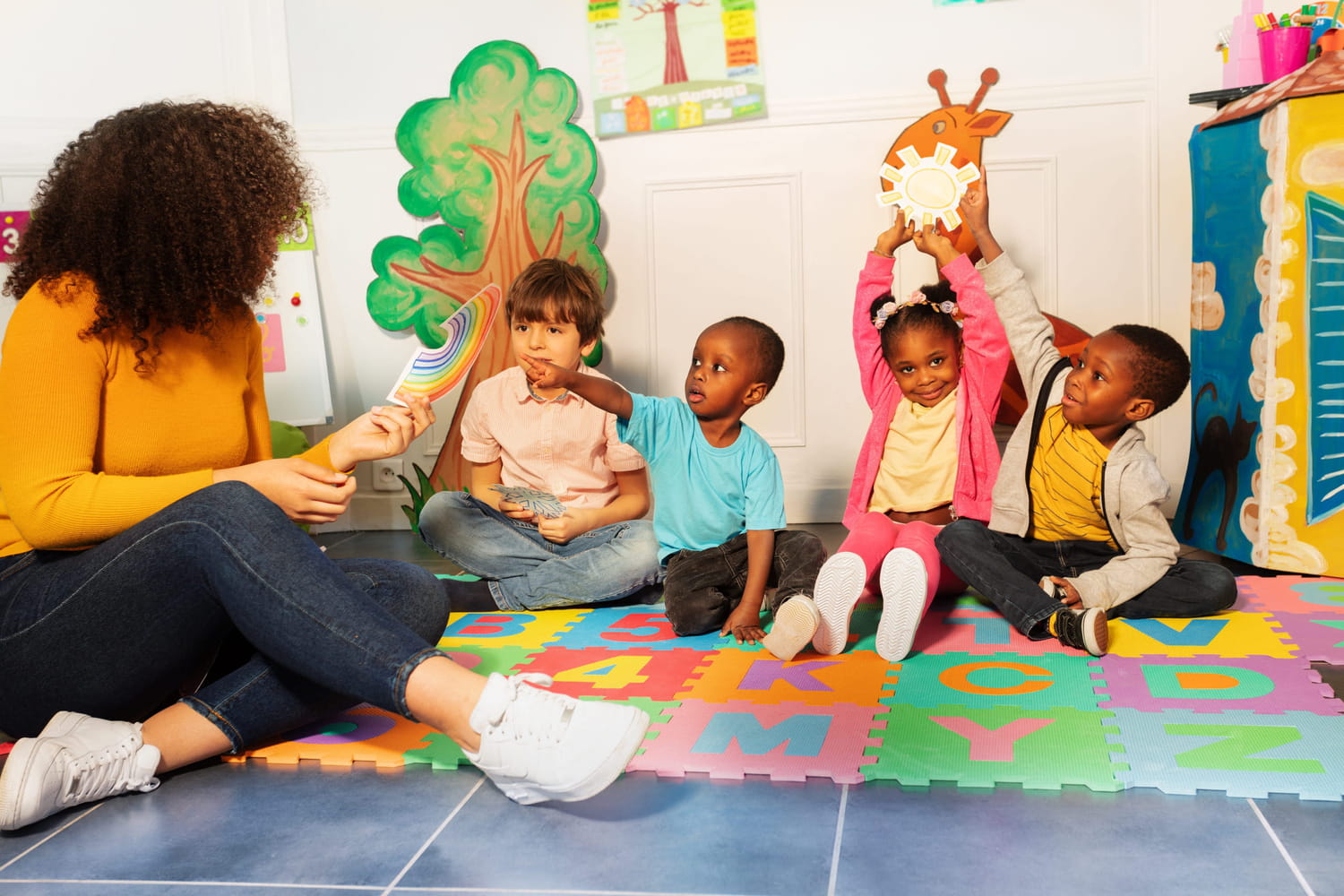
Let’s start at the beginning: in the Petite section, a large part of the learning focuses on discovering the school and the social aspect: “The main thing is to enter into student life and discover the world around you”. We learn to be “in relation to other children and adults”that there are rules, “to dare to speak”to understand instructions, to takeD take part in activities, we explore, we move, and the vocabulary is enriched while the first notions of mathematics are covered. For Mary,and most important is that the child “gain confidence, find your place and enjoyr to come to school”.
In the middle section, “the child learns to speak better, understand better… Et live better with others”, the teacher told us. Lare instructions become more complex, activities are a little longer. The child learns to recognize letters (especially his first name), “to make connections in writing”to count, compare and organize collections, to solve simple problems, but also to situate oneself in time and differents artistic techniques. Observation remains important, as does motor skills. We also strengthen living together: “wait your turn, cooperate, play together, respect common rules, start managing your emotions and ask for help”.
“In the Grande section, we prepare for entry to CP, without skipping steps of course! The child becomes more independent. He expresses himself clearly, tells, explains, understands complex instructions. He is able to engage in a task, to think, to justify”indicates Marie. The continuing studente to learn the alphabet and discovere cursive writing, playing with sounds, manipulating numbers and comparing them, developing reasoning, observing, practicing physical and artistic activities. Another point “essential” ? He now knows “live in a group”. “The objective is clear: an autonomous child, capable of learning and good in the collective.”
This teacher said thatyou should not panic or put pressure on your child if the things mentioned aboveus are not (completely) acquired. “It’s even common.” let this not be the case, because “research in cognitive neuroscience shows that learning is progressive and non-linear”. Marie emphasizes: “Children each progress at their own pace. What matters is not a level at a specific moment, but an evolution. A child who is not yet successful is very often a child in the process of learning.”