


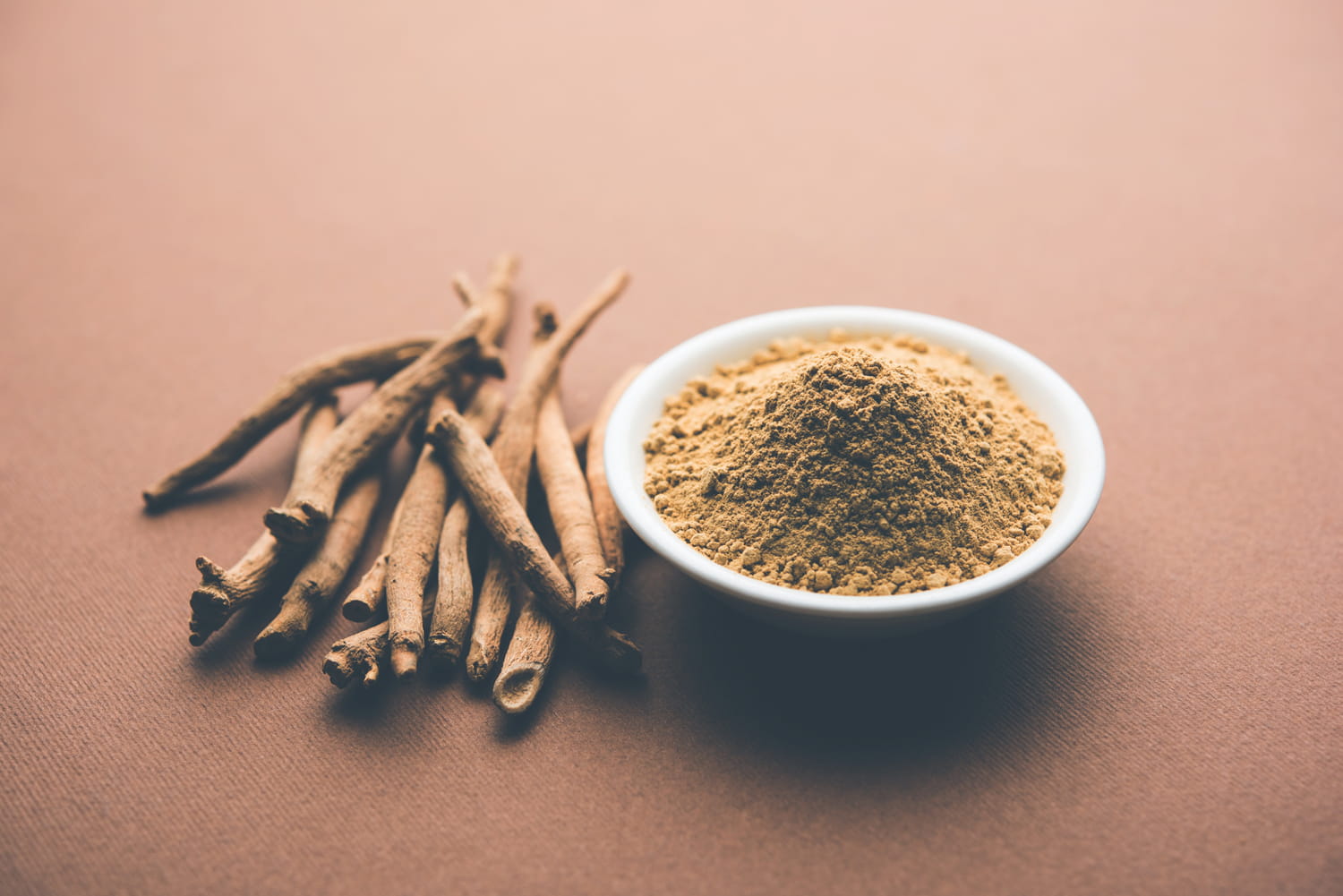



Ashwagandha capsules are all the rage in the wellness world. Fatigue, stress, libido, cortisol… What are the real benefits of this plant from Ayurvedic medicine? Sabrina Ragheb, phytotherapist, explains to us.
For several months, ashwagandha has been everywhere: on social networks, in pharmacies, wellness stores (Aroma-Zone, etc.). But behind the hype, do we really know what this plant is? Who is it for? Could it be dangerous?
What is ashwagandha?
“It’s a plant that comes from Ayurvedic medicine”Sabrina Ragheb, phytotherapist, immediately explains to us. “More specifically, a shrub that grows in Asia and Africa.” In herbal medicine, we use its root, because “it is in this part of the plant that the active ingredients are the most powerful”. Our phytotherapist tells us everything about this root that is so talked about.
What are its health benefits?
“The big reason why we use ashwagandha is because it is part of the adaptogen family”continues Sabrina Ragheb. Concretely, “it helps the body to recover and manage stress, whether physical or psychological”. The specialist prescribes it “to manage periods of chronic fatigue, major convalescences or burn-outs for example”. His action? “It will put the body and psyche back on track, with a reduction in cortisol, the stress hormone.” Ashwagandha also helps you fall asleep and improves the quality of sleep. Finally, the plant has benefits on reproduction and fertility. In men, it stimulates the number and mobility of sperm. In women, it acts on the hormonal and reproductive system, and can help regulate menstrual cycle disorders.
“It is found in several forms: powder, capsules, mother tincture and also in raw root which we make into a decoction”details Sabrina Ragheb. The choice depends on individual preferences. For preparation as a decoction (herbal tea), simply “throw the roots into the water and let boil for 10 minutes covered so that the active ingredients do not evaporate”. You can prepare it in the morning in a thermos and consume it throughout the day, knowing that herbal tea can be kept for 24 hours.
“We can’t have fun playing sorcerer’s apprentice alone in our corner”
Concerning the dosage of food supplements, each manufacturer indicates its dosages on its products. “But we generally recommend between 3 and 6 grams when it comes to powder. For the mother tincture, we use 40 drops, 3 times a day.” Ashwagandha can be taken as a treatment or long-term. “But often in herbal medicine, we like to take breaks, what we call therapeutic windows”. The specialist generally recommends a three-week course, with a one-week break, before resuming if necessary.
What are the contraindications?
Ashwagandha is contraindicated during pregnancy and breastfeeding, in cases of hyperthyroidism and for people on hypoglycemic treatment. Side effects may also occur, including intestinal upset and headache. The message from our expert is clear: “You never self-administer a plant without having seen a professional, whether it be a herbalist, a pharmacist or a doctor trained in herbal medicine. Plants are certainly natural, but they have active ingredients. You can’t have fun playing sorcerer’s apprentice alone in your corner.” Used well and supervised by a professional, ashwagandha can become a valuable ally for regaining balance and vitality on a daily basis.