






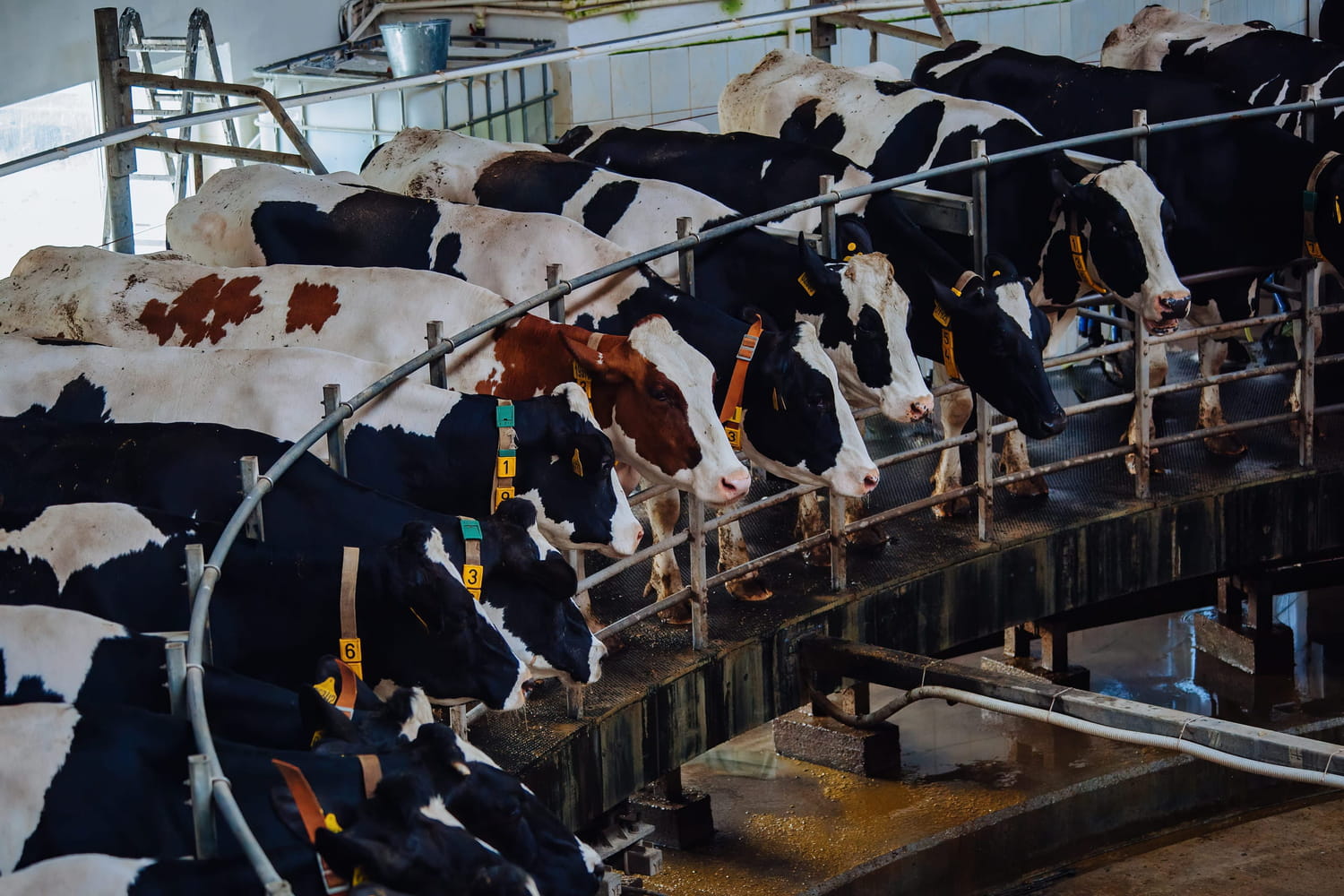
A new international study calls into question everything we thought we knew about animal pain in intensive farming systems.
We have known it for many years now: the intensive breeding system is a real nightmare for animals. We have all seen one of these videos, often filmed by associations, and showing the living conditions of chickens, rabbits, pigs, sheep, cows or even fish raised for human consumption. Overcrowded cages, more than questionable hygiene, and above all injured, stressed, terrified animals… whose suffering is very difficult to deny. And although there are veterinary protocols put in place by the government – not always respected, unfortunately – a new scientific report calls into question all our beliefs about animal pain.
This vast international study, published at the end of March 2026, mobilized researchers from six major institutions such as the universities of Reading or Bristol in the United Kingdom, or the famous New York University in the United States. A collective work which compiles decades of work combining neuroscience, veterinary medicine and behavioral sciences, for a unanimous observation: the suffering of animals in intensive breeding is much worse than we thought, and has therefore been “systematically underestimated” in veterinary protocols and regulatory standards.
The study thus reveals that the pain is not fixed, but can be modulated depending on the environment: a broken leg will be much more painful for a hen raised in a battery than for a hen “free” to move. Intensive farming not only creates suffering, it distorts it and makes it stronger by blocking the natural painkillers that animals produce. Thanks to movements, social interactions, exploration or even sleep, their body secretes analgesics and hormones which prevent (in part) painful signals from reaching the brain. But in a confined space, animals perform almost none of these activities. The worst thing is that intensive breeding not only removes these barriers to pain: it also activates mechanisms that make it worse.
These conditions often trigger chronic stress and hypersensitization of the nervous system, amplifying the perception of pain and extending the time it takes for injuries to heal. Animals suffer more, for longer, and heal less well. As a result, the suffering continues “beyond what the pathology would normally cause” and the effects can thus last a lifetime, and even be transmitted from generation to generation. In short, “several factors act in synergy” to create a system where pain is self-reinforcing: this is what researchers now call the “Pain Echo Chamber”.
We thus discover that the ethical problem already posed by intensive breeding systems is more serious than we estimated: pain is not only present, it is biologically modified. This is why academics are questioning all animal welfare assessment criteria and the resulting protocols. Because currently, a cage injury and an outdoor injury get the same score. This new study therefore proves that these results are completely misleading because “pain does not result solely from tissue damage, but can be strongly influenced by the environmental context.”