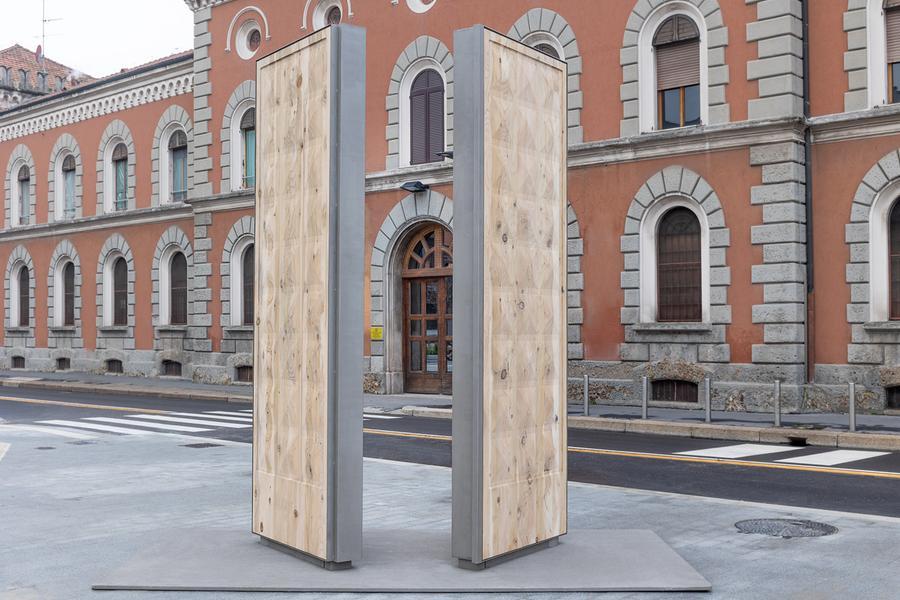






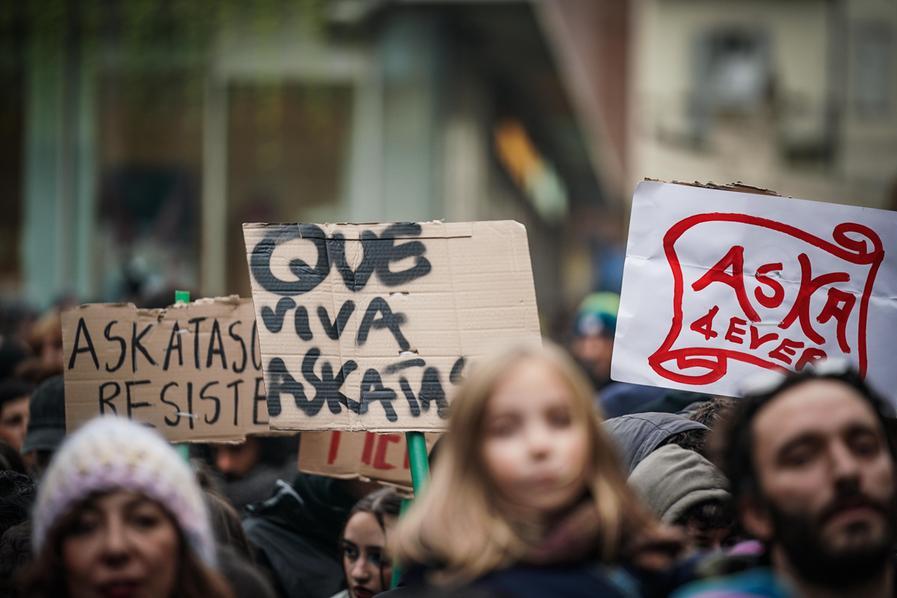
The building occupied by the Askatasuna social center in via Regina 47 in Turin dates back to 1880. It originally housed the Reynero nursery school, the forerunner of the current nursery schoolsthen merged with Royal Decree of 23 March 1924, n. 522, with the Association of Ladies of Charity of Santa Giulia in Vanchiglia, giving life to the Opera Pia Reynero, an organization which over time would bring together various charitable institutions. It later became the property of the Municipality, as the building had an adjacent courtyard with the municipal nursery and was abandoned in 1981.
THE EMPLOYMENT
Fifteen years later, on 15 October 1996, the building was occupied by around sixty self-employed workers. The building in Corso Regina Margherita became the headquarters of the Askatasuna Social Centre. The name borrowed from the Basque language (Euskara) means “Freedom” and is borrowed from the Basque independence movementsin Italy it is synonymous with the social center of Turin as Leoncavallo was with that of Milan. Askatasuna became a self-managed center but not isolated from the neighborhood with which it maintained close contact, in dialogue with the student collectives of the new Palazzo, home of the humanities faculties. The prevailing themes are the right to study, work, home and initiatives aimed at children which were still active in recent days.
THE TWO SOULS OF ASKATASUNA
Askatasuna has always had two souls, one social and one angry, the first works with the neighborhood and collaborates on solidarity initiatives, the other shows the angry side, which becomes evident in the hot moments of the sometimes violent anti-TAV protests: 26 activists end up on trial in Turin, the first instance ended in the first instance with the most serious charge, criminal association, being dropped, but with various sentences all around five years’ imprisonment for individual episodes.
THE PACT WITH THE MUNICIPALITY 2024
On 30 January 2024, a resolution by the Municipality of Turin lays the foundations for a co-development pact, to ensure the center survives and at the same time reconcile it with the city, isolating the violent: the pact, which finds favor with those who believe that dialogue is the key to managing social tensions, including Don Ciotti’s Abele Group, is aimed at making the building safe, provides for respect for constitutional values and the banning of any form of violence, as well as the possibility of carry out social activities on the ground floor, with a series of clauses, including the ban on using the other three floors, which are unusable.
THE DROP THAT OVERFLOWED
The pact renewed last March ended on 18 December, when the police, during searches linked to the investigation into the attacks on the large repair shops, the Leonardo headquarters in Corso Francia and the La Stampa editorial office in Via Lugaro, which took place during pro-Palestine demonstrations in recent months, found six activists in unusable parts of the centre, which they had promised not to go to. The pact with the institutions is violated and the eviction begins. It is the mayor of Turin Stefano Lo Russo, who had favored him, who announced that the co-management pact is over.
20 DECEMBER 2025
On December 20, the demonstration for Askatasuna that began with families ended in urban guerrilla warfare, the images reflect the contradiction of the souls of Askatasuna, the impression that in the minds of some, not all, that libertarian name (also part of the acronym of the initial nucleus of Eta) alludes to an unlimited freedom that goes beyond the constitutional perimeter. On December 21st the Vanchiglia neighborhood of Turin woke up “armoured”: “Trucks closing the streets”, says those who live just a block from Askatasuna, between the tip of the Mole, the Po and Palazzo Reale, and are old enough to have seen the whole story, “even exaggerated: it is true that Askatasuna is no longer considered among the moderate social centres, but militarization around Christmas is not good for the neighbourhood”.
THE ANALYSIS OF THE AFTER DAY
«The City of Turin», is the bitter reflection of Giancarlo Caselli and Vittorio Barosio in La Stampa of 20 December, «has tried in these two years to “overlook” these numerous and serious violations, so as not to blow up the Pact. But the attack on November 28 on the editorial office of La Stampa was so violent, aberrant and dangerous that it no longer allowed any margin for tolerance. And it is this episode which, combined with all the previous events, has now made the eviction inevitable. With it, the red line beyond which the state body responsible for public safety could not fail to intervene was crossed. Whose fault is it? Certainly of the followers of Askatasuna who in recent years, taking advantage of every opportunity, have continued to commit acts of violence. But the fault also lies with the guarantors, who evidently did not fulfill their surveillance task: neither on the fact that the upper floors of the building remained empty, nor on the activity that took place in the building itself and which had as its object the planning of illicit initiatives”.