


They have passed three years since the explosion in the European media of the controversial Qatargate investigation which first shook the European Parliament and which is now shaking the Belgian judicial system, due to methods and leaks which have also ended up under investigation.
Judicial outcomes still seem distant, the Belgian federal prosecutor’s office has made it known that “there is still a lot of work to do”. While it is difficult to make time predictions in a penal system in which the investigative process covered by secrecy exists in the preliminary investigation phase without time limits for indictment or dismissal, just as the terms of precautionary custody do not.
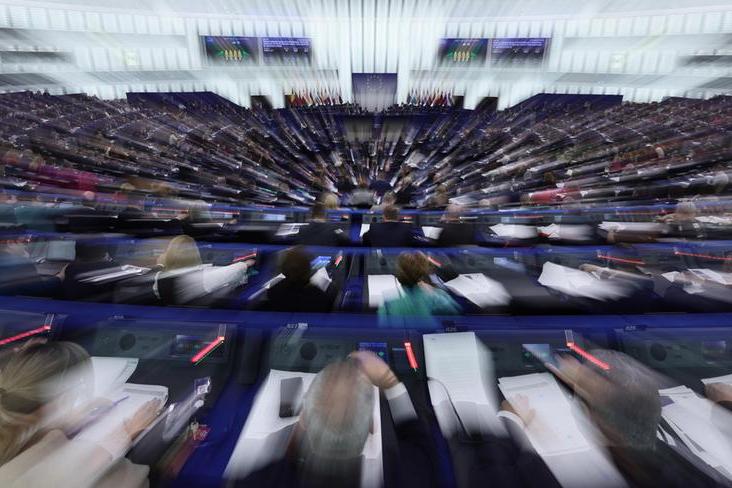
After months of silence, the investigation returned to the news in December 2025 because the European Parliament voted on the request for the revocation of parliamentary immunity for the Italian deputies Alessandra Moretti (granted) and for Elisabetta Gualmini (denied), self-suspended by the Socialists & Democrats group.
And in the meantime, in three years, raising legitimate doubts about the conduct of the investigations, the case seems to have become so intricate that it has lost the thread. Let’s see briefly how it has gone so far.
What is the Qatargate accusation and why is it called that
It all starts on December 9, 2022, with a raid by the Belgian police. In just a few days, photos of suitcases full of money went around the world: according to investigators, they were the result of an alleged corruption network between Brussels, Doha and Rabat.
Hence the media name of Qatargate, based on Watergate, the American father of all scandals in English, counterpart of Tangentopoli and epigones in Italian. The main suspects are Eva Kaili, Greek, former vice-president of the EU Parliament, her partner and MEP councilor Francesco Giorgi and the former PD MEP Antonio Panzeri, accused of being the top of the network.
The investigation opened in July 2022 starts from hypotheses of money laundering, criminal association and corruption, according to which people within the European Parliament were unduly paid to influence the decisions of the EU Parliament in favor of Qatar and Morocco. Kaili is deprived of parliamentary immunity and undergoes harsh precautionary custody, Panzeri ends up under house arrest in exchange for willingness to collaborate. In January 2023 Panzeri negotiated a plea, pleading guilty, and was then sued by the co-defendants in Milan for slander.
Because there is a risk of the boomerang effect
In June 2023, the investigating judge of the Brussels court, Michael Claise, in charge of the investigation, steps back from the case due to a conflict of interest linked to his son, preventing the recusal. In February 2025 Aurélie Déjaiffe, who had taken over from him, also leaves Qatargate, obtaining a transfer to the Brussels Court of Appeal and ownership passes to Pascale Monteiro Berreto.
But in the meantime, Claise’s step backwards has begun to undermine confidence in the foundations of the initial investigation, so much so that a few months later, another strand of Qatargate begins at the Belgian Federal Prosecutor’s Office – formally parallel but in fact on a collision course with the first – triggered by the suspects who denounce violations of the secrecy of the investigation, of parliamentary immunity and leaks of information, as well as “Police State” methods on Kaili’s part.
The new investigation touches the heart of the investigative apparatus and leads to the arrest and removal of Hugues Tasiaux, director of the Belgian Anti-Corruption Office (OCRC), which the Prosecutor accuses, thanks to the analysis of his digital devices, of violation of secrecy and abusive access to databases, for having forwarded information reserved to the two Belgian newspapers in advance of the investigative documents KnacFlemish, e Le Soir French who made the scoop on the investigation. Among the documents under scrutiny is also a message dated 28 November 2022, therefore preceding the arrests and searches, regarding a meeting with the press and possible involvement of the secret services, which is not reported in the official archives.
Shadows of suspicion that are added to those on the ways in which admissions of guilt were reached and which concern in particular the reliability of Panzeri’s statements.

What can happen to these two opposing investigations
Now the two distinct procedures, indirectly, intersect in some way because the material against Tasieux, – which could disqualify the real and presumed evidence acquired from the investigative work, due to procedural defects or otherwise, – is being examined by the judges of the Prosecutor’s Chamber who, according to the procedure in force, act as a robust filter to the work of the investigating judge and who will have to decide whether Qatargate deserves to lead to a trial or not.
There is talk of a decision that should arrive in February-March, barring postponements.
It is easy to predict that, however it ends, the so-called Qatargate will go down in history as a controversial judicial case, costly both for the image of the European Parliament and for the Belgian investigative system.