




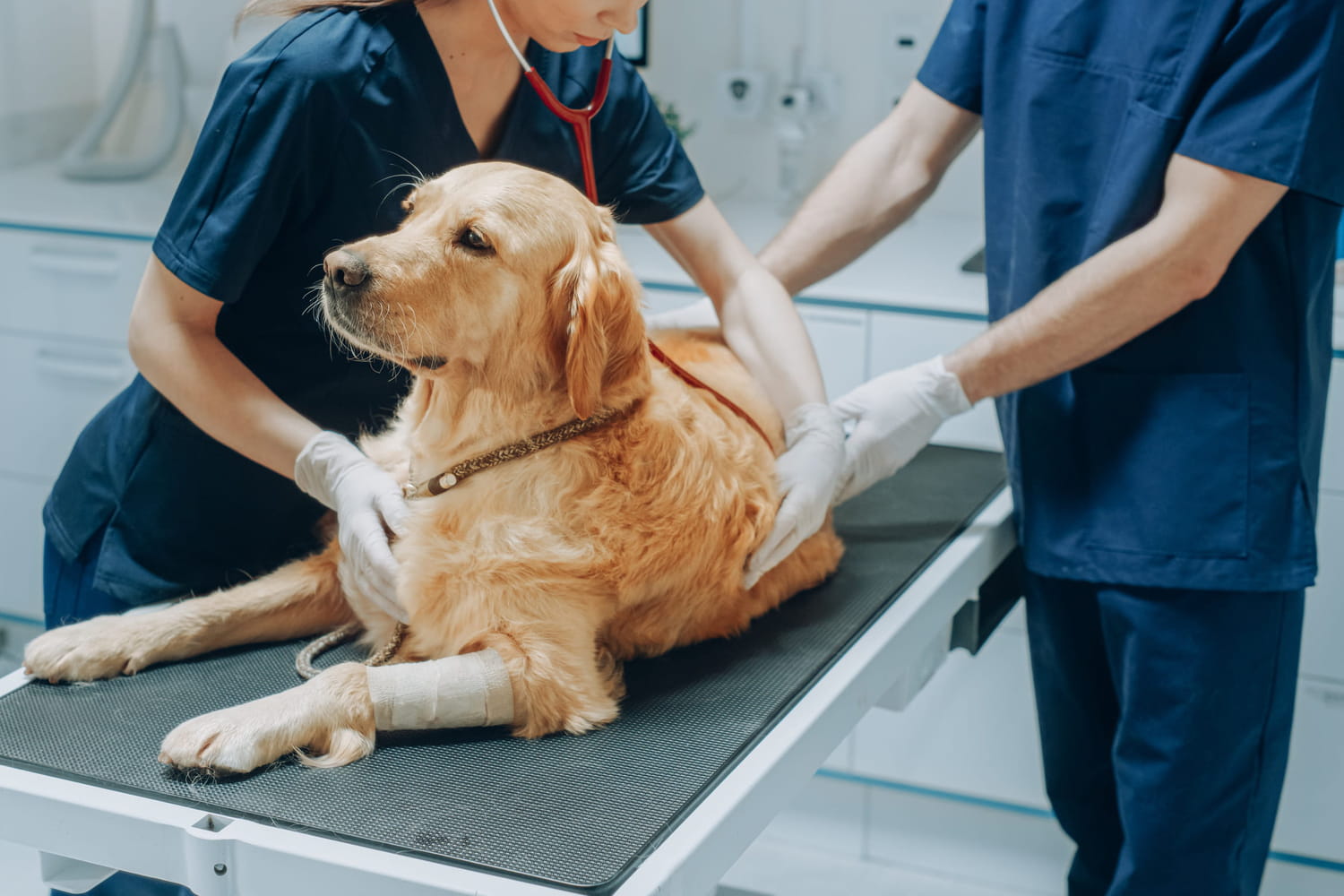
Do you find that your veterinarian’s bill has exploded in recent years? This is no coincidence: behind the doors of the offices, a discreet revolution is underway, changing the rules of the game without your knowledge.
943 euros is the average amount that pet owners spend each year. Between food, care and hygiene products, accessories and toys, or even services such as daycare, education or grooming… The budget can quickly climb when it comes to taking care of a four-legged companion. And that’s without counting veterinary costs, which represent the second largest expense after food: 145 euros per year on average, an amount that continues to increase. According to the insurer Fidanimo, a dog consults the veterinarian on average 23 times during its life and a cat, 29 times. But of course, for a sick animal or one at the end of its life, which requires more daily care, medication, or serious medical procedures, this figure can very quickly climb… as well as the expenses that go with it. The cost of an open heart operation, for example, can reach 30,000 euros.
Obviously, faced with this reality, the budget is sometimes a real obstacle when adopting a dog or a cat. It’s a fact: today, having a pet has become a luxury. But how come veterinary costs increase so much from year to year? What is the real reason behind this price surge? The World investigated behind the scenes of veterinary clinics, a very lucrative business that attracts investors. Indeed, in recent years, several multinationals have decided to put their eggs in the veterinary medicine basket. And this has direct consequences on the wallets of pet owners.
In 2025, the Competition Authority noted “an overall increase in healthcare prices”and mainly at “veterinarians who have joined a corporate network”. Yes, after a buyout, large groups decide, for the most part, to invest in renovations or in particularly expensive new equipment… which must then be made profitable. It must be said that an MRI machine alone costs around 500,000 euros. If technological progress is obviously laudable, the risk is to “want to amortize the material by multiplying the actions”, as reported by the National Council of the Order of Veterinarians. Practitioners lose their independence, and sometimes, their decision-making power. Some are pushed to perform more procedures (especially the more expensive ones), where, from a strictly medical perspective, they might not have recommended them. A commercial approach that relies “on algorithms and an accumulation of expensive exams” rather than on the pure “know-how”as professionals denounce.
“I left my establishment when it was sold to a group. The financiers impose a logic which can lead to excesses”testifies a veterinarian from Corrèze. “We should not become employees: a veterinarian must remain fully responsible for his actions and decisions”adds a teacher-researcher at the National Veterinary School of Alfort. In addition to the sometimes unnecessary services, another practitioner deplores a “very real commercial pressure” on the part of the shareholder group, to increase prices and choose more expensive suppliers… who often belong to the company itself.
Among these large multinationals, some are very well known to the general public, who are nevertheless unaware of their share of responsibility in the increase in veterinary prices. For example, in addition to the famous M&M’s, or Snickers, the Mars group owns the Royal Canin, Sheba and Whiskas kibbles… as well as the AniCura network, which owns 500 veterinary clinics in Europe. For its part, Nestlé also owns 20% of IVC Evidensia, France’s leading veterinary group. And these are just examples among many others, since more than one veterinarian in five now practices in a group. In 2028, they will be one in two.
Like many others, the veterinary care industry has fallen into the hands of powerful companies, which impose their choices and therefore influence the daily lives of veterinarians and their patients. But it’s a vicious circle: independent establishments have no other choice but to adapt in order to face competition. And therefore, to increase their prices, too.