Anyone who tried to book a taxi between Monday evening and Wednesday afternoon at Turin or Bolognawill certainly have encountered great difficulties, due to…. a data center in Milan. But how can a malfunction of a building located in Milan block taxi bookings in other large Italian cities?
The answer lies in the type of building: a data center; but what are data centers and how do they work?
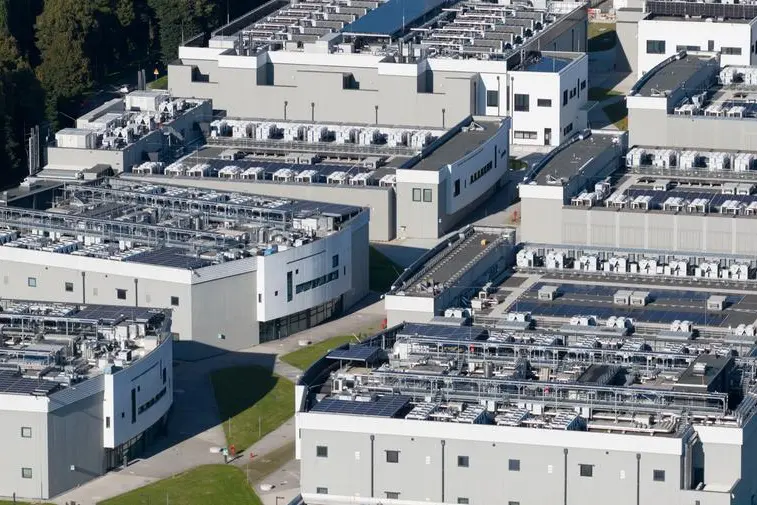
Data centers are the structures that host the servers and systems that store, process and allow the circulation of data for applications, cloud services, sites and artificial intelligence. In practice, they are the physical infrastructure behind any digital service we use in everyday life.
In Italy the sector is rapidly expanding: there are already around 200 data centers in our territory, to which another 80 are about to be added, currently under construction. A decidedly significant part of the development of data centers is concentrated in the Milan area, for a series of reasons: presence of vast former disused industrial areas to be reconverted – such as the former Olivetti area, in Pregnana Milanese, where three data centers will be built – and the convenience for small municipalities, whose budget could be upset – positively – by the development of this sector.

There is a “but” in this matter, which is anything but risk-free. In fact, the sector is experiencing vertical growth, which is all too rapid and, consequently, poorly regulated. As highlighted by a report fromUniversity of Padua created with the contribution of WWF Italyand requests for electricity connection already submitted to Terna, the network manager, add up today 82.6 gigawatts: a figure significantly higher than realistic needs. In fact, between 2023 and 2025 only 68% of the investments announced in the sector were actually implemented. At this point the most concrete risk is that a bubble will be created, where municipalities and territories fight for resources and funds on projects which, however, may never materialize. The issue, according to the study, is not so much whether Italy will have enough energy to power the data centers — the most realistic scenario leads them to account for only 4% of national electricity consumption by 2035 — as much as the lack of clear rules: today there is still no national law that establishes a standard procedure for authorizing them, nor binding criteria on where to build them and with which energy sources to power them.
This combination – a sector that is growing exponentially + the absence of a solid regulatory system – makes the case of the Bologna and Turin taxis something much deeper than a technical disservice. The two cooperatives, COTABO and Taxi Torino both rely on Taxitronic, one of the main suppliers of taxi software in Europe, which in turn manages its data through Vodafone: and it was precisely in Vodafone’s Milan data center that, on Monday evening, the fault occurred which sent both the apps and the telephone booking systems of both cities into a tailspin. It took almost two days – between protests on social media and people left on foot at night, perhaps heading to the airport – before everything started working again. An episode that shows well how, now, even apparently “local” and non-digital services such as calling a taxi actually depend on a distant, concentrated and – as this story demonstrates – far from infallible physical infrastructure.