




Luke 1,46-55 – Feria proper of 22 December
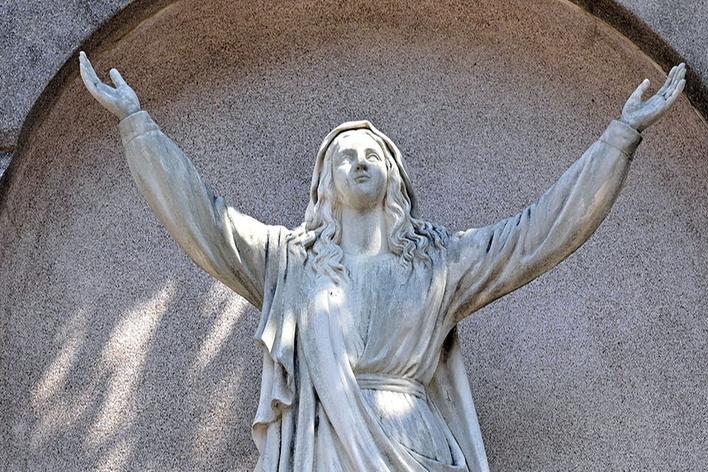
In Mary’s Magnificat there is all the surprise of God who enters history without making a noise, without knocking loudly, but choosing what is small, hiddenapparently irrelevant. It’s as if Mary were telling us: “Look what happens when you leave space for God. You don’t have to become great: it’s He who makes things great within you.” And this is precisely the heart of the Christmas Novena: letting ourselves be reached by a God who does not demand, but asks to be accepted.
Mary sings not because her life has become easy, but because she has discovered that God is faithful. God’s gaze, placed on his humility, becomes the point from which everything is transformed. And perhaps we too, in these days preceding Christmas, should ask ourselves: where God’s gaze rests in our life? What little things, what fragilities, what silently held expectations does he want to visit? The Magnificat is not the song of those who have solved the problems, but of those who have understood Who is going through them with them.
This is why Mary dares to announce that the powerful will be overthrown and the humble raised: not because the world suddenly changes structure, but because the heart, when it allows itself to be touched by grace, sees everything in a new way. God’s omnipotence does not crush, it raises. It doesn’t impose, it frees. As Christmas approaches, the Lord asks us to learn this gaze: to see God’s work in the cracks, in the silences, in the long waits, in the contradictions of our history. The magnificat asks us if we know how to reread our history as Mary does, realizing that God always has a point even when he doesn’t seem to be there.
Only this awareness can found a new joy, because if He is always there then we can experience everything, even what is deformed, strange, difficult, darkand thus feel an unexpected gratitude.