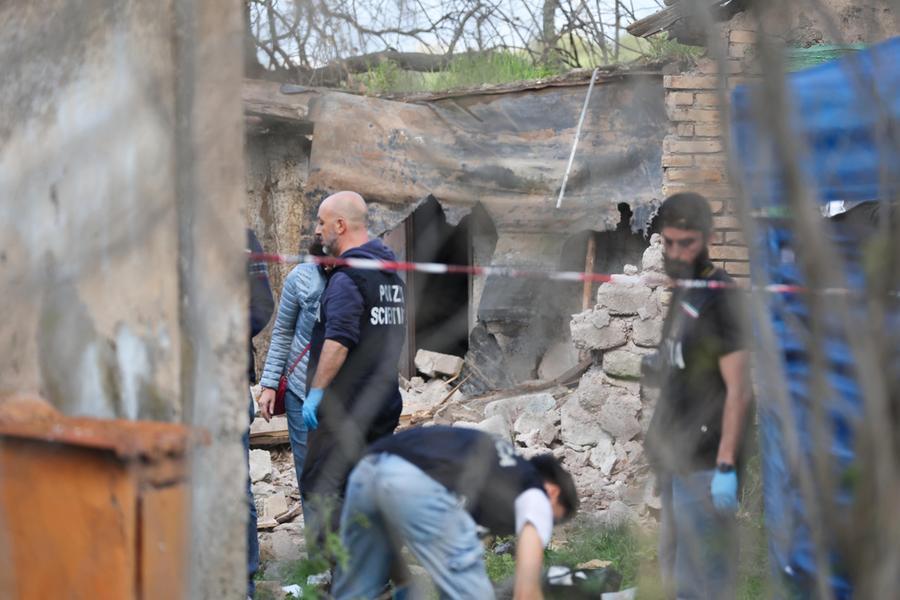





Sara Ardizzone and Alessandro Mercogliano, a couple in life, who died in the explosion of the abandoned farmhouse in Rome, are well-known names in the area of anarcho-insurrectionism, attributable to the Cospito group. Mercogliano di Cospito was also a co-defendant in the Scripta manent trial in Turin, convicted at first instance and acquitted on appeal of the charge of association with the aim of terrorism. The hypothesis of the investigations, based on elements found at the site of the explosion, is that the two were intent on making a bomb and that the fact can be linked to the sabotage actions on the high-speed train during the Olympics and to the calls for mobilization around the Cospito case, which has already sparked more or less heated actions in the pastin view of the expiration of the terms of its 41 bis on May 2nd.
WHO IS ALFREDO COSPITO
Alfredo Cospito, 59 years old, detained in the high security Bancali prison in Sassari, was sentenced to 10 years and eight months for the knee-jerk attack on Ansaldo Nucleare manager Roberto Adinolfi which took place in Genoa on 7 May 2012. At the trial he denied having acted – with his co-defendant Nicola Gai also convicted – within the framework of an organization but claimed an anarchist origin: «We are anarchists and nihilists», he stated in the courtroom, attracting the support of the anarchists present who applauded and verbally attacked the magistrates, «we acted alone and we decided this after the Fukushima nuclear disaster. No one else participated in our project.” The judges who condemned him with a final sentence for that wounding as “promoter of the association with terrorism purposes called Fai/Fri”, acronyms for Informal Anarchist Federation/International Revolutionary Front, had a different opinion”. (The acronym FAI of the informal anarchist Federation we are talking about should not be confused with that of the Italian Anarchist Federation, the acronym is the same but they are two different groups).
FOSSANO AND THE CONTESTATION OF TERRORISM
Cospito’s situation became complicated when in 2016, as part of an investigation by the Turin Prosecutor’s Office relating to around fifty actions that occurred at different times and reported to the FAI, he was accused of the explosion of two bombs that occurred in 2006 at the Allievi school in Fossano. Crime for which the Turin Court of Appeal sentenced him to 20 years, accusing him of being the leader of a terrorist organisation.
The attack had caused neither deaths nor injuries but article 422 of the Criminal Code provides that the crime of massacre is already established when someone, with the aim of killing, carries out acts that endanger public safety. If there are victims the expected punishment is life imprisonment, in other cases the minimum is 15 years. According to the magistrates, in this case the time elapsed between the two explosions would have been suitable for the second to have hit those who had intervened to investigate following the first explosion and that only this case would have avoided deaths or injuries.
When the trial ended at the Supreme Court, the Supreme Court held that the purpose of those acts was not to kill or injure but rather to “attack the security of the State” and that therefore the crime to be contested should be that provided for in Article 285 of the Penal Code, a more serious crime of massacre because it had subversive purposes, punished with life imprisonment. Following that decision at the trial which returned to the Court of Appeal for the sole redetermination of the sentence, Cospito could have also risked a mandatory life sentence, while in the end following a ruling from the Constitutional Court hearing the case, in May 2023 the sentence was redetermined at the 23 years that Cospito is serving.
41 BIS FOR 4 YEARS FROM 2022
In the meantime, however, in early May 2022, at the request of the Turin DDA, Cospito had been transferred under the 41 bis for 4 years with a decree of the then Minister of Justice Marta Cartabia, especially for «numerous messages that, during his detention, he sent to recipients outside the prison system; these are documents intended for their anarchist comrades, explicitly invited to continue the fight against domination, particularly with violent means considered more effective”.
41 bis is the regime which, improperly defined as “hard prison”, was born after the 1992 massacres, to prevent those detained first for mafia crimes and then also for terrorism, from having relations with their organizations and continuing to control them from prison. His methods consist of strong limitations in contact with the outside world and with other prisoners.
Cospito was criticized for the fact that on «area sites», i.e. frequented by an anarchist audience, «he continued to forcefully propose revolutionary themes, encouraging those most predisposed to violent actions to commit attacks». The defenders argued that it would be enough to tighten censorship on correspondence. The supervisory court endorsed Marta Cartabia’s interpretation, there are in fact precedents of this type of application also to exponents of the new Red Brigades and from the reasons it is clear that external propaganda and solidarity actions by anarchist groups contribute to maintaining this regime.
The combination of the risk of life imprisonment and the application of 41 bis led Cospito to proclaim a hunger strike between 2022 and 2023 which lasted several months.
On March 24, 2023, the Supreme Court confirmed article 41 bis, against which a request for revocation to the Minister of Justice had already failedconsidering the motivation adequate to justify the need for the detention regime aimed at limiting contacts with the outside as much as possible.
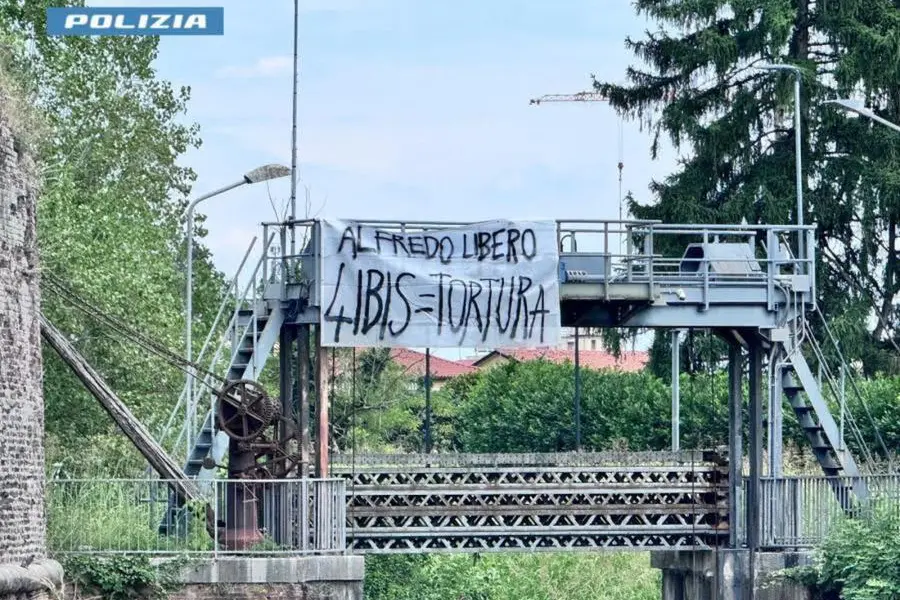
WHAT HAPPENS ON MAY 2ND
The four-year deadline set for the 41 bis regime expires next May 2nd, against which an appeal to the ECHR had also given a negative outcome, it will be up to the Minister of Justice to decide whether or not to renew the “41 bis” for another two years. Attention was already high due to calls for mobilization within the so-called anarcho-insurrectionist galaxy in view of that deadline, also because in the past, especially in 2023, while awaiting the decision on Cospito’s 41 bis, more or less violent actions, incendiary acts in Turin, and above all actions against various Italian diplomatic offices abroad had multiplied. Now the case of Rome has further raised the attention of the institutions.