
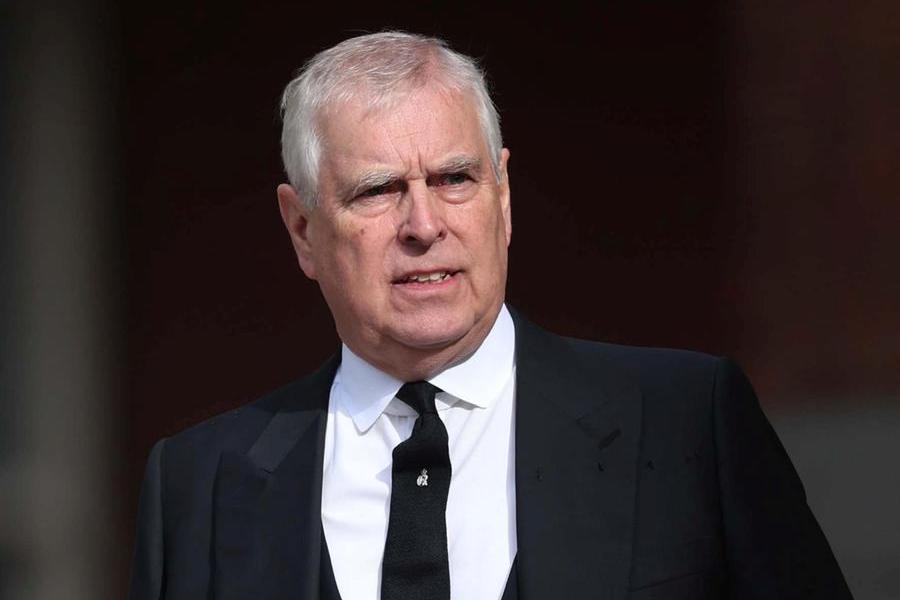



The former prince Andrea Mountbatten‑Windsor was arrested Thursday morning at his home in Norfolk, England, on charges of “unlawful conduct in public office.” British authorities have so far provided no specific details about the alleged violations, but Investigative sources indicate that police were investigating the possible sharing of confidential government documents with financier Jeffrey Epstein, thus linking the current investigation not only to his personal life, but also to his activity as a trade emissary for the government. The arrest of a brother of the current King Charles III is an unprecedented event in modern British history, and the monarch himself declared that justice must follow its course, ensuring full support and collaboration with the authorities.
Who is
Andrea, born on 19 February 1960, is the second son of Queen Elizabeth II and Prince Philip. For many years he was one of the most visible figures of the British royal family, with military posts, institutional roles and diplomatic appointments. Among these, the role of special representative for international trade of the United Kingdom stands out, which led him to interact with governments and global institutions.
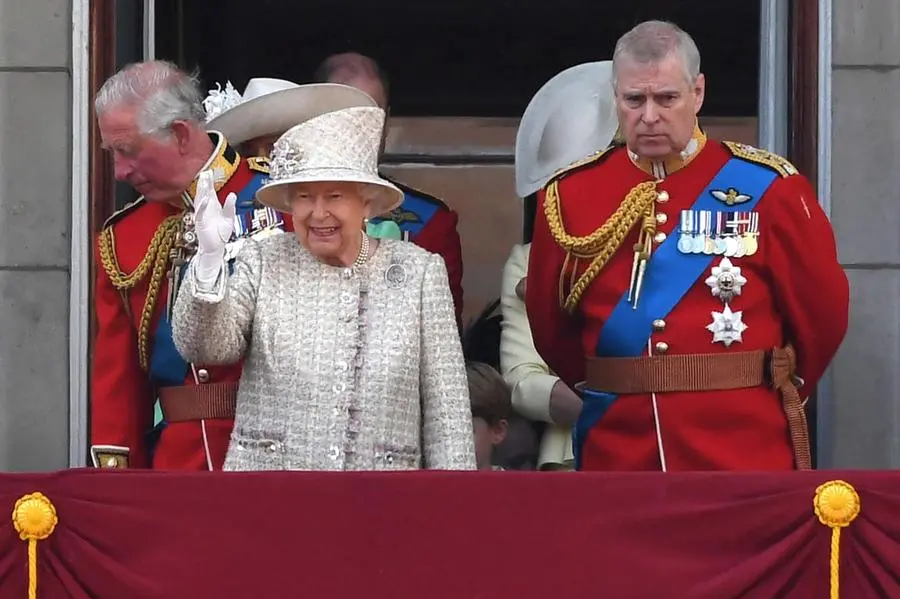
Queen Elizabeth II, who died in 2022, with her son Andrew (right) and King Charles III (left) during the Trooping of the Color parade in 2019
(EPA)
The relationship with Epstein and the allegations of abuse
Andrea’s personal and public story was profoundly marked by her connection with the American financier Jeffrey Epstein, known for having been convicted of sexual crimes against minors and who died in 2019 in prison in Manhattan while he was detained awaiting trial on new charges. According to reconstructions by authoritative sources, the two met in the late 1990s and maintained a long-standing relationship, with Epstein also present in social contexts and, in some cases, photographed together with Andrea on public occasions.
It was precisely this bond that brought dramatic revelations to light: in 2021 Virginia Giuffre, one of Epstein’s main accusers, accused Andrea of forcing her into sexual intercourse on several occasions when she was a minor. Giuffre’s accusations, made public and amplified by the international media, marked one of the deepest crises for the British monarchy in recent years. Andrea has always strongly rejected these accusations. In 2022 Giuffre and Andrea reached an out-of-court legal agreement which allowed the former prince to avoid trial in exchange for financial compensation paid to Giuffre and his association against sexual exploitation. Before dying last April at the age of 41, Virginia Giuffre published a posthumous autobiography in which she recounts in detail the way in which she was lured and the abuse she suffered, making the picture of the story even more painful and complex.
New accusations and ongoing investigation
In addition to Giuffre’s statements, another allegation of sexual exploitation against Andrea by a woman recently emerged, the details of which have not been made public. According to her lawyer, the facts date back to 2010 and the woman was sent by Epstein to the United Kingdom to have sexual relations with the prince at his residence outside London. Even in this case, Andrea declared himself innocent.
Alongside these criminal and civil charges, the current British investigation now shines a different dimension: the possible misuse of confidential information during his time as a sales representative. The hypothesis of having passed sensitive government documents to Epstein opens a completely new front of investigation, with potentially serious implications for public order and trust in institutions.
The relationship with the monarchy
The consequences for the Royal House have been profound and progressive. Intense media criticism and image damage led to Andrea’s withdrawal from active public functions in 2019, following an interview given to the BBC which was perceived as a sensational communication error. In 2022, Queen Elizabeth II stripped him of various military titles and honors, marking a clear separation between the institution and Andrew’s personal behavior. Last year, in a step of great institutional importance, King Charles III completed the revocation of the title of prince and the request that Andrew abandon his official residence, an unprecedented decision in the recent history of the British monarchy. This move was interpreted by international observers as an attempt to protect the image and stability of the institution in the face of scandals capable of directly involving a member so close to the sovereign.
The public portrait of Andrea Mountbatten-Windsor is that of a man whose trajectory, from the upper echelons of the monarchy to the halls of an unprecedented judicial investigation, reflects one of the most delicate and complex crises the British Crown has faced in modern times.