






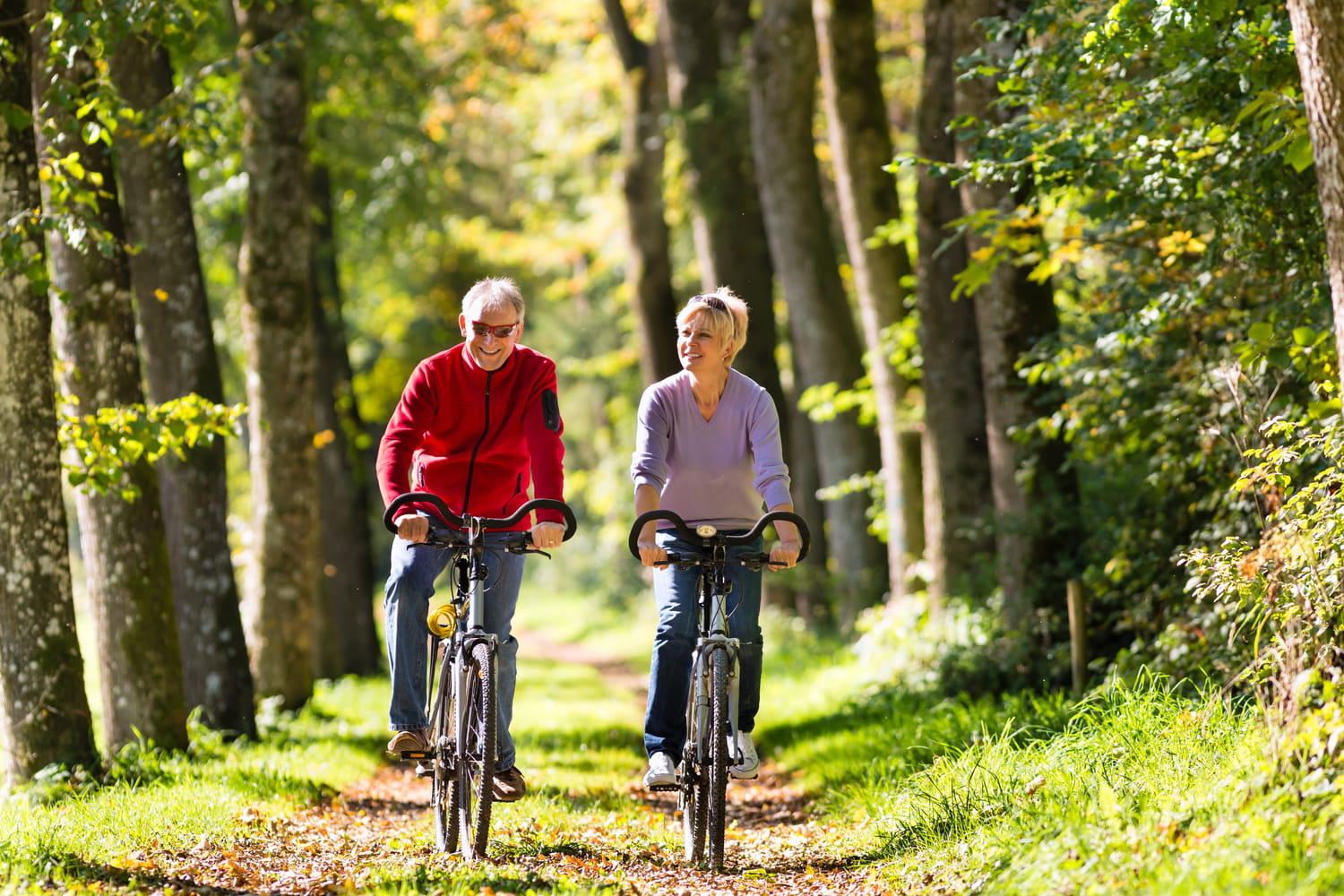
Even after years without practice, pedaling becomes almost instinctive again. This astonishing phenomenon can be explained by a very particular memory, much more resistant than everyday memories.
If memory can alter over time, particularly during cognitive decline, certain things are immutable, such as knowing how to ride a bike. Getting back on a bike after years without practice and succeeding in pedaling almost instantly: this phenomenon, often summed up by the expression “it’s like cycling, you don’t forget it”, is in reality based on a very specific mechanism in the brain. Unlike a first name or an appointment that we can easily forget, cycling mobilizes a particularly resistant form of memory: procedural memory.
Not all of our memories work the same way, as an article in the science magazine Popular Science explains. Neuroscience distinguishes in particular the memory of facts and knowledge, that of personal memories, and that of gestures and know-how. It’s the latter that comes into play when learning to ride a bike. Once acquired, this skill no longer depends on conscious effort: it is automated. Pedaling, keeping your balance or turning the handlebars become integrated reflexes, which no longer require thought.
Contrary to what is sometimes called “muscle memory”, it is in reality specific areas of the brain that are involved, notably the cerebellum, which coordinates movements, and the basal ganglia, associated with automatisms. With repetition, neural connections strengthen and make these gestures more and more fluid. It is this process that explains why a person can get back on a bike after years without riding and quickly regain the feeling.
However, initial learning can be long and sometimes difficult, because it involves coordinating several functions at once: balance, orientation, movement. But once these circuits are properly installed, they become very stable over time. Researchers have also observed, in numerous studies in neuroscience, that procedural memory deteriorates much more slowly than memory for events or knowledge. In other words, even if you may feel a little clumsy at first after a long break, the basics remain there and come back quickly.
Although scientists have a lot of data on procedural memory, they rarely study cycling itself, because it is difficult to precisely analyze the brain activity of a person pedaling. They favor more controlled experiments in the laboratory, all of which show the central role of repetition in the lasting anchoring of gestures. Repeated learning helps consolidate neural circuits, making the skill accessible even after years without practice.
This ability doesn’t just apply to cycling. It also applies to other activities such as swimming, skiing or driving. It remains active throughout life and even allows you to learn new gestures as you age. It is a valuable asset for adapting to new situations or maintaining autonomy. In short, if we never really forget how to ride a bike, it is because our brain is designed to retain essential actions over the long term and transform them into solid automatisms.