



There is Italian, or rather Tuscan, blood in the American giant who challenged Trump and who asked for a dialogue with the Catholic Church to set rules and limits to artificial intelligence. The brothers Dario and Daniela Amodei, who together with Cristopher Olah founded Antrophic, continue to challenge Donald Trump. The American president is trying to expel them from federal contracts and the Pentagon has labeled them a “national risk”. But they remain steadfast in their belief: artificial intelligence must be “beneficial, honest and harmless”.
An ethical imperative which, to hear their words, has its roots in a childhood marked by Italian culture and the sacrifice of a father who emigrated from Tuscany to California.
Born and raised in San Francisco – Dario in 1983, Daniela in 1987 – the two brothers are the children of Riccardo Amodei and Elena Engel. He is a leather craftsman originally from Massa Marittima, in the province of Grosseto, who emigrated to the United States in the Seventies. She is a Jewish American project manager from Chicago, with a passion for libraries. A second generation family in all respects: Italian-American, working class, marked by the value of manual labor and attention to the least.

«In our family we worried about people in other parts of the world: we wondered if they had what we have», Daniela told Time magazine, which in 2024 included Anthropic among the 100 most influential companies in the world.

That attitude – which today leads them to refuse military orders and block the use of Claude for mass surveillance – is the result of an education in which the sense of responsibility towards the community came before profit. This is why they continued to resist, supported by their lawyers, when Donald Trump ordered Anthropic to be excluded from all public contracts.
It all started when the Department of Defense, renamed by the Administration “War Department” orders Anthropic to grant unlimited access to its Claude model for “all lawful uses”. The clause, in fact, would have allowed the military to employ AI to power fully autonomous drones and for mass surveillance programs on the American population.
For the CEO Dario Amodei that is a red line that cannot be crossed. “We cannot in good conscience agree,” he writes in an official note, reiterating that its models “should not be used for mass surveillance of American citizens or to develop autonomous weapons systems.”
Trump’s response is lightning fast. On February 27, on Truth Social, he thunders: «I order ALL federal agencies to IMMEDIATELY cease all use of Anthropic’s technology. We don’t need it, we don’t want it and we won’t do business with them anymore! The president’s anger fully affects the CEO, defined as a “left-wing lunatic”. The ban follows the designation of Anthropic as a “supply chain risk,” a sort of stigma usually reserved for suppliers of enemies of the United States.
The Amodei brothers respond through their lawyers that “no amount of intimidation by the War Department will change our position.” Their refusal to bend, at risk of losing a $200 million contract and access to the federal market, has transformed them into unexpected champions of digital freedom. And in court Trump lost. A federal judge in San Francisco overturned the president’s decision to exclude Antrophic from the contracts, calling it an “illegal retaliation” against companies’ freedom of expression.
Dario, 42 years old, CEO and co-founder, has an exceptional curriculum behind him: physics at Caltech and Stanford, a doctorate in biophysics at Princeton, then Google Brain, Baidu and OpenAI, where he was vice president of research. Daniela, 38 years old, president of Anthropic, comes from humanistic studies – a degree in English literature from the University of California – and experience as a member of Congressional staff and at Stripe before arriving at OpenAI.
In 2021, dissatisfied with OpenAI’s overly commercial drift, the two brothers left the company with about ten researchers and founded Anthropic. Objective: to build increasingly powerful but also more controllable, safe and transparent AI systems. Today their startup is valued at around $380 billion and their chatbot Claude is considered more accurate and reliable than ChatGPT, so much so that it has won the trust of Microsoft and the Emir of Qatar.
But their commitment is not limited to business. The company has launched initiatives such as Mythos Preview and Project Glasswing for global cybersecurity, and fights to ensure technological evolution remains at the service of humanity.
In many international articles, Dario and Daniela Amodei are described as «Italian-Americans» or «Americans of Italian origin». Their story can also be read as an example of how much migration can help in the development of the host country by drawing strength from its roots. The two brothers, in fact, have been able to transform their cultural heritage – attention to the community, craftsmanship, respect for human dignity – into a competitive advantage in the world of new technologies.
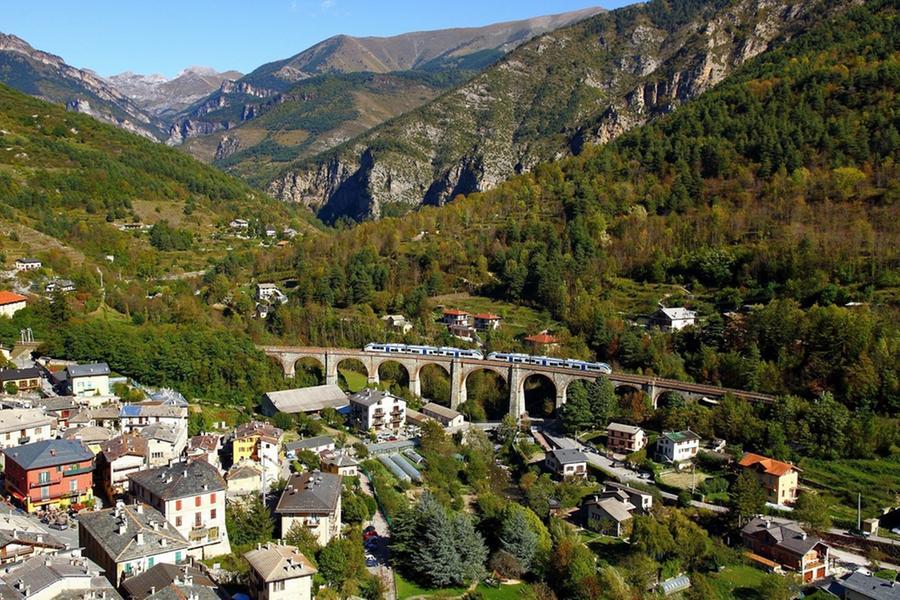
«Dario and Daniela Amodei, Riccardo’s children, are American citizens, but the name is not misleading: Italy and Massa Marittima are in their DNA», the Tuscan economic newspaper T24 wrote about them. And right in the Maremma village where his father worked Mayor Irene Marconi confessed: «In Massa Marittima we all had to become passionate about artificial intelligence. We are pleased that the name of our city is linked to two such important researchers.”
Once again the case of the Amodei demonstrates how Italy can be an incubator of talent even when those talents leave. The children of Italian emigrants – often forgotten by national policies even if they retain citizenship – bring with them an invaluable heritage: the ability to combine Italian artisanal “know-how” with the scalability and innovation of Silicon Valley.
As he pointed out Milano Finanza, “the two brothers deserve the highest recognition of the Italian State”, because “every day they reveal themselves to be authentic advocates of AI technology that is at the service of humanity and not against it”.
In a world where the race for artificial intelligence risks leaving ethics behind, Dario and Daniela Amodei represent a counter-current model: that of those who, starting from a “cardboard suitcase” and leather processing, have managed to write the rules of the future without ever forgetting the value of their roots.
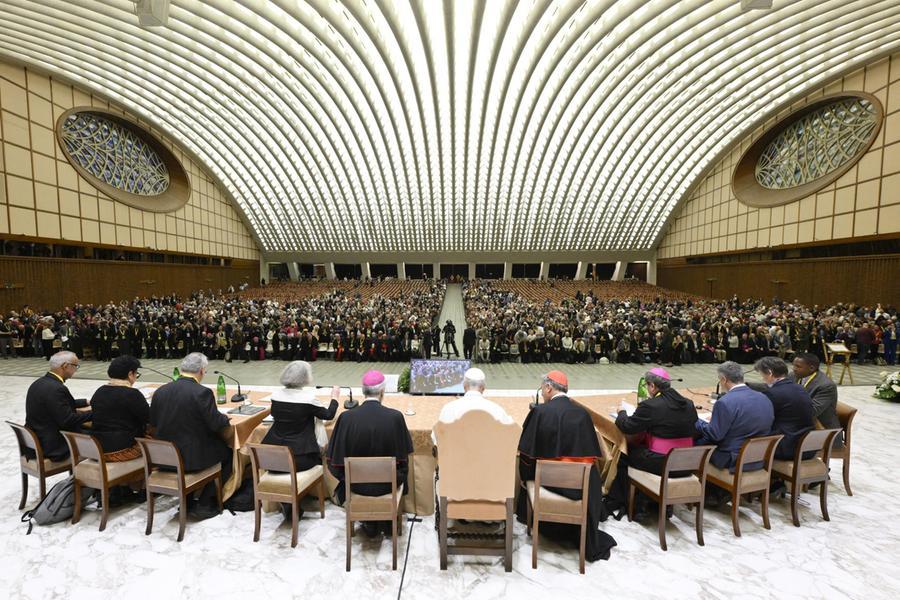
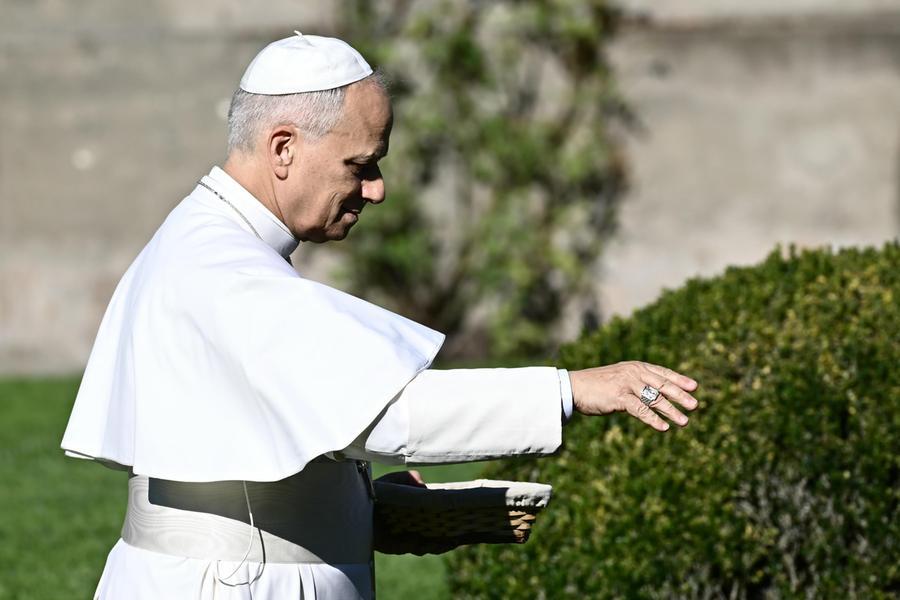
It is therefore not surprising that Antrophic wanted to ask for help from the Catholic Church and beyond. Speaking at the presentation of Pope Leo’s encyclical Magnifica Humanitas, Cristopher Olah, on behalf of the entire company, put the most burning issues on the table. First of all, the fact that AI risks replacing human work on a large scale, even if the profits and advantages will then be concentrated in a few rich nations. There is no mechanism to guarantee that the benefits are shared globally, while the Social Doctrine of the Church calls for development to concern all peoples. The risk of AI becoming ubiquitous and what this could mean for humans, families and the world. A discernment on the very structure of AI that even scientists and those who train it cannot fully understand. Olah spoke of mysterious and disturbing discoveries: structures similar to those of human neuroscience, evidence of introspection, internal states that functionally resemble joy, fear, pain and which go beyond what the producers themselves imagine.
This is why there is a need for collaboration between those who build the technology and those who, from the outside, can see its prospects and limits. And act for a regulation that places it at the service and not against humanity.