The data recently published by INPS on its activities are much more than the budget of a public body, although important and strategic, but constitute a true x-ray of Italy, read from the point of view of social protections and welfare interventions. And it is right to start from an initial positive, indisputable figure on overall employment in our country: over 24 million employed, “records” to finally be proud of, as well as the reduction in unemployment to 5%. In short, more work, for a growing number of people, and not just growth in financial income, or a pure increase in company turnover. Good news and a nice development model, a growth of Italy that gives more work to everyone.
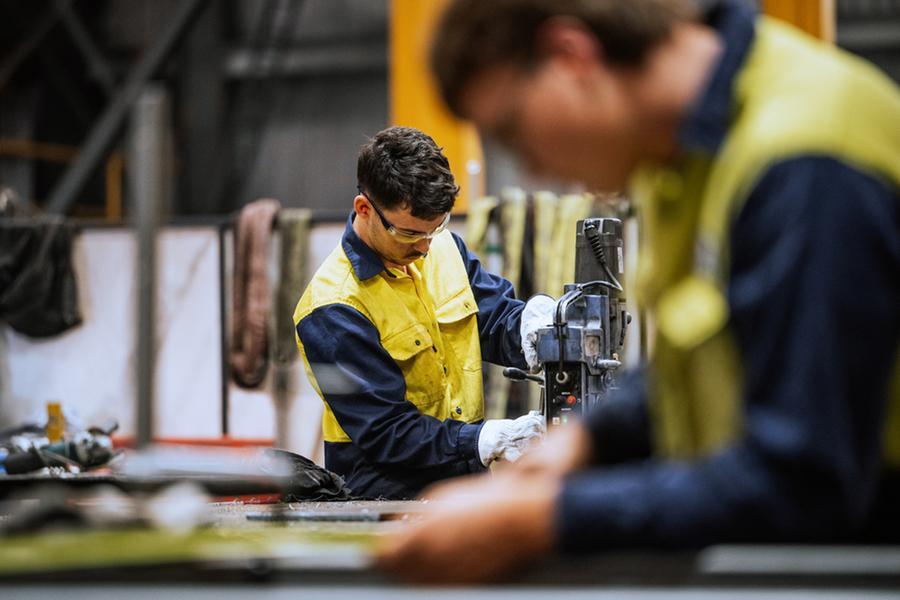
Of course, it is also right to remember some negative aspects, often crucial – and it is precisely the INPS data that allows us to say this; for example this job, for several people, is not always well paid, given that the average salary increase from 2019 to 2025 was 11%, but inflation exceeded 18%; thus, today the salary, although increased in terms of Euros received, has unfortunately remained lower in purchasing power. Furthermore, the continuing – and intolerable – gap between the earnings of men and women is confirmed, too penalized in current salaries (also due to maternity leave), and therefore also in future pensions.
Yet another element of the INPS data describes well the new Italy with which we have to deal, relative to the percentage of foreign workers: today they are one in seven, regular workers, with regular permits, employed in good standing, who pay taxes, who pay social security contributions, in short, full citizens, holders of rights, but precisely for this reason also capable of contributing to the common good. It is not only the athletics champions, increasingly mixed on the track, but with the Italian flag, who speak with the accents of our regions, to confirm that Italian society is built on the meeting of many histories and cultures; but it is also the “normal” workers, in the countryside, in the factories, in the social-health services, in the offices, who build an Italy that can remain proud of its genius and its specific identity, and which for this very reason can and must be capable of integration and collaboration.
INPS has also become “family friendly” in recent years, not so much and not only because it opens its offices to the families of its employees (last June, an interesting tradition to bring children closer to their parents’ work, at least for a day), but above all starting from a growing role in the provision of support: exemplary in this it is the Single and Universal Allowance for children, which reaches Italian families directly from INPS, outside the paycheck. It is a rational solution, to solve many operational problems, for example for those young couples of freelancers, who do not have a pay slip… but it has also become a new identity of the INPS, which is no longer the pension company, but has become the national welfare agency (at least with respect to monetary disbursements). AND an important “family portal” has been opened on the pages of the INPS website, where every citizen, with their own tax code, can know and access all the services currently available. An innovative action of transparency, simplification, de-bureaucratization, a testimony to how digital can become, over time, not a barrier, but a real support for many.

For this reason, the reflection on the birth rate of the INPS President, Giuseppe Fava, who underlined that to relaunch the birth rate, monetary support is certainly important, but alone it cannot make a difference: the services are much more effective (more places in nursery schools), family-work conciliation tools, smart working, to ensure that young couples can decide to bring a child into the world – and perhaps one more child.
In short: with the INPS data we understand where Italy is going, not only by looking at the monetary aspects or the growth of the Gross Domestic Product, but by counting the solidarity and support measures that Italy implements. Because money spent in solidarity makes a nation richer.