
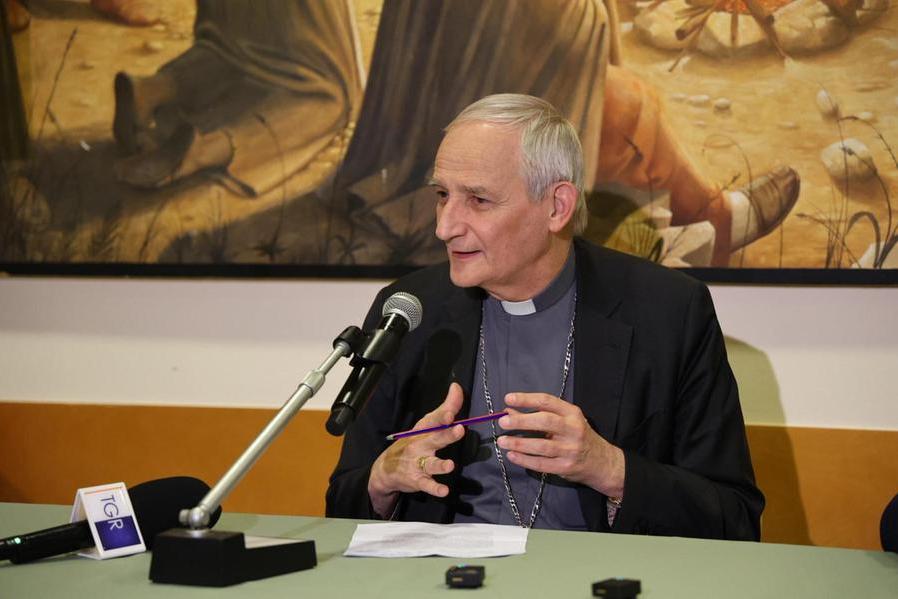




A Church called to be a credible sign of unity in a world marked by division, violence and fear; a community that rejects the logic of force and chooses the care of relationships, of the most fragile, of life always and in any case. It is the horizon traced by Cardinal Matteo Zuppi, archbishop of Bologna and president of the Italian Episcopal Conference, in the speech that opened the Permanent Council of Italian Bishops in Rome, ongoing until January 28th.
Antisemitism and memory
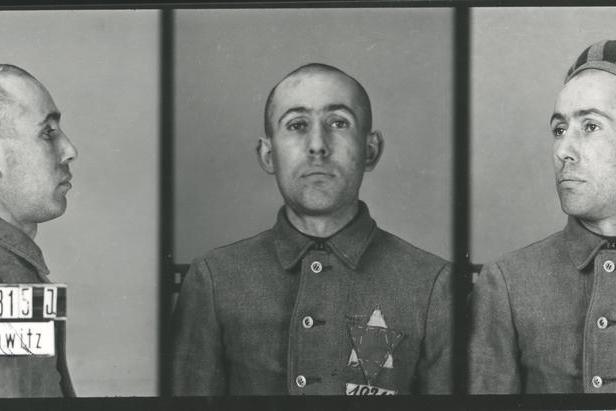
On the eve of Remembrance Day, Zuppi expressed the strong concern of the Italian Church for the re-emergence of anti-Semitism: «We are concerned about the development of anti-Semitic phenomena which has no justification given the dramatic problems of unacceptable violence in Gaza and the West Bank». Hence the unambiguous condemnation: «On the eve of Remembrance Day, the Italian Church profoundly condemns the resurgence of ignoble facts, while reiterating its closeness to all the Jewish communities of the country and renewing its contribution to combating such phenomena».
School and education
A significant passage of the speech was dedicated to education. Zuppi welcomed the budget law: «The recent 2026 budget law pays due attention to private schools», appreciating «the choice to increase ordinary funds and to introduce a school voucher in favor of students who attend first or second level private secondary school, limited to two years».
Catholic schools are “true educational centers in the area”, “training spaces open to all” and “educating communities” in which teachers “live their work as a vocation”. Even the teaching of the Catholic religion must be understood “as a laboratory for discussion, coexistence and integration, in which differences can dialogue and grow together, nourishing a culture of peace and brotherhood”.
Regarding young people and youth hardship, Zuppi recalled alarming data: «The minors reported for carrying improper weapons went from 778 in 2019 to 1946 in 2024», even though “the rate of minors in contact with the justice system is one of the lowest in Europe”. And on the drama of La Spezia: «This pain challenges us as a civil and educational community», recalling the role of «many priests, religious and lay people who dedicate their lives to offering meaningful alternatives to young people», quoting Father Pino Puglisi «and many fathers and mothers next door».
End of life and palliative care
Zuppi forcefully reiterated the CEI’s position on the end of life: «We return to expressing strong concern regarding the debate on the end of life. Human dignity is not measured by its efficiency or its usefulness. Life has a value, always, despite illness, fragility, limitations.”
«The answer to suffering is not to offer death, but to guarantee forms of social support and healthcare and continuous home health and social care, so that the patient does not feel alone and the families can be supported and accompanied”.
“Regulations that legitimize assisted suicide and euthanasia risk weakening public commitment towards the most fragile and vulnerable”, he warned, and for this reason “it is necessary to guarantee palliative care for everyone, without social and geographical distinctions”, because “they represent a true antidote to the logic that contemplates assisted suicide or euthanasia as viable options”.
Referendum on justice
The cardinal also addressed the topic of the next constitutional referendum on justicewhich will see Italians called to the polls on March 22nd and 23rd. «The separation of careers between prosecutors and judges and the structure of the CSM are issues that, as pastors and as an ecclesial community, must not leave us indifferent», stated Zuppi.
«There is a balance between the powers of the State that the founding fathers left us as a precious legacy and which we must preserve»he added, underlining that «autonomy and independence are essential characteristics for the exercise of a fair trial, and these values must be pursued, despite the different possible historical realizations and plurality of opinions and orientations».
In view of the vote, Zuppi called for everyone’s co-responsibility: «In a general climate of disengagement, which emerges every time we are called to the polls, we feel the need to reiterate the importance of participation. All of us will participate, because we are co-responsible for the common good of our country”. The invitation to Italians is clear: «Go and vote, after having informed yourself and having thought about the issues and what is at stake for the present and future of our society, without being ensnared by partial logic».
Finally, Zuppi hoped that «continue, even after the referendum, the attention on the concrete exercise of jurisdiction in our country, important hub for the protection of the common good and the pursuit of justice, which suffers from many difficulties”. «On these issues, as on all the others that affect our coexistence, we hope that there will always be a responsible and constructive dialogue between the social and cultural forces and the different political parties, in the search for the greatest possible consensus around good solutions».
A world in the “wild ages”
Zuppi read the present in light of Censis data: “Italy in the savage age of iron and fire, in which strength and aggression count, rather than law and right”: «We capture disorientation, malaise and fear, but also a desire for research and a future», which the Church is called to intercept with a “proximate” response.
Synod, Jubilee and unity
Looking at the Synodal Path, Zuppi indicated a turning point: «We must give space to what is born and not compress everything into the structures that already exist». The final document “is not just a point of arrival, but a starting point”. The Jubilee just experienced was a strong sign for Zuppi: «The Church is united, despite being a sign of the unity of the human race in many peoples». A Church called to be a “house of peace” and not to be divided “by the climate of this world”.
A gentle Church, at the service of the country
«There is a widespread Catholic Italy», concluded Zuppi, «which cannot be measured by worldly indicators». A network of communities that “avoids the landslide of the human and social terrain”. “The Church has an invincible but mild strength”, because “faith is expressed as brotherhood” and “only relationships give meaning, dignity and security to the individual”.
Yes to the deferred pardon
«A door was also opened in the prison of Rebibbia, a symbol of the many thresholds to cross, giving visibility to those forgotten whom the Church instead wants to continue to take care of», recalled Zuppi: «For them we do not stop asking for dignity, opportunity, hope and itineraries that make it real, the only ways to guarantee the community the desired security; also because, by not guaranteeing dignity and redemption, the one who loses is the State itself. For this reason, we look with interest to the proposal for a deferred pardon developed by a working group within the Prisoners’ Jubilee, as well as all initiatives aimed at the social reintegration of people who leave prison”, stated the president of the CEI: “Let’s open the doors of our hearts and the doors of our communities!”