




There is a date that every cycling enthusiast should hold dear as a small civil holiday: the May 10, 1931. That day, at the finish line in Mantua, for the first time in history a runner clasped a pink jersey around his shoulders. His name was Learco Guerra, and until a few years earlier he was a bricklayer.
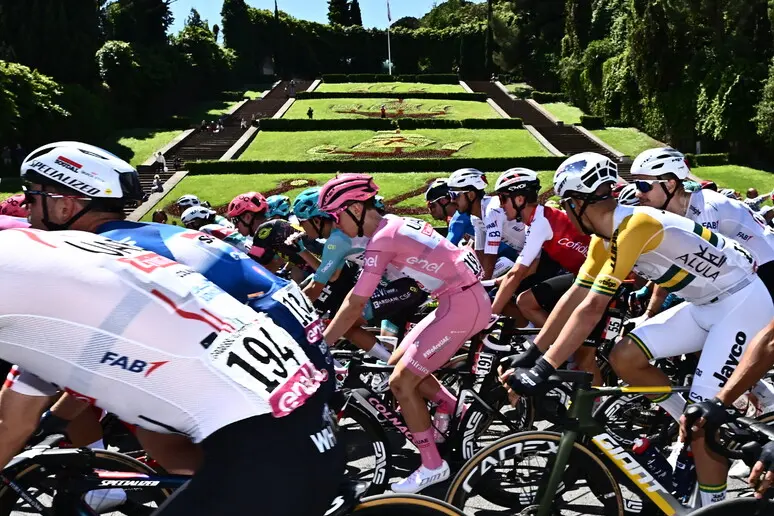
Ninety-five years later, while the Giro d’Italia returns to paint the streets of the peninsula pink, it is worth dwelling on that story – because it contains something more than a sporting record. It contains the parable of a man who came from nothing and became a popular symbol, loved like few champions before and after him.
A color born from a brilliant idea
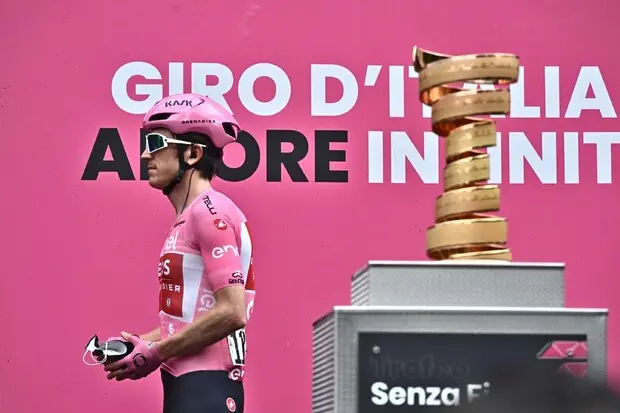
It was the Gazzetta dello Sport, on 9 May 1931, the eve of the 19th edition of the race, that solemnly announced: «Similar to what happens in the Tour of France, the pink jersey is established, which stage by stage of the Giro d’Italia will be worn by the rider first in the standings». The idea was Armando Cougnet, a journalist from the Gazzetta, and the color was not accidental: pink like the paper on which, since 2 January 1899, the Gazzetta dello Sport, the same newspaper that organized the race, was printed. The fascist critics of the Twenty Years would have turned up their noses, complaining about the lack of virility in those shades. But pink remained, and over time it would become one of the most recognizable sporting symbols in the world.

The bricklayer who pedaled like a train
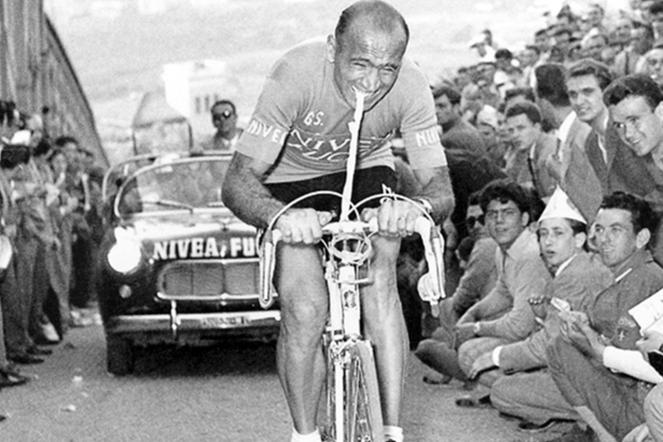
Learco Antenore Giuseppe Guerra was born in San Nicolò Po on 14 October 1902. Until the age of twenty-five he had worked as a bricklayer together with his father, a master builder in a construction company in the Mantua area. At the beginning, the bicycle was just a means of transport: every day he traveled up to forty kilometers between going and returning to reach the construction site, almost effortlessly. Someone noticed.
It was his friend Gino Ghirardini who believed in his athletic skills, who made him believe that he had obtained a bicycle and the official shirt from Maino for him. It was an affectionate lie — he had paid for them out of his own pocket, but it paid off: War he showed up at the 1929 Milan-Sanremo, he was the only one in the gray jersey to reach the finish lineand the real Maino called him to the official team. The Locomotive had left.
The nickname was given to him by Emilio Colombo, director of the Gazzetta dello Sport between the 1920s and 1930s: Human Locomotive. That one goes like a train, great compliment to go like a train when instead you have two thin human-powered wheels. A formidable long-distance runner and also strong in sprints thanks to his powerful physique, although not inclined to climb, they didn’t easily detach him on climbs and he quickly recovered from his efforts.
The day of the first pink jersey
Upon leaving Milan, the most awaited man was Alfredo Binda, unsurpassed in the 1927-1929 hat-trick, returning to the Giro after the organizers had paid him not to show up in 1930: too strong for anyone, so there was no fun.
In the Milan-Mantua race which christened the pink race, 109 people started from Piazza Duomo. Two hundred and six kilometers in the lands of Guerra’s childhood, among those fields where he pedaled to go to work just a few years before. This time it was different. There was something new and coveted up for grabs: the leader’s jersey, a symbol that the race had never had.
It soon became clear that the stage would be decided in a sprint. Entering the town of Mantua, Michele Mara of Bianchi was the first to attack, with Binda not being asked to wait. Guerra responded in a big way: with his head down, he unleashed on the asphalt the muscles forged over the years as a bricklayer alongside his father Attilio. For the other two there was nothing that could be done. The Locomotive won, and was celebrated in pink by friends and acquaintances in Mantua which was her home.

An unprecedented popular love
In the 1930s Guerra was the Italian runner most loved by the fans: they poured on him the affection and popular passion that they were unable to allocate to his great rival Alfredo Binda, lucid, cold and scientific. The increasingly fierce rivalry with Binda had divided the people into “warrians” and “bindians”.
Returning from the 1930 Tour de France, where he had defended the yellow jersey for eight stages, winning three stages, a small crowd of Italians awaited him in front of his hotel in Paris. On the wave of enthusiasm, some enthusiasts had launched a national subscription in his honour, with the Gazzetta depositing over one hundred and eleven thousand lire for him. With that money Learco was able to buy a house.
The bitter epilogue of that Giro, and the world championship as consolation
The 1931 Giro was an emotional whirlwind for Guerra: he wore the pink jersey for only two stages, before giving in to Binda due to intestinal problems. He returned to the race by winning the Perugia and Montecatini stages, returning to wear the leader’s jersey while Binda abandoned. But in the ninth stage, upon arrival in Genoa, he fell and was forced to retire. The final victory went to the Piedmontese Francesco Camusso.

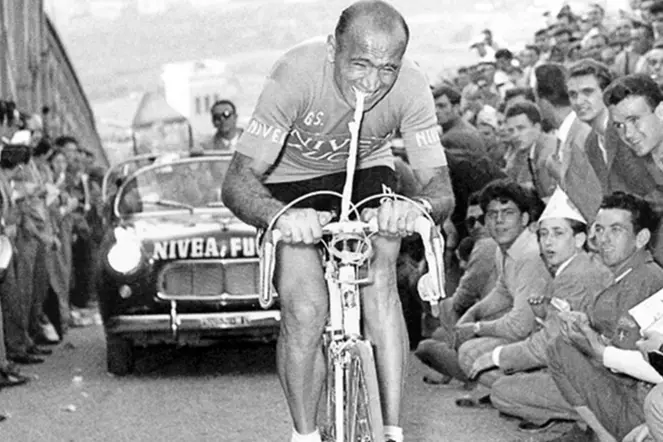
But that year Guerra consoled himself with a title that remained in history: the world championship in Copenhagen, held for the only time in history in time trial mode over 170 kilometerswon with an advantage of more than four minutes over the two placed on the podium.
He won the Giro d’Italia in 1934, winning ten stages in that edition. In total he won the Giro 31 times, preceded in the calculation of stage victories only by Cipollini and Binda.
Having hung up his bicycle, Guerra took the path of sports director with excellent results: he led champions such as Hugo Koblet and Charly Gaul to victory in the Giro d’Italia. He died in Milan on 7 February 1963, at the age of sixty-one. In May 2015 a plaque dedicated to him was included in the Walk of Fame of Italian sport at the Foro Italico in Rome.
Today, in the heart of Mantua, on a wall that loomed over the Rio towards Porto Catena, the writing in thick black paint remained until a few years ago: «Long live Guerra Learco». An epitaph that no archive could match. The people, at times, know how to recognize their lay saints better than any encyclopedia