





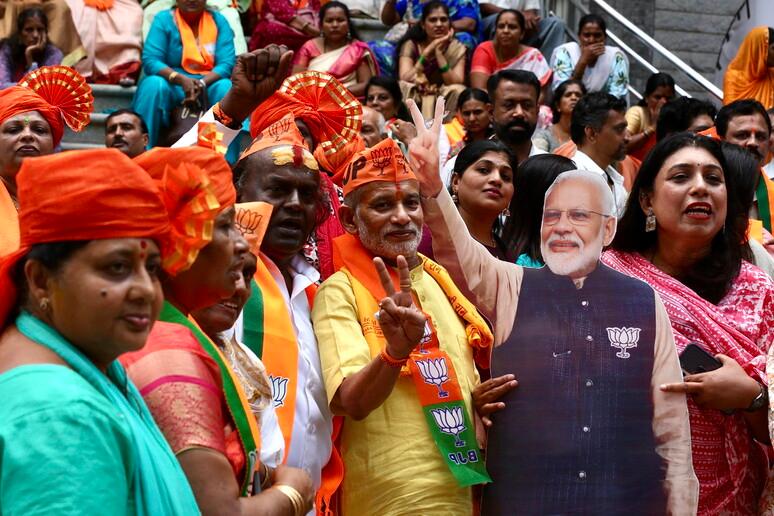
There is a Sanskrit word, Bharat, which indicates India in its most ancient and identifying sense. It is the same word that Narendra Modi loves to use in his speeches, when he describes the nation he wants to shape: united, Hindu, proud. Until a few years ago, it seemed like an ambitious politician’s dream. Today it looks more and more like a project in the process of completion.
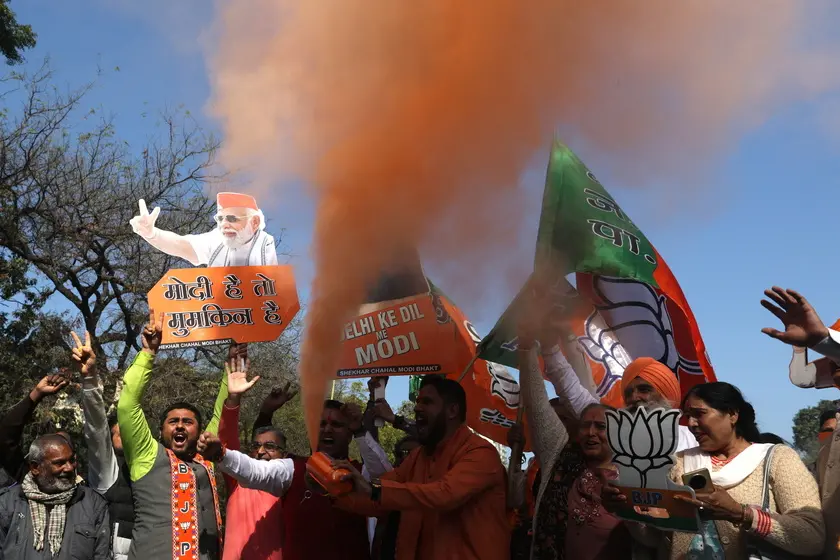
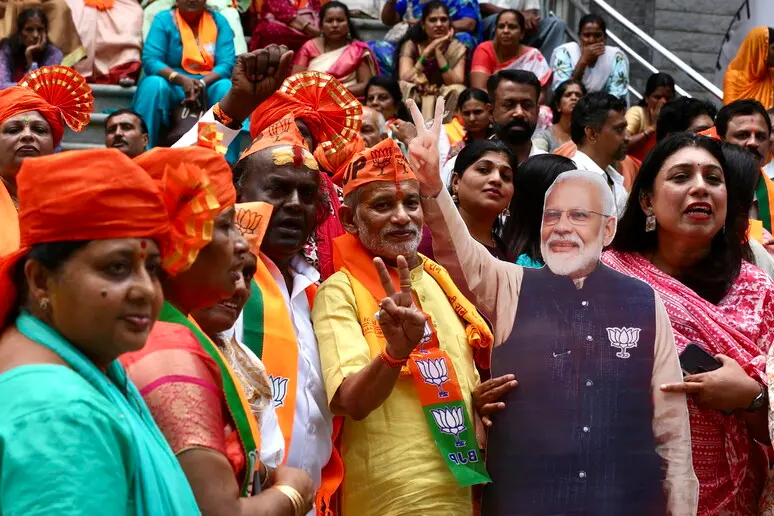
With Sunday’s victory in West Bengal, the Indian Prime Minister’s party, the nationalist, Hindu and right-wing Bharatiya Janata Party controls 21 of India’s 36 states and territories, home to more than 70 percent of a population of 1.4 billion people. A political hegemony that has no precedent in contemporary India except in the decades of Indira Gandhi’s Congress, and which transforms the face of a democracy born in 1947 on an exactly opposite principle: the coexistence of different cultures, languages and religions.

The defeat of the last frontier
For the first time in 46 years of history, the BJP has conquered West Bengal, a state of almost one hundred million inhabitants, considered the most difficult stronghold to conquer. Until ten years ago, Modi’s party had only three seats in parliament there. On Sunday he got 207 out of 294, more than two-thirds of the assembly. Mamata Banerjee, the “Didi” — the big sister, as her voters called her — who had led the state since 2011 and who had been among the few regional leaders capable of standing up to Modi, failed to even win a seat in parliament. Historically, Election analysts argued that the BJP’s Hindu nationalism could never take root in a state where more than a quarter of the population is Muslim. It didn’t happen that way. What changed things? The answer that emerges from field reports is both simple and disturbing: religious polarization. Many Hindu voters were convinced that Banerjee favored Muslims, and this resentment fueled the BJP vote in urban areas.
It’s a strategy that the BJP has refined over the years, election after election: making the Muslim community, approximately 200 million people across the country, the negative counterweight against which the Hindu majority can unite.

An electoral machine without rivals
The path that led to the current hegemony was not linear. Two years ago, in the national elections in June 2024, the BJP had obtained a disappointing result, with 42.5 percent of the votes, and for the first time in a decade had had to seek alliances with smaller parties. It seemed like the beginning of a decline. It wasn’t.
Since then the BJP has relaunched its political initiative, focusing on direct welfare policies, widespread “door-to-door” communication and more aggressive anti-Muslim propaganda. The results spoke clearly: victory in Haryana, where the Congress was favored; victory in Maharashtra, the state of Indian Milan, the great Mumbai; victory in Delhi, in 2025, for the first time in 26 years, beating the party of Arvind Kejriwal, one of Modi’s most lively opponents; victory in Bihar, and now triumph in Bengal.
The victory in Bengal gives the BJP and its allies a majority of close to two-thirds in the upper house of parliament. The consolidation of power is now structural, not cyclical.
The shadows on democracy
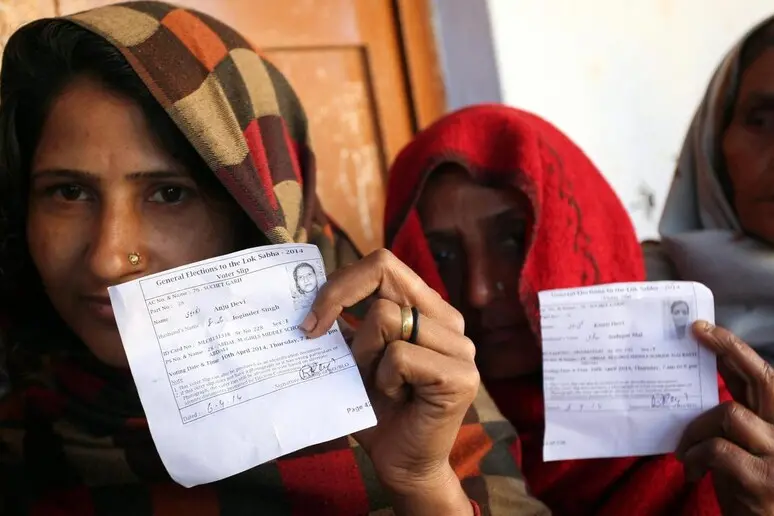
Not everything, however, can be explained by popular consensus. Many of these victories were accompanied by controversies, accusations of fraud and the use of the judiciary to repress opponents. Many political opponents were arrested or accused of corruption in trials that proved to be mostly weak, and the electoral lists were subject to constant revisions with deletions especially affecting the Muslim minority.
In West Bengal, around nine million people were removed from voter registration rolls in the run-up to the election, in a move that disproportionately affected the Muslim minority.
These are figures that cannot be ignored by those who reflect on the fate of the most populous democracy in the world. India, with its secular Constitution, its codified pluralism, its tradition of alternation, is going through a profound transformation. What will become of that sense of interreligious coexistence that has long characterized Bengal? This is one of the most pressing questions emerging from the election results.
Who stays on the other side
The opposition is shattered. The Congress, the main centre-left party, that of Nehru and Indira Gandhi, today governs in only four states. The regional parties that had been able to resist the BJP, and Mamata Banerjee’s Bengal was the most sensational case, one after the other give in or weaken. Even in Tamil Nadu, one of the few southern states where the BJP has not yet managed to assert itself, the elections saw the defeat of the main opposition party in favor of a former Bollywood actor who reinvented himself as a politician. The crisis, therefore, does not only concern the regions where Modi wins, but the entire political system.
A Christian look at a changing giant
From a Christian and humanist perspective, the Indian story raises questions about issues that concern us closely. The nationalist and identity drift is not an exclusively Asian phenomenon: it is a temptation that crosses the West, Europe, the Mediterranean. When politics is built on the fear of the other, of those different in religion, ethnicity, language, it ceases to be a service to the community and becomes an instrument of division.
India is a huge laboratory, and what happens there has a symbolic as well as geopolitical value. A country founded on diversity as a constitutive value, which slowly compresses itself around a single identity, is a warning to everyone. Great democracy does not always die suddenly, through a coup or a revolution. Sometimes it gradually transforms, one election after another, until the landscape that remains bears little resemblance to the original.