




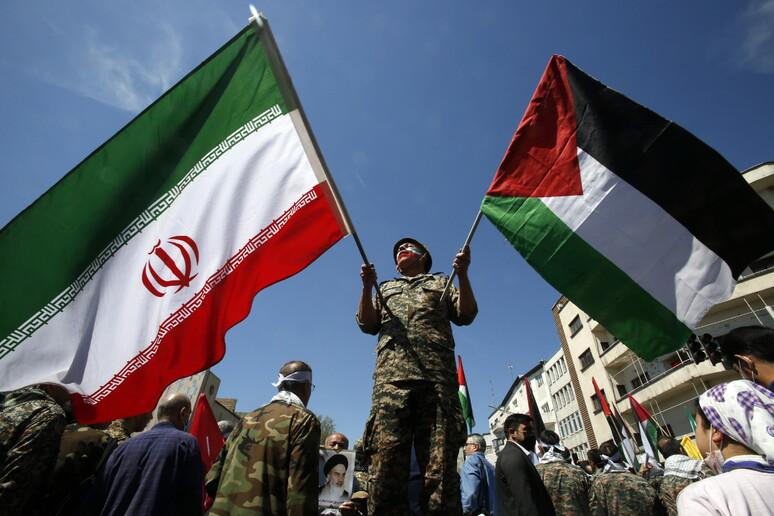
There is a red thread that runs through the burning Middle East and binds two populations distant from each other in history, culture and geography: that of innocent blood. On the one hand, the Gaza Strip, engulfed in a war that never really ends – not even when it is called a “ceasefire”. On the other, Iran, a country of eighty million inhabitants overwhelmed since February 28th by a new wave of joint military attacks by the United States and Israel, which has already caused – according to the most reliable estimates – over a thousand civilian victims and the destruction of schools, hospitals and vital infrastructures. Two crises with different roots, but with the same face: that of those who did not choose war and find themselves surviving among its rubble.
Gaza: a hell that is not called peace
It’s easy to call a ceasefire. But in the Gaza Strip, the word “peace” almost sounds like an insult to those who are forced to live with rats – increasingly aggressive, which feed in the rubble – with infectious diseases, with toxic smoke rising from waste burned inside residential areas because there is no other way to dispose of it. Caritas Jerusalem has sent testimony to the international Caritas network that leaves no room for optimism: the humanitarian situation continues to deteriorate, despite the fragile agreement that should have stopped the fighting.

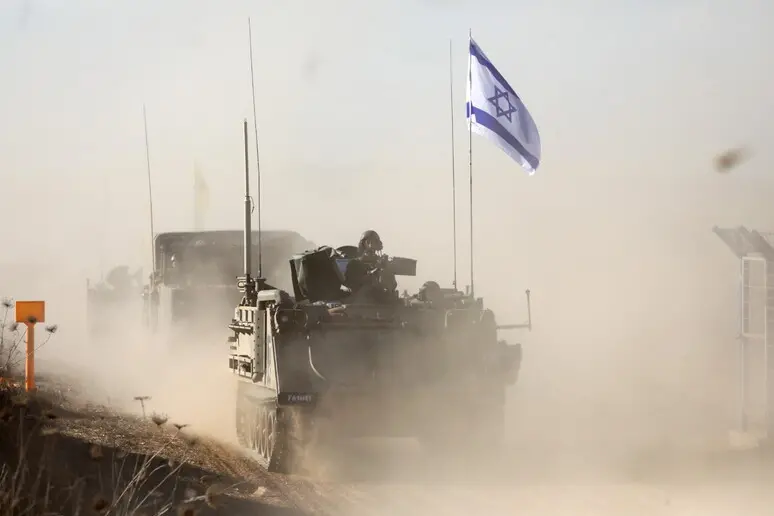
The proliferation of rodents has become a serious and documented health threat: the animals, altered in behavior by hunger and chaos, contribute to the spread of diarrhea, hepatitis, scabies, chickenpox. The collapse of the waste disposal system forces plastic and other toxic materials to be burned in urban areas, with devastating effects on the respiratory tract. There is a lack of industrial fuels needed to run electric generators, and without them even water purification plants stop. The circle closes on itself, ever narrower.
Yet, in this scenario, Caritas Jerusalem has not stopped. Through its medical center in the capital city and eight mobile clinics – six for emergency care, two for psychological support – it continues to guarantee assistance to minors with disabilities, the elderly, and poor families. The shortage of medicines has made Caritas one of the few actors capable of ensuring essential medicines, with a consequent and significant increase in patients seeking treatment. And the need to expand maternal health services is growing: for this reason Caritas Ambrosiana promotes the “Hope for Gaza” fundraiserwith the aim of raising 150,000 euros (at the moment, in two months, 105,000 have arrived) to strengthen and support the mother-child clinic in the Strip for two years.
Iran: a new war on an already wounded country
The Iranian context is profoundly different from that of Gaza, yet the logic is the same. Iran is a sovereign state with its own internal complexity – political, ethnic, religious – which has always been crossed by ttensions between the theocratic regime and a growing part of the population. But since the joint attacks by the United States and Israel turned that complexity into rubble on February 28, the burden has fallen – as always – on civilians.
The military operations, which are part of a long escalation that began with the “twelve-day war” of June 2025, hit not only military targets but also schools, health facilities and residential neighborhoods, raising serious questions about respect for international humanitarian law. UNHCR estimates that between 600,000 and one million families have already been affected. The internet has been disrupted several times by Iranian authorities, cutting off access to information and communications with loved ones. In a country where internal repression was already intense – with mass arrests, restrictions on civil liberties, systematic discrimination against minorities – the war functioned as a multiplier of suffering.
In this context, the small but tenacious Iranian Caritas was unable to operate: the risks produced by the war context made any organic humanitarian intervention impossible. Now, however, he is preparing to do so. The first emergency appeal from Caritas Iran to the international Caritas network is expected in the coming weeks, with a structured program of interventions to respond to the primary needs of the population. Caritas Ambrosiana is waiting to meet him to evaluate how to contribute.
Same disease, different roots
The two crises are not superimposable. Gaza lives under a military blockade that limits external aid and in a context of prolonged conflict that has dragged on for years, with precise and discussed political and historical responsibilities. Iran is a country that entered the war in a sudden and devastating way, with a population already bearing the weight of international sanctions, inflation and a structural economic crisis. In Gaza, the main enemy is the siege and destruction of infrastructure. In Iran, military devastation is compounded by informational isolation and the double pressure of a repressive regime and a war brought on from outside.
Yet the similarities exist, and they are profound. In both cases, civilians did not choose war. In both cases, health facilities were affected or put out of action. In both cases, access to humanitarian aid is hampered – in Gaza by the Israeli military filter, in Iran by the closure of the airspace and the risks for workers on the ground. In both cases, the response of the Caritas network – local and international – often represents the only protection left between the people and the abyss.
Charity as resistance
Caritas Ambrosiana, which in the last two and a half years has allocated over a million euros to interventions in Gaza, the West Bank and to experiences of Israeli-Palestinian dialogue, today addresses the faithful, citizens and supporters asking for a concrete gesture of solidarity. The reason is “Middle East Emergency”: the resources collected will be allocated to projects already underway – from the maternal and child clinic in Gaza to support for displaced people in Lebanon, to reconstruction in Syria – and to the new programs that will emerge from the Caritas Iran Appeal.
It is not a question of choosing between one victim and another, between a “more just” war and a less so. It’s about remembering that, at the bottom of every conflict, there is always a mother looking for clean water for her children. In Gaza as in Tehran.
How to donate:
– Online with credit card: (donazioni.caritasambrosiana.it)(https://donazioni.caritasambrosiana.it/)
– Postal current account no. 000013576228 made out to Caritas Ambrosiana Onlus
– Bank transfer IBAN: IT82Q0503401647000000064700 – Reason: **Middle East emergency. (The offers are tax deductible)