





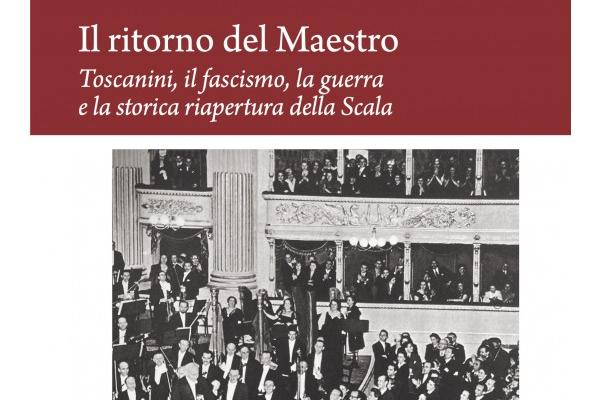
“The undersigned son of Claudio, born in Parma on 25 March 1867, domiciled in Milan, residing in Milan – via Durini 20, of well-off condition and having all the eligibility requirements required by the current political electoral law, declares to accept as he accepts the candidacy for the constituency of Milan in the political elections which will take place on 16 November 1919 supported in the ‘fascist bloc’ list which is distinguished by the mark showing a bundle of rods with an ax in the middle.” This is the document that Arturo Toscanini signed at a notary on 25 October 1919. In the elections the maestro received 5,114 votes, was not elected and “perhaps he realized that he had taken a wrong step”, he writes Mauro Balestrazzi in his essay The return of the Master. Toscanini, fascism, war and the historic reopening of La Scala (IWB-Pocket).
Balestrazzi, journalist and writer, collaborator of the monthly magazine since 2007 Classic Voiceexplains that we cannot understand the true meaning of Toscanini’s presence on the podium of the Teatro alla Scala on 11 May 1946 to conduct the reopening concert of the hall after the bombings of the war, without retracing the history of our country starting from the birth of fascism. And his story starts from 1919, intertwining music and politics, the rise of fascism, the birth of the dictatorship that pushed Toscanini into an eight-year exile, the war and the bombs on the most important Italian theatre.
Balestrazzi has the merit of carrying out an extraordinary work of research among bibliographic sources, the archives (especially the central state archive and the historical archive of the Teatro alla Scala) and the newspapers of the time. Some of these documents are reproduced in one section of the book. Among these, the report of a telephone wiretap from 19 October 1935 with Toscanini’s criticism of the regime (Balestrazzi insinuates that probably the maestro, knowing he was being spied on, took even more pleasure in criticizing fascism). Among the photos, the one from April 24, 1946 stands out, with Toscanini getting off the train at Ponte Chiasso to set foot in Italy again after exile. The story of the concert for the reopening of La Scala, which ended just before midnight with the crowd in delirium, is memorable. Before, during and after the concert there were 37 minutes of applause