






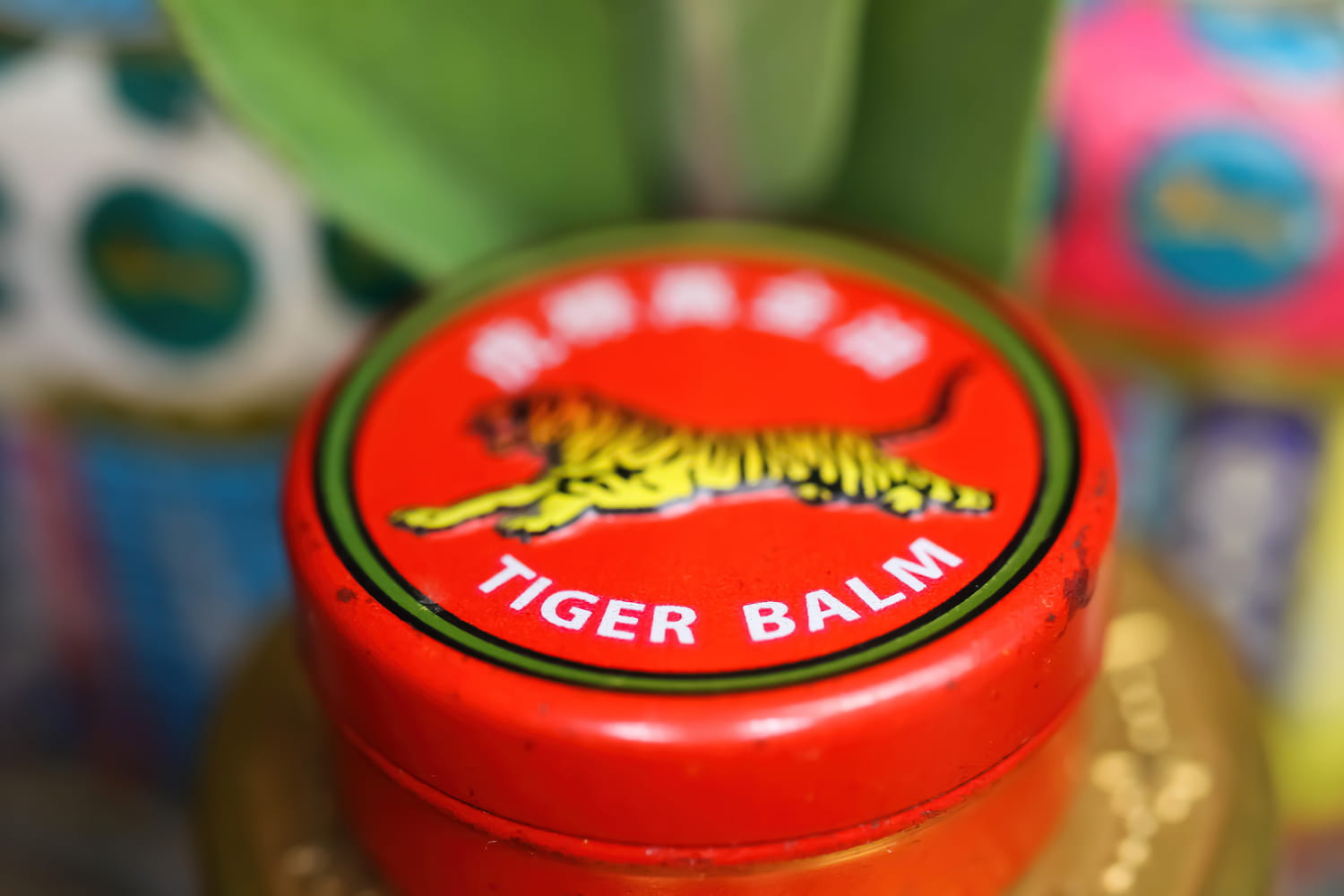
Tiger Balm is a very useful natural remedy for relieving pain but it must be used with some precautions.
An essential painkiller, Tiger balm still stands out today as a natural ally of choice to relieve muscular tension, cold symptoms and even insect bites. However, behind its popularity, this powerful product requires some precautions to avoid its unwanted effects. As an expert in phyto-aromatherapy, here is everything you need to know to use it safely. Composition, benefits, instructions for use and precautions with Sylvie Hampikian, pharmacologist specializing in phyto-aromatherapy.
What is Tiger Balm?
Tiger Balm is a kind of therapeutic ointment or “ointment” developed by a Chinese herbalist at the end of the 19th century. Traditionally used by Chinese emperors to soothe various everyday ailments, it has now become popular on a global scale. It mainly comes in two distinct versions: red tiger balm and white tiger balm.
Composition of Tiger Balm: not of animal origin
Contrary to what its name might suggest, Tiger Balm does not contain any extracts of animal origin. “It contains essential oils of Clove (between 1 and 2%), Cajeput (around 7%), Cinnamon and Eucalyptus, peppermint essential oil (around 10%) as well as camphor (up to 25%) and menthol (around 10%), explains Sylvie Hampikian. All in a vaseline base for easy application.”
Red Tiger Balm: rich in mint
This is the most iconic version. “It contains a greater quantity of mint essence than the “white” version as well as Cajeput essential oil, explains Sylvie Hampikian. It will rather be recommended for inflammation, muscular and osteoarticular pain as well as for back pain and lumbar weakness.”
White Tiger Balm: with eucalyptus
Slightly softer, it includes eucalyptus essential oil. “It will rather be used for nasal congestion, sinusitis, rhinitis, stiff neck, headaches, coughs, colds as well as insect bites,” recommends Sylvie Hampikian.
Benefits and daily use: pain, sport, migraine…
- Muscle pain: Its anti-inflammatory and analgesic action relaxes the muscles. It is a sovereign remedy to calm stiff neck, aches, lower back pain and neck pain. Use with gentle circular massages on the affected area.
- Joint pain: It helps soothe pain related to arthritis, osteoarthritis and rheumatism. Apply with a gentle local massage to knees, hips, ankles or shoulders.
- Sports: before exercise, applied as a massage, it heats the muscles and activates circulation, helping to prevent sprains, cramps and tears. After exercise: It promotes recovery and reduces physical fatigue.
- Abdominal pain: For spasms linked to painful periods or digestive disorders (constipation, diarrhea), gently massage the lower abdomen clockwise for 5 minutes.
- Headaches and migraines: Menthol provides an immediate cooling effect. Massage a tiny amount onto the forehead, temples and neck, strictly avoiding the eyes.
- Insect bites: Apply a pinhead’s worth to the bite to soothe the itching. Repeat 3 to 4 times a day.
- ENT (colds, sinusitis): Thanks to eucalyptus, it decongests the respiratory tract. Apply a small amount of the balm near the nostrils (if the skin is not irritated) or use it by inhalation (a dab in a bowl of very hot water). If you have a sore throat, massage a little balm onto the area.
Danger: powerful essential oils
“Due to the presence of essential oils and neurotoxic camphor in its composition, this product is contraindicated for children under 10 years of age, pregnant and breastfeeding women”specifies Sylvie Hampikian.
- Never apply to damaged or irritated skin or to mucous membranes.
- External use only (never ingest).
- Wash your hands thoroughly after each application.
The product is available in pharmacies, parapharmacies, as well as in certain specialized herbalists and sports stores.