




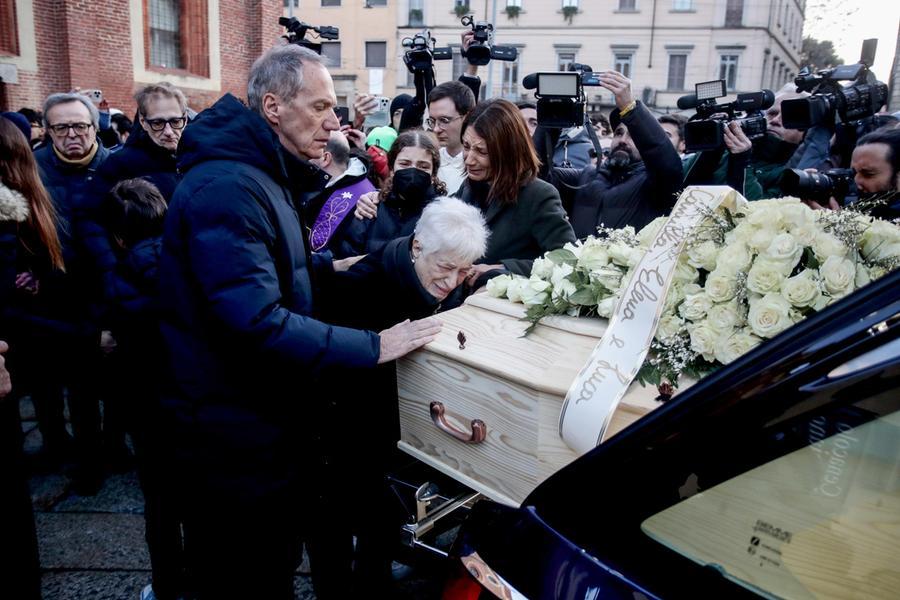
At the end of the funerals of Riccardo, Giovanni, Achille, Chiara and Sofia, very young victims of the Crans Montana massacre, a void remains. Deep. Excruciating. A sense of anger and rebellion takes hold of our fragile hearts, incapable of supporting the family and collective drama of an entire country for many young people, wonderful human lives lost due to man’s carelessness and indolence in a moment of celebration.
It is extremely unfair to die at 15, 16 years old. Why, then? While waiting for human justice to take its course, the silence – of the relatives and the crowd around – was the first response, dignified and profoundly human, that we caught on live television. Not only in the churchyards where the funeral took place or in the schools, where a minute of silence was observed on that day, but also in the liturgy. The religious rite, which alternates it with gestures and words and which fills these with symbolic load, is in this sense a master of life and can indicate to us that our life, in order to be truly full, needs spaces of absence of noise to reclaim, in our breathless living, the ultimate meaning of existence. But in the human experience the rite also represents a moment of passage in one’s existence, as those same children had experienced in Baptism, First Communion and Confirmation. That passage now certainly concerns them, who have passed from earthly life to that of endless joy, where the LORD “will wipe away every tear from their eyes, and there will be no more death, no mourning, no crying, no more pain, because the former things have passed away” (Revelation 21.4). But, if this is the real reason for hope that consoles us, that passage will now also concern the parents and relatives of those children (but also all of us!), who will (have to) make a long, arduous and tiring transition, which will require a lot of silence to make them (make us) move from a presence of the future to an absence that in certain dark moments will have the bitter taste of death.
In this moment of collective desolation, mitigated by our all physically and spiritually huddled around those coffins, we must however – all of us, young and old! – draw a great lesson from this tragedy, so that those faces that we will never see smile again still have something to tell us. And that is that time is precious, that we must take every opportunity to express our love and our feelings to those close to us, to those we love, that we must never take anything for granted, that life (which, at times, is very hard!) is above all a gift that we must make use of in every moment of our days to build good in our microcosms, in a world increasingly surrounded by violent words and gestures.
It is one of the treasures that they leave us as a legacy. Let’s make good use of it.