






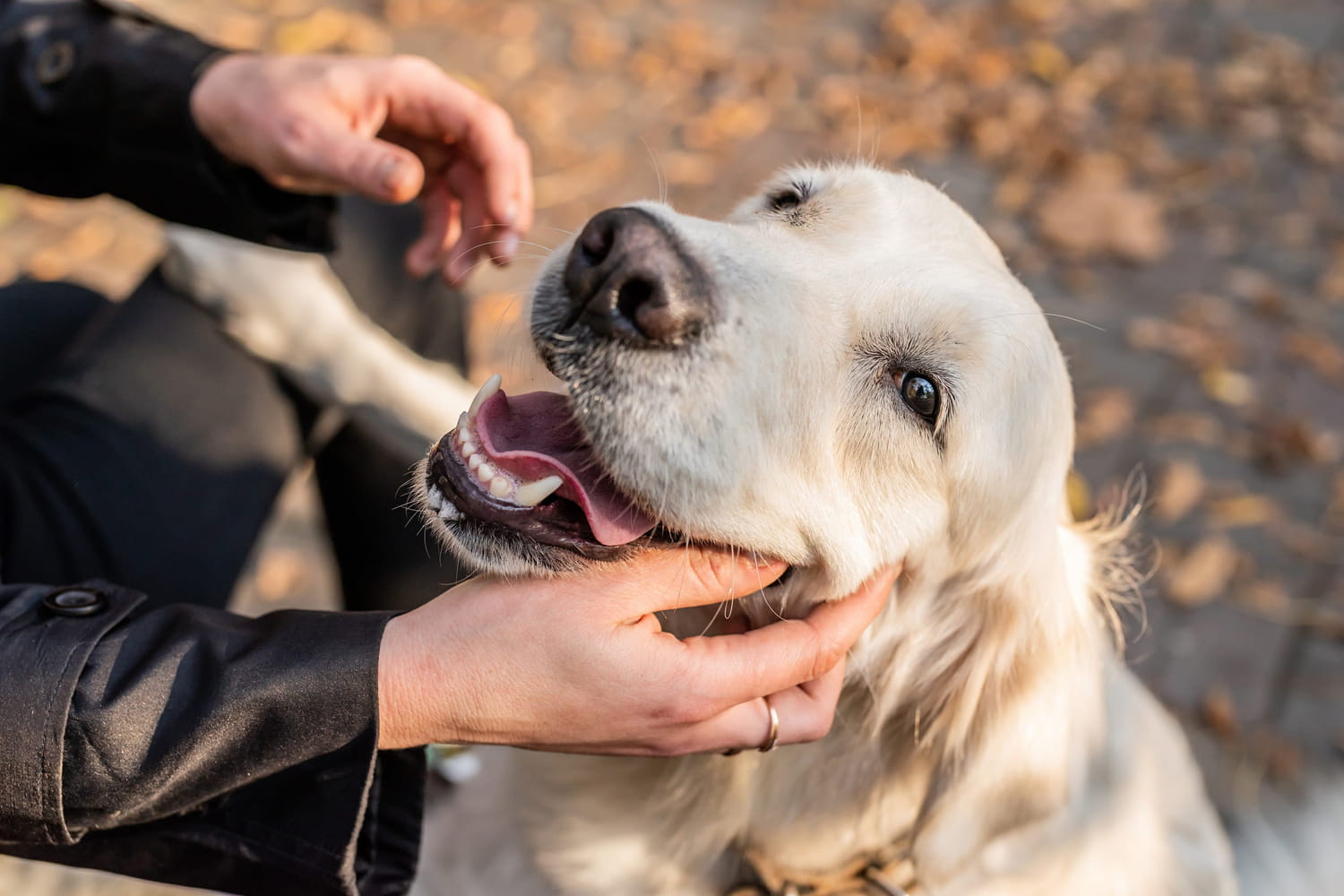
It has long been thought that one should follow the 7-year rule to compare the age of a dog with that of a human. However, a scientific study shows that this calculation is false, because dogs do not age at the same rate as us.
This is the calculation that we all have in mind: multiply the age of your dog by 7 to compare it in “human years”, and understand at what rate our beloved doggies age. All breeds combined, dogs have an average life expectancy of 12 years, compared to around 83 years for humans (men and women combined, according to the latest INSEE estimates). We therefore live approximately… seven times longer than our four-legged companions. Coincidence? Probably not.
However, the biological aging of dogs does not occur at all at the same pace as ours. So, it is believed that a one-year-old dog is equivalent to a 7-year-old child, a two-year-old dog to a 14-year-old teenager, and so on. But this is scientifically false, as researchers from the Faculty of Medicine at the University of California, San Diego, proved in a study published in 2020. To arrive at a more reliable comparison, the specialists did not look at the wrinkles or the number of candles, but at what is happening at the heart of the cells.
They relied on epigenetics, that is to say small marks that appear on DNA over time, without modifying its sequence. By analyzing these age markers (called methyl groups) in more than a hundred Labradors, then comparing them to those observed in humans, scientists found that dogs and humans share similar biological changes… but not at the same speed. Result: aging does not progress linearly. Dogs age very quickly at the beginning of their lives, then more slowly after that.
From this data, the researchers established a formula that is much more accurate than the 7-year rule. Thus, at the age of one, a dog corresponds more to a 30-year-old human. But that doesn’t mean you have to multiply by 30, because at the age of 4, a dog is more like a 52-year-old human, while at 12 years old, its stage of aging is similar to that of a 70-year-old human. A calculation that seems entirely logical, as Professor Trey Ideker, lead author of the study, points out: “After all, a nine-month-old dog can have puppies, so we already knew that the 1:7 ratio was not an accurate measure of age.”
Far from being anecdotal, these revelations actually have a real impact: it is not only a question of owners having fun comparing the age of their dog with their own, but above all of better understanding the biological evolution of our animals to better care for them. “It is important that we better understand their aging process because veterinarians frequently use the old ratio of 1:7 to determine a dog’s age and leverage this information to guide diagnostic and treatment decisions.”explains Trey Ideker.