






Result: more attention, more interactions, and a potential impact on learning.
For years, parents have searched for the ideal toy, one that promises to awaken, develop motor skills or stimulate the imagination. However, a team of American researchers puts forward an unexpected hypothesis: the most effective objects for capturing the attention of young children are not necessarily found in specialized departments. The study, carried out with 32 children aged two to four, looked at how they interacted with their surroundings at home. The objective: to compare their behavior when faced with familiar toys and when faced with everyday objects that they were not used to using.
The protocol was based on a very concrete situation. Parents first had to play with their child for ten minutes with familiar toys. Then, they introduced a common object, but new to the child. The researchers then measured the number of contacts, the duration of handling and the reactions observed. The results show a clear gap. The children touched the unusual object an average of 40 times during the ten-minute session, compared to 30 times for the familiar toys. Each hold of the new object also lasted longer: 5.32 seconds on average, compared to 4.64 seconds for the toy. This differential then reflects more sustained attention and more active exploration.
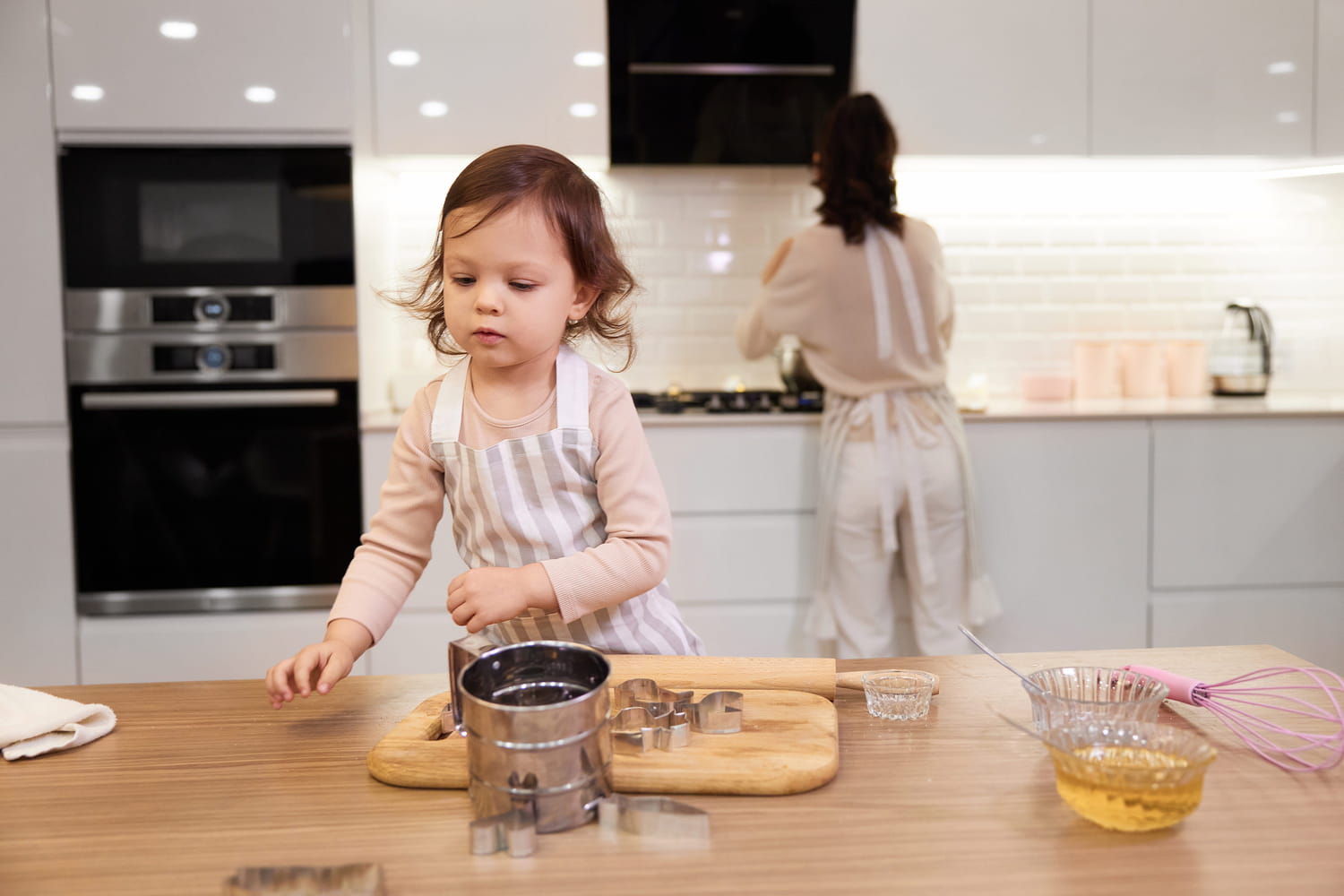
Delaney Witmer, a student researcher at Arizona State University, summarizes the phenomenon by explaining that an unknown object “gets their attention”. She specifies: “It’s captivating and helps shift focus from something they see every day to something new.” According to her, this break from the usual environment stimulates curiosity and encourages the child to observe, manipulate and test more. The researchers also noted that when faced with a new object, children more often turned to their parents to understand how to use it. Thus, the objects that aroused the most interest among these children were neither electronic nor designed for them: they included a tea ball, a funnel, a whisk and a potato masher.
The study thus underlines that novelty plays a key role in cognitive development. “Even if they only played with it for three minutes, at least they learn something new and play with something new”says Delaney Witmer. The challenge is therefore not to ban traditional toys, but to broaden the field of possibilities by regularly introducing new elements, in a secure environment. And the good news is that parents can participate too.