




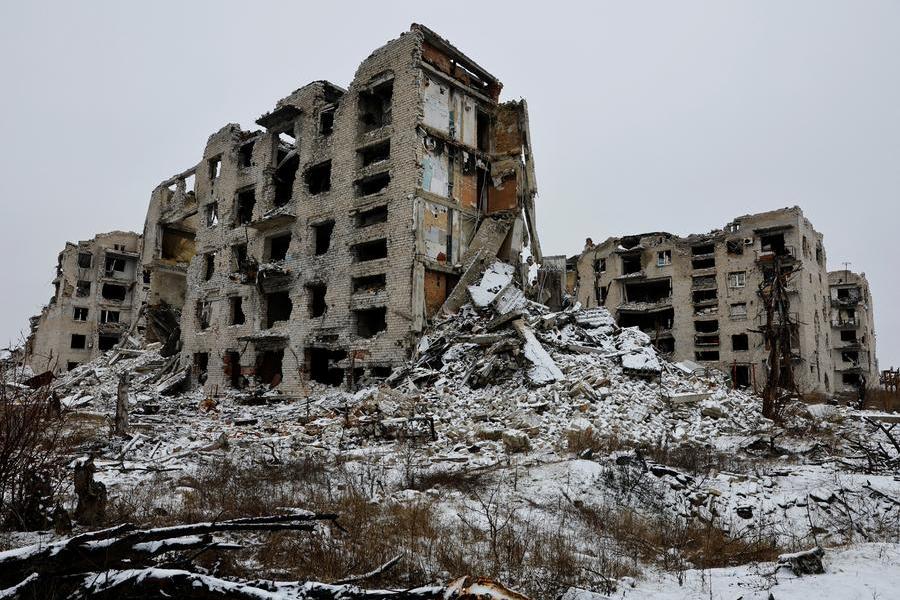
Ukraine reaches the fourth anniversary of the Russian invasion, which began at dawn on February 24, 2022, exhausted, in the grip of a humanitarian crisis, while the prospect of peace still appears distant. Since the beginning of the full-scale war, the country is going through the harshest winter. Moscow’s offensive in these months of frost has targeted energy infrastructures throughout the territory, leaving the population without electricity, heating, water, in the grip of a frost unprecedented for years. «Moscow is trying to defeat Ukraine by destroying its economy, terrorizing the population and also the political leadership, because it is unable to make much progress at the front”, he comments Bartosz Cichocki49 years old, ambassador of Poland to Ukraine from 2019 to 2023.
Historian and analyst of Russian regional politics, Cichocki was Undersecretary of State for Security, Eastern Policy and European Policy at the Ministry of Foreign Affairs. In 2022, he was the only EU ambassador to leave Kyiv during the siege of the capital. «I don’t feel brave», he observes, «Poland is bordering Ukraine, it is the country most involved in the war in terms of support and aid».
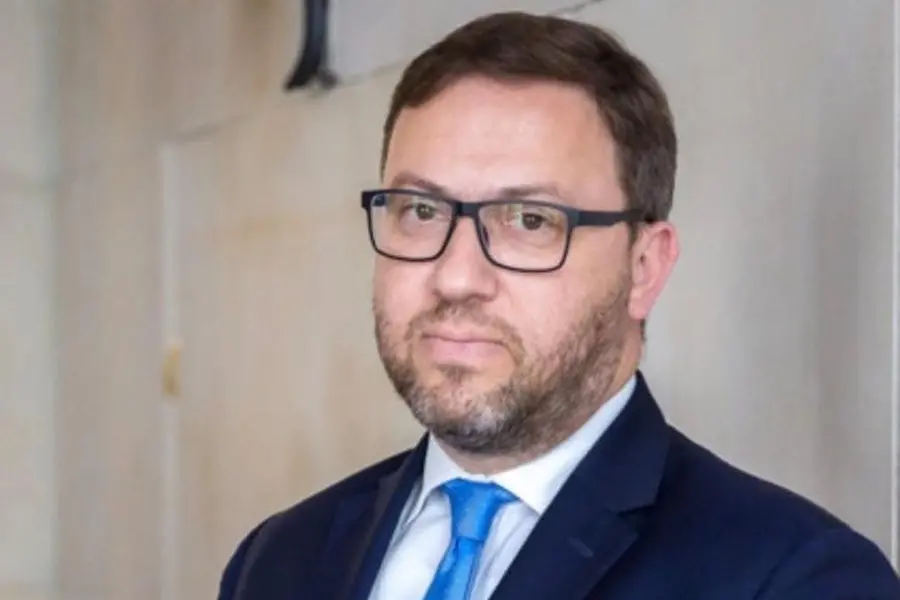
Bartosz Cichocki, historian, analyst, ambassador of Poland to Ukraine from 2019 to 2023.
(Photo from Facebook)
Go back with memories to when the Russian aggression began. «Before the war, there were many different voices. There were those who didn’t believe there would be an invasion, those who said yes, those who thought that if there were an attack it would be very limited. We diplomats obviously have much more information than ordinary people. At the end of October 2021 I decided, as an ambassador, to prepare for the worst case scenario. I began to collect and send sensitive documents to Warsaw – so that they did not fall into the hands of the Russians – and to stock up on petrol, water and food at the embassy. Some people thought I was crazy, but my foresight later turned out to be useful. Yet when the invasion happened, it was terrible. It’s one thing to be warned, it’s another to find yourself in that situation. You can spend a lot of time preparing for a war, but when it happens, you are never ready. The level of horror shocked me.”
Now, diplomacy continues, under the aegis of the United States, in an attempt to reach a solution to the conflict and a ceasefire. The central node remains the territorial one: Moscow demands the cession of the entire Donbas with the withdrawal of Kyiv from the part of Donetsk which remains under Ukrainian control. And it continues to apply war pressure to increasingly weaken the spirits and strengths of the Ukrainians. Another crucial issue: the security guarantees to be provided to Ukraine.
«I am not pessimistic about the ongoing negotiations and I don’t think they lead to anything», comments Cichocki. «We Europeans criticize Donald Trump a lot, but where is Europe now? Maybe before criticizing we should look in the mirror. With his undoubtedly unconventional ways, Trump at least managed to bring Russians and Ukrainians to sit at the same table, in the Abu Dhabi talks, for the first time since the beginning of the full-scale war. He has made progress. Russia is now in a very difficult economic situation.”
However, the former ambassador observes, as long as they have the human, military and economic forces to do so, Moscow and Kyiv will continue to fight. «The territorial question is central, but it is not the only one, there is also the ideological question at stake. And Ukrainians have every reason not to trust Russia and to be skeptical about ceding territories. Putinism is very solid and for Russia war is an existential question. Let’s not forget that in December 2021 the Kremlin effectively declared that it wanted to restore its control over all post-Soviet territory. Moscow wants to turn the clock back to the time of the Soviet Union. And transform Ukraine into a new Belarus or a new Georgia (where there are pro-Russian governments, ed.). But his ambition goes far beyond Ukraine.”
Central and Eastern European countries are particularly afraid of the Russian threat. «I think that in the past there was a lot of naivety in building common ground with Moscow on the heads of Central Europeans. But today within Europe there is much more consensus and sharing on what Russia represents. The war did not create a fracture, on the contrary I think it united the two souls of Europe, western and central-eastern.” Today Cichocki continues to deal with the neighboring country, he often travels to Kyiv: «My wife Monika does it from a humanitarian point of view with a charitable organization linked to the Dominican friars, I in the private sector, promoting economic relations between Warsaw and Kyiv. Every type of support is important. If everyone puts a brick in the end we will build a house. We must help Ukraine survive.”