



The electronic sundial has gone crazy. Since its origins, television has had a privileged relationship with time: that is, the television screen has always functioned as a “sundial”, an imperceptible social clock that enters our habits. Who hasn’t happened to “synchronize” meal times – lunches and dinners, when possible shared with the family – with the news editions?
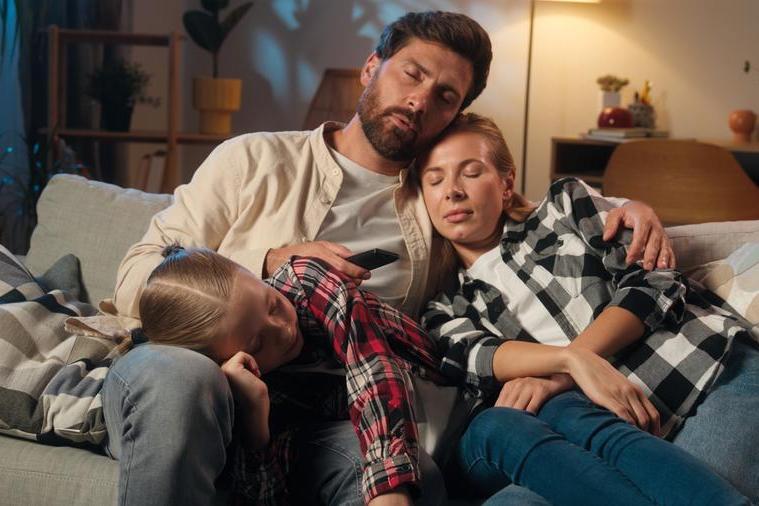
Today, however, it seems that television schedules no longer coincide with the rhythms of life: starting to watch a prime time program now presents the very high risk of not being able to finish it. Prime time has moved further and further, prime time programs thus “override” midnight, even one o’clock. Not only viewers, but also some producers of entertainment and fiction programs have shown growing discomfort. So why do TV editors seem so deaf, bordering on self-harm? Let’s try to explain it.
To understand what is happening to our “crazy sundial” we must first take a step back in time. It was said that TV is like a shared clock: an Italian media sociologist wrote this almost thirty years ago, coining the definition (Piermarco Aroldi, La meridianaelettronica, Franco Angeli ed.). TV is our favorite metronome. Because television adapts to the times of our life but at the same time conditions them. For example, between 7.00 pm and 9.00 pm, with peak ratings on Tg1 and Tg5, which together today attract almost 9 million people.
In the history of television, Carosello has entered the common sayings precisely because of its function as a clock: «In bed after Carosello!» parents said to their children until the end of the seventies. That is: in bed by nine, when the program closed the curtain on the little ones’ day.
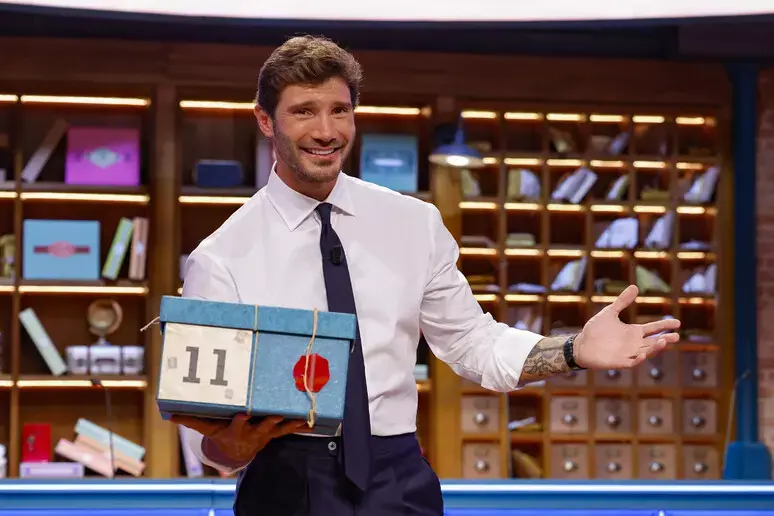
Things changed profoundly during the 1980swhen the so-defined segment of access prime time was born following a radical transformation of TV, with the start of commercial programming. It is precisely in this context of competition between public and private TV that in Cologno Monzese they invented the programming slot that is placed immediately before prime time. At the beginning it was a short buffer, lasting less than ten minutes, but it kicked off a story lasting more than thirty years: Striscia la notizia was broadcast at 8.30 pm, first on Italia 1 and then on Canale 5. In the meantime, at the beginning of the following decade, Fininvest/Mediaset also provided live broadcasts and news programmes. Since then the Tg5/Striscia sequence has moved the actual prime time after nine in the evening. Public service television adapted, initially with a diametrically opposed program: The fact of Enzo Biagi is a short daily strip of in-depth analysis, a formula recently taken from Five minutes of Bruno Vespa. Then Rai embraced a more commercial strategy in the peak audience segment, inaugurating Affari Tui in 2003 (with Paolo Bonolis), who took turns several times with Soliti Ignoti.
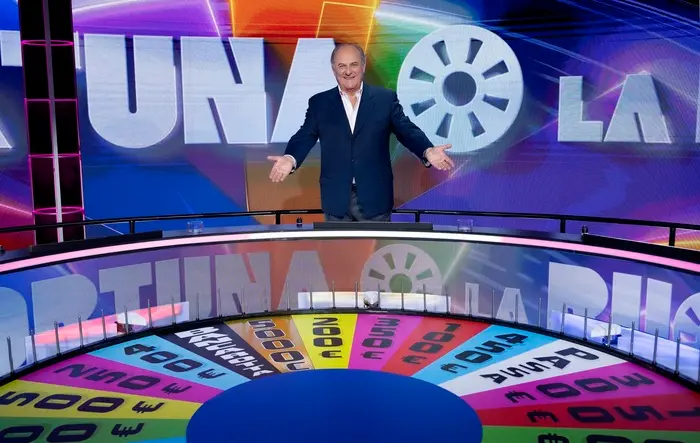
Everyone will remember the frantic competition between the Rai 1 games and the satirical news program invented by Antonio Ricci. In terms of duration, this competition has led to the expansion of prime time access programs over the years. However, Striscia la Notizia never lasted more than 40/45 minutes. The latest “innovation” takes us back to this year. When Gerry Scotti’s successful Wheel of Fortune experiment was brought to an average length of over an hour. In short, between one thing and another, prime time struggles to start before ten in the evening. But is prime time, at ten o’clock, still prime time? Or, instead, has the sundial gone crazy?
Rai 1 and Canale 5 have found the goose that lays the golden eggsbecause the two programs catalyze over ten million Italians, who generate value for advertising breaks (especially for the one that leaves us in suspense about the final prizes of both). On a commercial level, therefore, this hypertrophy of access is convenient for the two publishers. In the long term, however, the strategy risks being harmful: at ten in the evening, many of the public are discouraged at the idea of starting to watch a programme. And today the most manageable alternatives are within reach of Smart TVs: not only Netflix & Co., but also YouTube. A TV made to measure for the viewer. Even in times and durations.
We don’t know if the winning strategy of prolonged access will later turn out to be a Trojan horse. What we know is that television – public and private – also has a social responsibility. They “stole” prime time from us, we are now loudly asking to restore it with a schedule more accessible to viewers and families!