




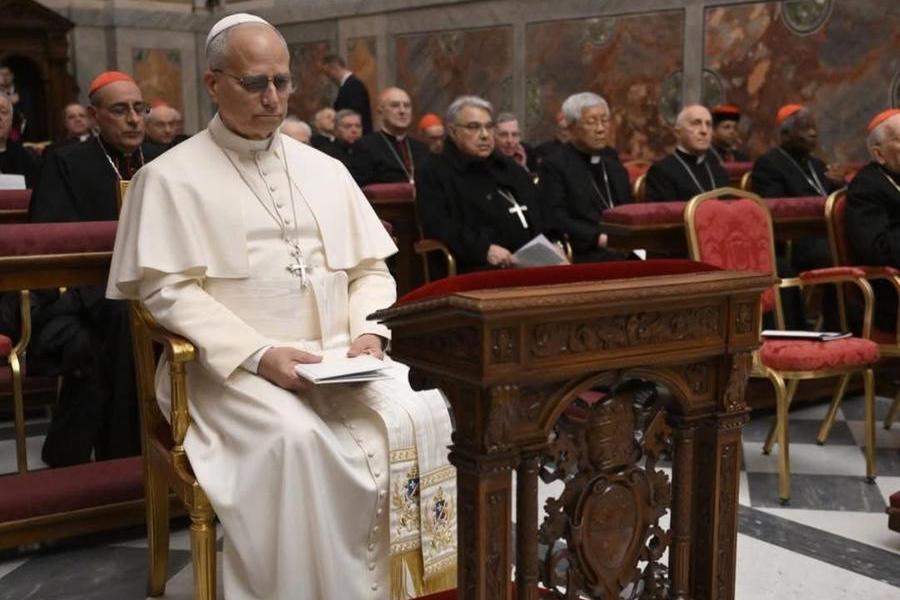
“There is no greater obstacle to the presence of the Spirit within us than anger.” Monsignor Erik Varden, Cistercian Trappist and prelate of Trondheim, Norway, opened, on February 22nd in the Pauline Chapel, the spiritual exercises of the Roman Curia which will end on February 27th. He did so by recalling the words of Saint John Climacus. Words which, says the monk, serve to «articulate the radicality of Christian peace, its rooting in the right, courageous gift of self.”
«Christian peace is not a promise of an easy life; it is the condition for a transformed society”Monsignor Varden clarified. And he explained that «the Church “instills” peace in our Lenten program». It’s about a peace “that the world cannot give”, but which “testifies to the constant presence of Jesus in us”.
There Lenthe added, then leads us to deal with the essential: «It takes us into a material and symbolic space freed from the superfluous. The things that distract us, even the good ones, are temporarily put aside.” And it is also the time to face an “authentic spiritual struggle” which leads us to “fight vices and harmful passions”. The language of the Church then becomes “‘Yes, yes’, ‘No, no’, not ‘now this’, ‘now that'”. At the beginning of this Lenten struggle he also gives us «a melody that brings peace, as a soundtrack for this time», It is the «“tractus“, the solemn song, which for over a thousand years the Roman liturgy of the First Sunday of Lent has used before the Gospel of the temptation of Christ in the desert”. A song that reports almost entirely Psalm 90, the “Qui habitas”, which is not a «relic of an obsolete aesthetic. The tractus communicates a vital message” underlined Monsignor Varden. The Cistercian then invited us to discover the seventeen sermons on the same psalm that Saint Bernard preached to his monks in 1139. Sermons that are “a guide for a discipleship full of love and lucidity on the Lenten journey”.
«Bernard’s teaching on conversion», recalled Monsignor Varden, «was born from an unparalleled biblical culture and well-considered theological notions. It is also born, and with the passing of time more and more, from personal struggle, in learning not to take for granted that his path is always the right onetaught by experience, wounds and provocations to question his presumption and marvel at the merciful justice of God.”
Two meditations are scheduled every day for the resident cardinals and heads of departments gathered in the chapel in the presence of Pope Leo.