





There is a new generation who encountered Sandokan for the first time thanks to the recent television series, rediscovering today a hero who belongs to a much longer tradition. And there are the adults who grew up with the Tiger of Malaysia: children in the seventies, glued to the screen in front of the drama starring Kabir Bedi, today parents ready to recognize in those stories the origin of their dreams of adventure. But the passion for this character has spanned at least five generations, starting from that Tuesday 16 October 1883 when Emilio Salgari’s novel “The Tiger of Malaysia”, with its protagonist Sandokan, was published in 150 installments in the newspaper “La Nuova Arena” of Verona. An extraordinary success with the public, a literary phenomenon that has lasted intact for almost 150 years. And now from March 7 to June 28 in the monumental spaces of the Orangery of the Royal Palace of Monza the great universe that developed around the figure of the Malaysian tiger comes to life in the exhibition Sandokan. The tiger roars again: a journey of total immersion in nineteenth-century South-East Asia – real and legendary – through Borneo, Malaysia, India and Indonesia, as imagined by Emilio Salgari, the writer who made generations of readers dream.
Conceived and produced by Vertigo Syndrome and curated by Francesco Aquilanti and Loretta Paderni, the exhibition is conceived as a great visual and sound epic, capable of bringing literary imagination into dialogue with authentic historical materials, in a continuous game of references between narrative invention and reality.
But Sandokan is not just nostalgia. He is a romantic and profoundly political hero, a figure of resistance and rebellion, protagonist of a cycle of adventures which, at the end of the nineteenth century, contributed decisively to forming the Italian collective imagination, in a young country hungry for distant worlds.
Sandokan embodies a universal and timeless need: escape, mystery, the attraction to remote lands in which to measure courage, loyalty, love and the desire for self-determination. Values that cross the eras and which today, in a restless and disoriented present, speak again with surprising force.
A hidden treasure, revealed for the first time
For the first time ever, artefacts that the public has never been able to admire are on display: the original ethnographic collection of the Dayaks, donated directly to the King of Italy Umberto I by Sir Charles Brooke, direct descendant of the legendary but real White Rajah James Brooke, Sandokan’s literary antagonist. They are the real, concrete objects that sparked Emilio Salgari’s imagination. Having remained hidden for over a century, they are now back to light in this exhibition.
An experience that goes beyond the traditional exhibition
Not a simple exhibition, but a multisensory journey. Visitors will pass through the Borneo jungle, listen to the mysterious ramsinga and war drums, hear the cries of tigers and the roar of naval battles.
Sandokan beyond the page: cinema, comics, illustration
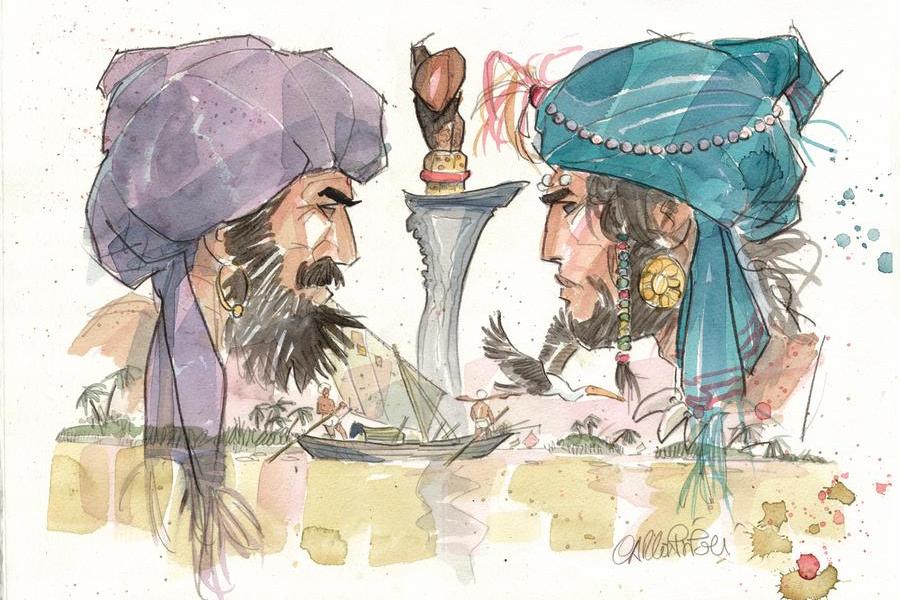
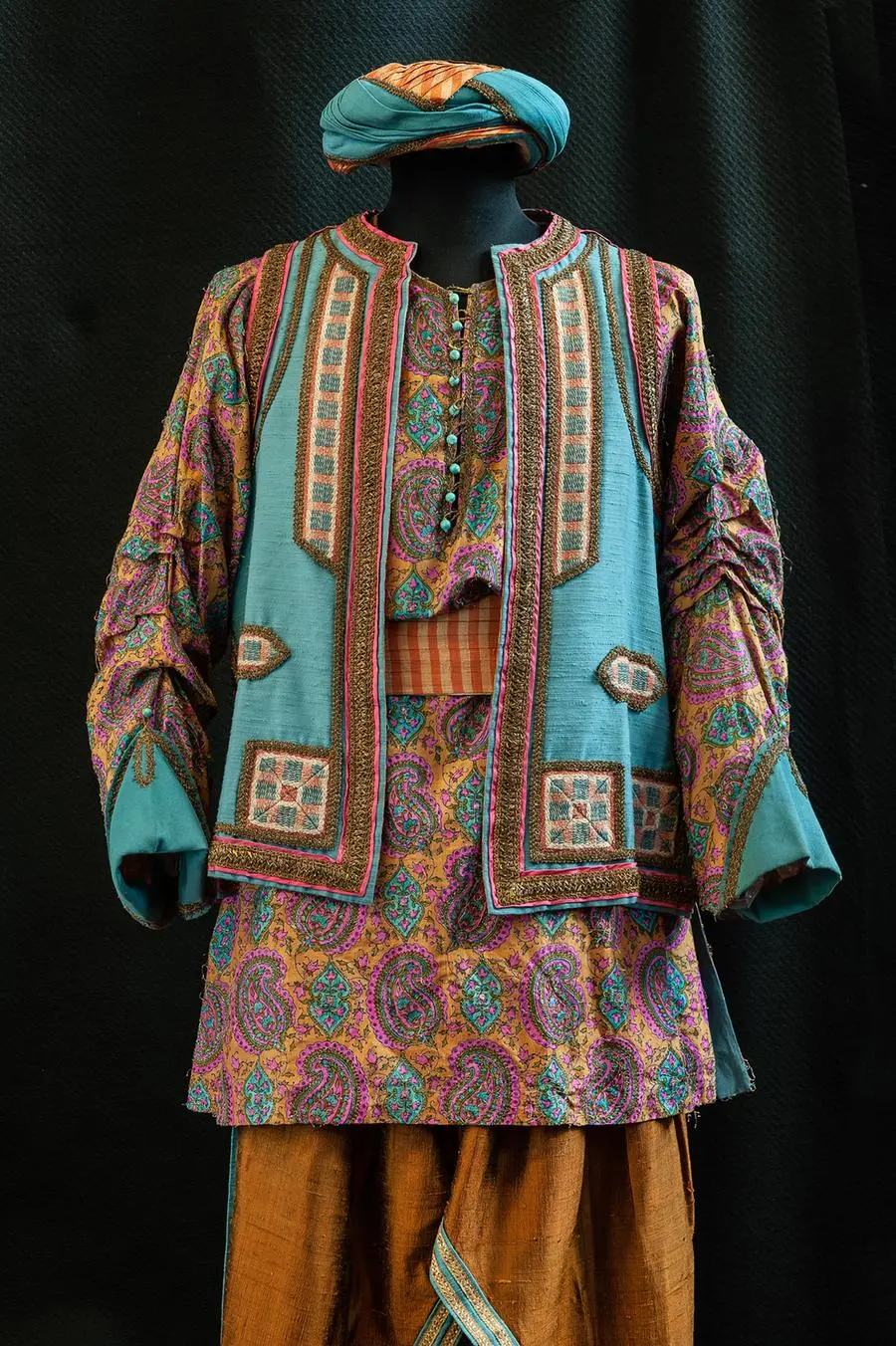
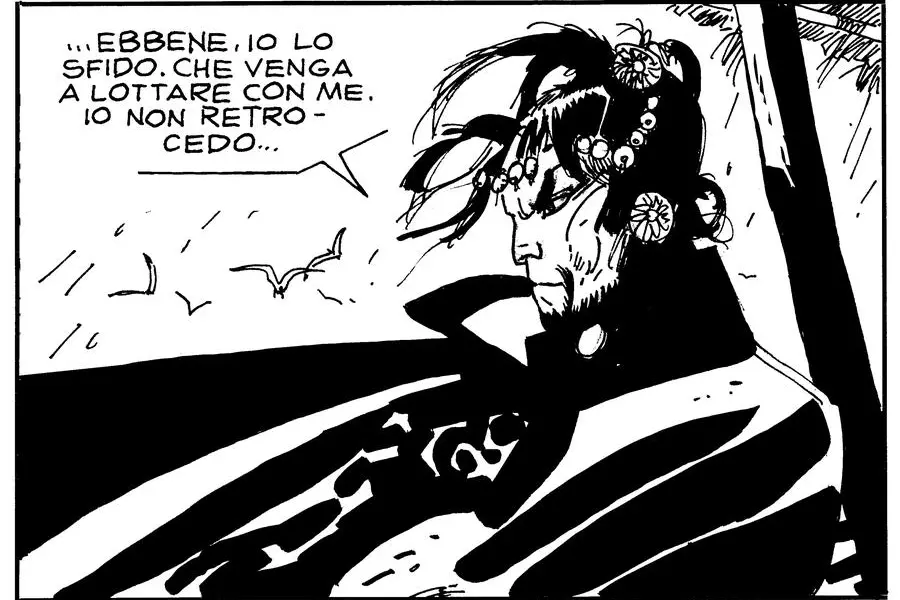
Finally, the exhibition opens up to the many visual reincarnations of Sandokan: from the cinema of the 1940s to television, from the great RAI dramas to in-depth programs and television parodies, passing through comics, costume sketches and illustration, for which original preparatory drawings by memorable illustrators such as Alberto Della Valle and comic artists known throughout the world such as Hugo Pratt will be visible. A century of images and testimonies that confirm the vitality of a myth capable of crossing languages, eras and generations while maintaining those values of adventure, courage and loyalty intact.
The exhibition has the patronage of the Ministry of Culture and the Municipality of Monza and was created thanks to the active collaboration of the Villa Reale and Park Consortium of Monza and of institutions and private individuals who enthusiastically joined the project, making their precious objects, documents, memorabilia and above all their cultural skills available. Among these are the Museum of Civilizations of Rome, the Tancredi Foundation of Barolo, the Matania/Della Valle heirs, the Cong SA – Hugo Pratt properties, the Sarti Archive, the Stibbert Museum of Florence, the RAI, the Cineteca Nazionale and the Istituto Luce.