




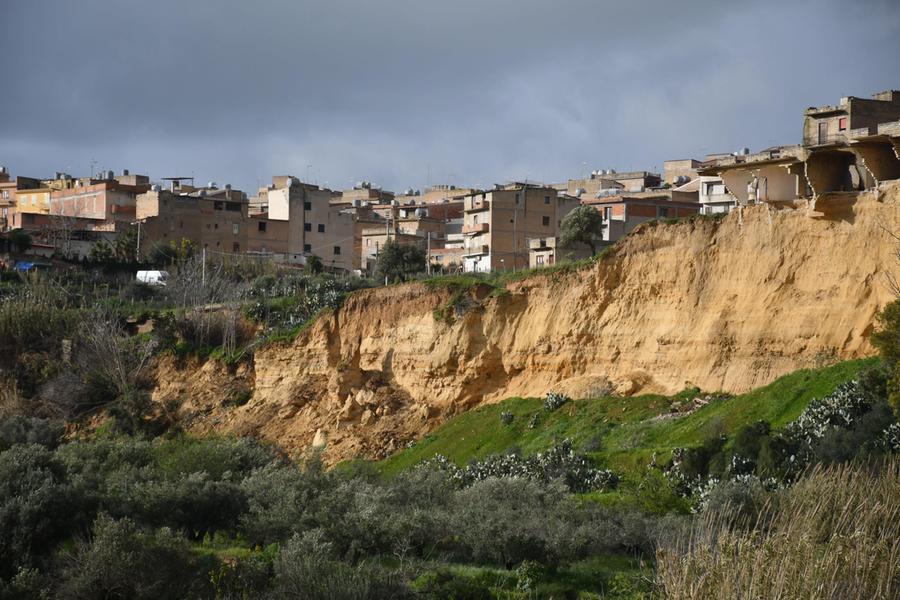
The ground continues to move in Niscemi. Second geologists from the University of Florenceappointed by the Civil Protection, the landslide remains unstable and There are no interventions capable of definitive stabilization the entire slope.
An episode that brings us back to the center the theme of the fragility of the Italian territory. To understand why landslides and floods are so widespread in our country we interviewed Erasmo D’Angelisjournalist and environmental communicator.
The Niscemi landslide brings the issue of the fragility of the Italian territory back to the center. How much does the nature of the soil weigh and how much does man’s responsibility?
«We can’t say we didn’t expect it. Niscemi, like many Italian municipalities, stands on clayey and sandy ridges, not very rocky. Italy is geologically young: it emerged from the waters much later than other continents and this makes our soil fragile. That ridge was once the seabed. We knew that that landslide would happen again: since 1997 that area has been classified as highly dangerous. Yet, once the emergency has passed, it is forgotten. Fundamental works had been promised, such as the regulation of the waters of the Benefizio stream, where today even illegal waste ends up. The funds were there, but construction never started due to years of disputes. The lack of prevention has thus been added to the natural fragility.”
So is hydrogeological instability the result of both the nature of the territory and human choices?
«They both weigh heavily, but the second has enormously aggravated the first. In recent decades, choices have been made that have multiplied the risk. From 1956 to today we have gone from around 3% of built-up territory to 8.5%: we have almost tripled the built-up area. It is unique in the world. This also occurred through four building amnesties, a practice that simply does not exist in Europe. We built on the banks of rivers, on landslide slopes, on areas that the master plans indicated as prohibited. If you build in risk areas and don’t carry out defense and maintenance works, it’s inevitable that sooner or later something will collapse.”
The numbers on landslides in Italy are impressive. What do they really say?
«They tell a reality that we often ignore. Approximately 750 thousand landslides are registered in the 27 countries of the European Union: over 620 thousand are found in Italy. It’s a fact that says it all. Furthermore, we are also a country where an enormous quantity of water falls: around 300 billion cubic meters of rain per year, distributed along 7,546 waterways. It is an extraordinary wealth, but this water arrives on very unstable terrain. In the last century we have recorded 17 thousand major landslides, almost 6 thousand deaths, millions of displaced people. And every year we spend billions to repair the damage. This is the photograph of the country we live in.”
What would it really mean to move from emergency management to prevention?
«It means changing the public spending model. We spend on average every year 4 billion on earthquakes, 4 billion on landslides and floods, 2.5 billion on droughts, 1 billion on fires. Always after. The money is there. Let’s think about the 170 billion Superbonus, the largest investment since the post-war period: we have redone facades, but forgotten structural anti-seismic and safety interventions. In the Pnrr there is no strong voice on landslides, floods, earthquakes. Ordinary maintenance means investing before, not after.”
How much does a cultural issue also weigh in the way we face these risks?
«We are a very fatalistic people: we tend to say “It happened, it won’t happen again” and we move on. We should develop a true awareness of risk as a daily fact, not an extraordinary one. We live in a country that concentrates almost all possible natural dangers: earthquakes, landslides, floods, volcanoes. We must shorten the distance between knowledge of the risks and concrete protection of the territory.”
What should be the next step to truly protect Italian territory?
«Our Civil Protection is among the best in the world. We must support it with true “civil prevention”: a stable, continuous system that works every day on climate adaptation and risk reduction. And this requires a change of mentality: considering the care of Creation as a daily responsibility, not as a response to catastrophes. We have all the necessary knowledge, technologies and resources. We just have to decide to do it.”
In collaboration with Credere
Credere, the magazine for living the “adventure of faith”
BELIEVE is the magazine that offers you stories, characters and columns every week to inspire faith in everyday life. Already chosen as the “Official Magazine of the Jubilee of Mercy”, it is a newspaper rich in content for the spirit, with many testimonies of famous people and ordinary people and the gestures and words of the Pope, closer than ever.
Discover the magazine and subscribe »