



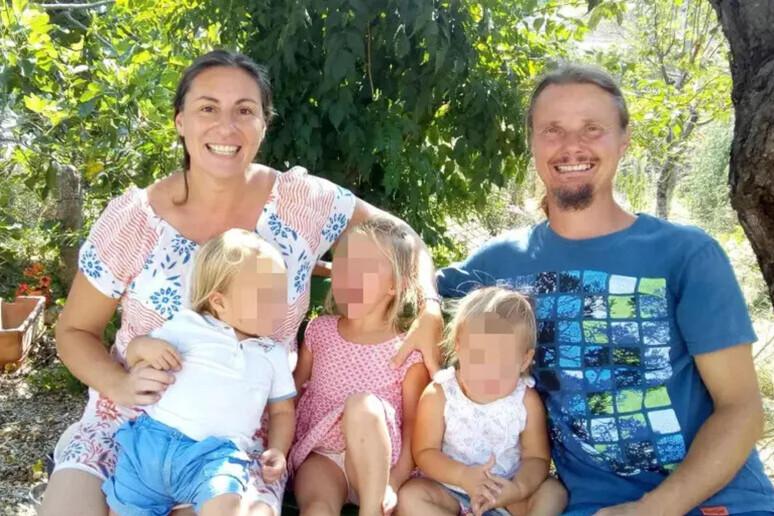
In recent months the so-called “forest family” case has received widespread media coverage, generating a heated public debate which, however, risks shifting attention away from the real needs of the minors involved. As often happens in highly polarized situations, the complexity is simplified into opposing narratives: on the one hand the family represented as the victim of an invasive system, on the other the institutions perceived as arbitrary and intrusive. In this scenario, the children’s point of view – which should remain the fulcrum of every intervention – tends to disappear or be exploited.
One of the most problematic effects of this representation is the progressive delegitimisation, in the eyes of public opinion, of the work carried out by professionals, social services and judicial authorities. The idea is spreading that institutions “rip” children away from families, fueling mistrust and suspicion towards a system which, on the contrary, is called upon to operate according to rigorous criteria, based on technical, legal and clinical evaluations. This narrative is not only misleading, but risks compromising the very possibility of building effective working alliances with families.
It is important to remember clearly that, in our system, the removal of a minor from his family of origin represents an extreme measure, adopted only in the presence of conditions of serious prejudice. This is not a light or frequent intervention: on the contrary, the data shows that Italy is the European country that resorts to removal the least, with percentages ranging from half to a third.
In reality, an opposite trend is observed: that is significant tolerance even in the face of problematic situationswith the result that, very often, there are minors who remain exposed to inadequate contexts for a long time before effective protection measures are activated.
The reasons for this lack of protection action are multiple: legal, psychological and cultural. Not the least of which is due to the fact that, if you intervene, you can easily be attacked and banned; vice versa, if no action is taken, no one will censure the lack of protective action, except in cases – which unfortunately happen, but fortunately are rare – in which an accident occurs.
In this sense, the idea that there is an excess of intervention appears difficult to support. Rather, the system is called upon to find a complex balance between respecting the right of parents to raise their children and the duty to protect minors when those rights are compromised. The principle according to which “children are parents” represents a misleading simplification: children are not “someone’s”, but are subjects of rights, bearers of needs and interests that must be recognized and protected also, if necessary, regardless of the choices or beliefs of adults. At the same time, it is essential that professionals maintain a self-critical look at their work.
The risk, in high-conflict situations, is to enter into symmetrical dynamics with families, fueling relational escalations that can harden positions and make more likely the very interventions limiting parental responsibility that one would like to avoid. The ability to maintain a balanced, non-reactive and dialogue-oriented professional posture represents a crucial element in preventing such drifts.
In conclusion, cases like that of the “forest family” they require careful and non-ideological readingcapable of bringing together the complexity of situations and the centrality of minors’ rights. Only in this way is it possible to avoid harmful simplifications and contribute to a culture of protection that is neither persecutory nor deresponsible, but truly oriented towards the well-being of children.
*Marco Chistolini, scientific director of CIAI (the first Italian institution to deal with international adoption)