



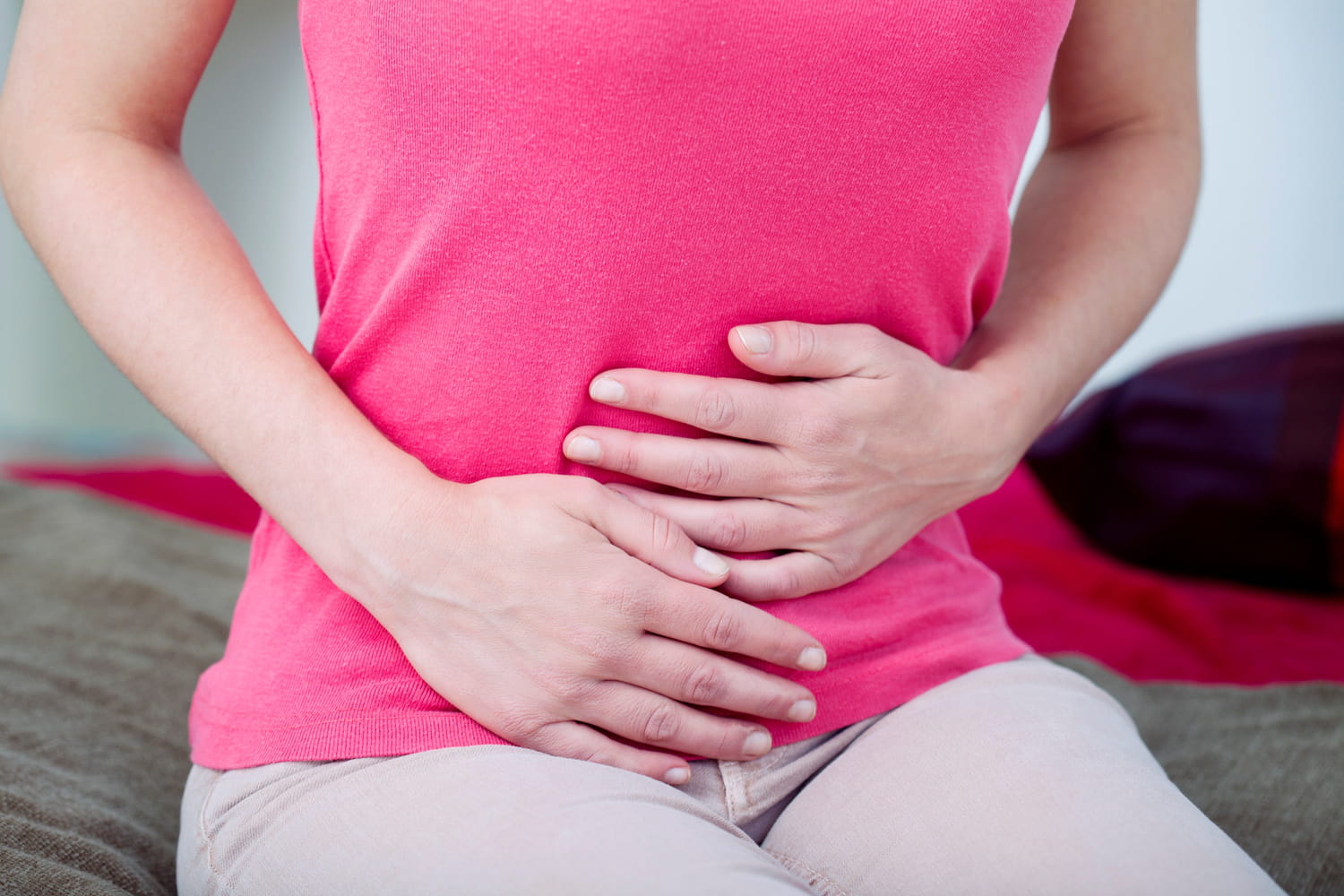
Many women complain of bloating after the age of 50. The stomach is swollen, the feeling of heaviness almost permanent. There are several solutions but Dr Pauline Jouët recommends one as a priority.
In women, a swollen stomach is a fairly common reason for consultation. They often suffer from bloating from the age of 40 and then at 50. These digestive disorders can be linked to the pre-menopause phase, menopause and/or being overweight. “The first problem to look for in fifty-year-old women who have a swollen stomach is recent weight gain, explains Dr Pauline Jouët, hepato-gastro-enterologist. In postmenopausal women, fat will tend to settle in the belly, with the symptom being a feeling of abdominal tension..”
Indeed, the distribution of fat in women before this phase is called gynoid; women tend to accumulate them on the hips, buttocks and thighs. After menopause, they adopt a male-type distribution, called android (fats located at the visceral level). This new distribution of fats is linked to the fall in female hormones (estrogen and progesterone). “Doctors therefore recommend doing physical exercise such as walking, cycling or taking walks. Physical activity should ideally be supplemented with new food choices by avoiding taking large quantities of foods that promote bloating, such as garlic, onion or even cabbage.”, develops Dr Jouët.
But her first advice to women who have a swollen stomach at 50: try activated charcoal. “Activated charcoal medications can relieve bloating” she continues. The level of evidence is not high, but sufficient to be sometimes suggested by doctors to fix and absorb intestinal gas. Health authorities recommend activated charcoal to reduce bloating and flatulence after a meal, provided that the food supplement contains at least 1 gram of activated charcoal. Activated charcoal should be taken before and after a meal and away from possible medication.
Furthermore, a team of Spanish researchers recommends breathing exercises to patients suffering from this type of inconvenience. “Researchers believe bloating is a problem with diaphragm relaxation. Their hypothesis is that the diaphragm, which is a muscle between the lungs and the viscera which relaxes after eating, paradoxically contracts in certain patients after a meal, describes our doctor. They therefore offer deep abdominal breathing exercises 5 minutes before each meal and 5 minutes after each meal. These 30 minutes of daily exercise can effectively reduce bloating.” Also, existing constipation must be treated. “The more constipated a person is, the more gas transit is slowed down. Treating constipation can therefore reduce bloating.”
Abdominal swelling causes a feeling of discomfort in patients. This feeling of unease can give rise to anxiety, which itself can contribute to the appearance of digestive symptoms. Hence the doctor’s final advice: “Anxious women who experience bloating can learn to better manage their stress with hypnosis. We use hypnosis focused on the management of digestive disorders, because this therapy has shown its effectiveness in reducing this type of digestive disorder, and can also be effective on anxiety. Medication is offered as a last resort.”
Thanks to Dr Pauline Jouët, hepato-gastroenterologist at Avicenne hospital.