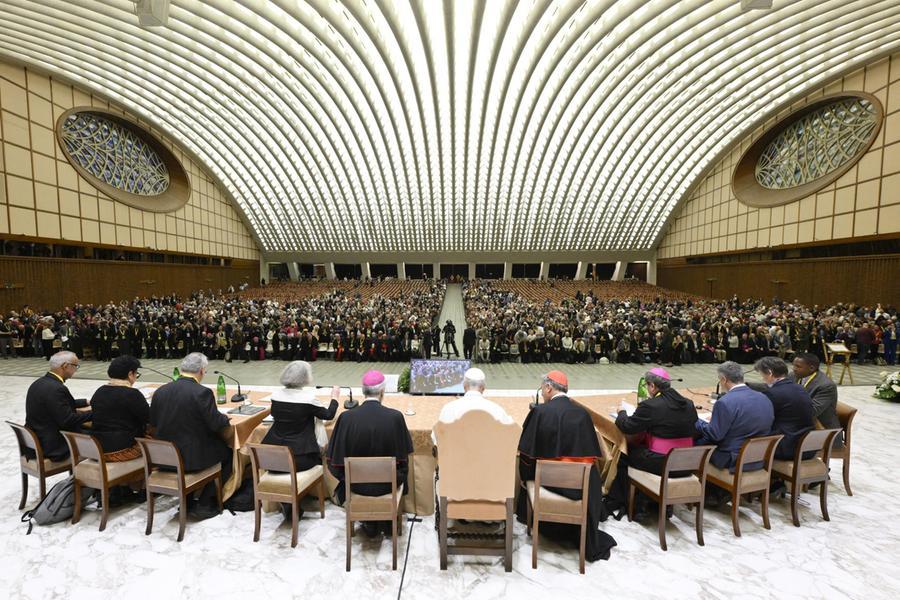





How to overcome the lack of priests for the management of parishes and liturgical animation? An answer comes from the diocesan assembly of Church of Verona led by the bishop Domenico Pompili. Among the propositions voted on May 16th, an important novelty emerges: in parishes without the stable presence of a priest, pastoral guidance may also be entrusted to lay men and women.
The approved text explicitly recalls the Code of Canon Law and states that «in parishes without the presence of a presbyter, the life of the community is entrusted to a pastoral guide. This task can also be entrusted to lay men and women.”
A perspective which, as the diocese explains, does not concern the theme of female priesthood but that of ecclesial co-responsibility. To clarify this to the Veronese newspaper The Arena it was monsignor Ezio Falavegnaparish priest of the cathedral and professor of pastoral theology at the Theological Faculty of the Triveneto: «It is not an ordained ministry», he specified, «The debate on female priesthood has nothing to do with this, which concerns the universal Church, certainly not that of Verona. Here it is a question of recognizing important roles, even for women, in the governance of the Church.”
The approved propositions also insist on the valorization of the female presence in ecclesial communities. In fact, the document states that “the parishes enhance the presence and role of women in our communities” and that “they make use of the faculty extended to women to exercise the ministry of lector and acolyte”, according to the provisions of the motu proprio Spiritus Domini of Pope Francis.
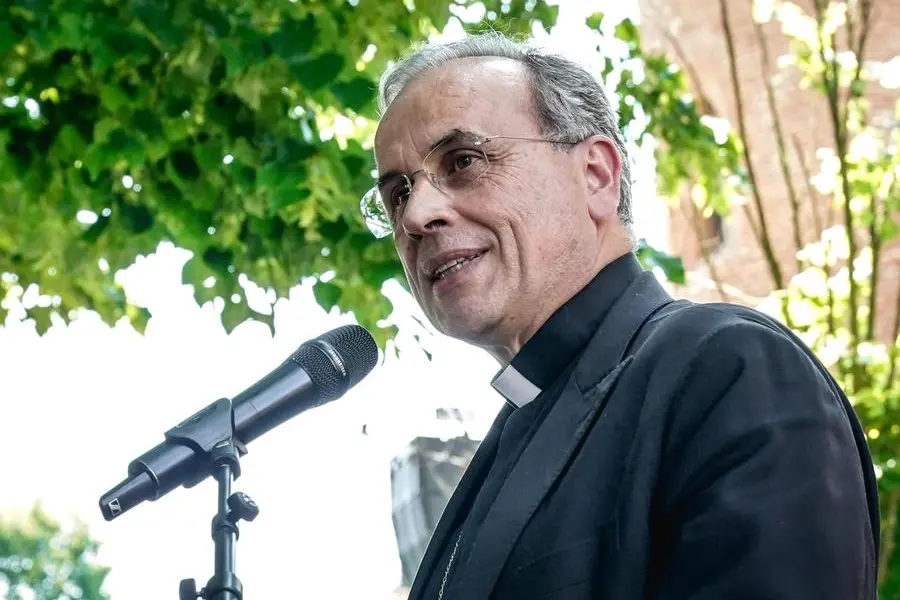
The bishop of Verona Domenico Pompili
(HANDLE)
The choices already made by Pompili
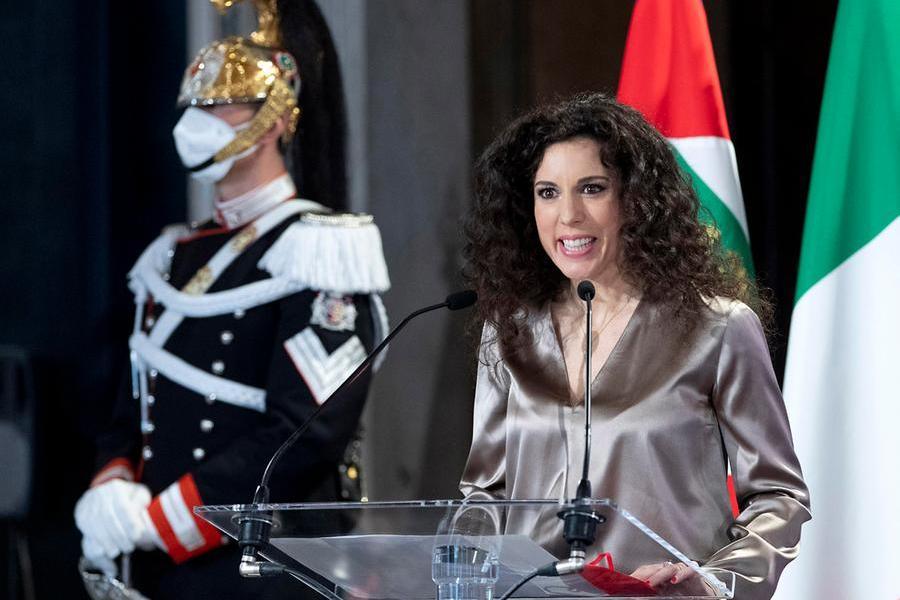
Falavegna also recalled some choices already made by Monsignor Pompili who assigned the role of episcopal delegate to a woman, Lucia Vantini, for the area of proximity. Then to another layman, Roberto Marrella, the economic one. And to Don Davide Adami the announcement.
The process will continue in the coming weeks with new in-depth meetings, starting from the one scheduled for 13 June, to concretely define the methods of application of the lines approved by the assembly.
A model already present in Italy and in the South of the world
Similar experiences already exist in other Italian dioceses, such as Vicenza, Trento and Reggio Emilia, where ministerial groups also composed of lay people and women with pastoral responsibilities operate in communities without a resident parish priest. «These groups, which receive a delegation from the bishop, are responsible for everything, from catechesis to charity, from the economy to assistance to the sick up to liturgical celebrations», Falavegna further explained, «in some cases, on Sundays, they can be “liturgies of the Word”. It is a way to experience the day of the Lord in a different way».
An experience that recalls what has been happening for years in many Churches in the South of the world, from Africa to Latin America where the role of lay people, men and women, is highly developed, also to lead parishes due to the shortage of priests. From catechesis to training, up to celebrations without the priest, where a lay man or woman is minister of the Word.
The Church of the future between vocational crisis and new ministries
The diocese of Verona today has 380 parishes and around six hundred priests, of which five hundred are diocesan. A number destined to decrease in the coming years. But, as Falavegna underlined, the change does not arise only from the vocational emergency: «The need to assign pastoral leadership roles to lay people, including women, is not only dictated by the decrease in priests, but by the experience of a Church with a different posture. Capable of expressing this renewed awareness entrusted to us by the Gospel and the Second Vatican Council.”
An experience that has already been started in other parts of Italy. For a few years there diocese of Turin, led by the cardinal Roberto Repolehas launched specific training courses aimed at lay people called to carry out basic functions in parishes where the presence of permanent priests is not possible. In Alto Adige there are around 500 lay people who lead public liturgiesalso for funerals, especially in the valleys where there is greater need.
A question also addressed by the bishop of Asti, Marco Prastarowho recently published the book Let it not be so among you. Power in the Chesa (San Paolo): «In this period», he said in an interview with the monthly magazine Jesus for the release of the volume, «I am carrying out a pastoral visit in the diocese. Quite a few confide in me: “We regret when there was our old Don Camillo-style parish priest and we felt like an army.” The mayors of small towns implore me: “Don’t take away the parish priest from us, because they have already taken away everything from us, from the school to the pharmacy to the post office…”. There I realize that a time is truly over and why try to go back to that model – with all the advantages it had and which we regret, and with all the limitations which we do not regret – it’s not possible and it’s not even the right strategy.” The alternative for Prastaro is another: «Let’s ask ourselves: when we say that the Church must exist in today’s reality, who are we actually referring to? Do we mean to say that the Church exists if the parish priest is there? Or is the Church there because there are Christians? This is the change we will be asked to make: the Church will not abandon the territories even if it will no longer have a resident parish priest or Mass every week in all the churches. The community will continue to be present because there are Christians who live there and try to bear witness to the faith. And we must prepare for this.”