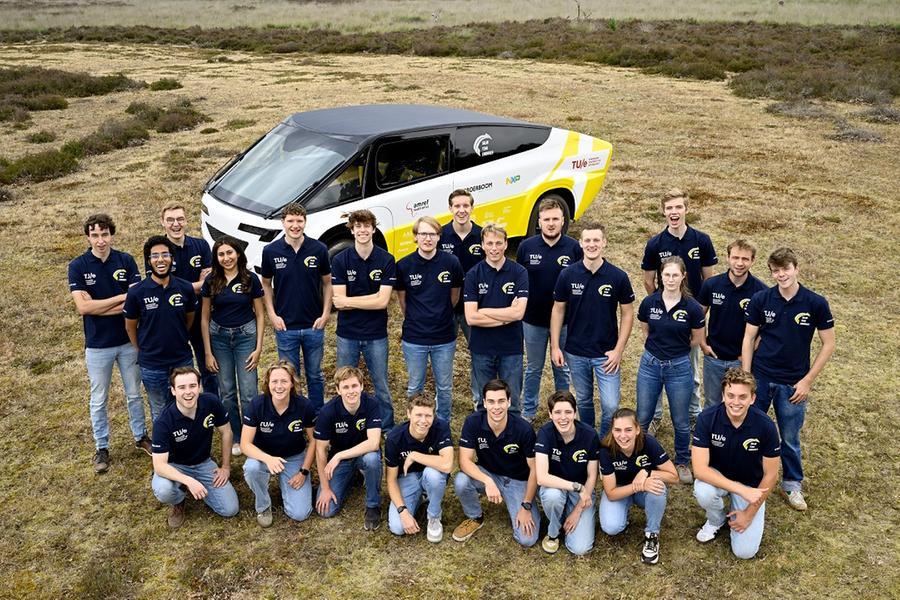
It’s called Stella Juva, and it’s the first ambulance in the world that runs on solar energy. This vehicle, in fact, generates energy thanks to the solar panels installed on the roof, using it both for moving the vehicle and for powering medical equipment. On a sunny day, it is estimated that the solar ambulance can travel up to 715 kilometers, making the provision of medical care completely independent of charging infrastructure.
This vehicle was designed to make medical care accessible to even people in the most remote areas, where poor roads and fuel or electricity shortages limit access to care.
Stella Juva was created by the student team Solar Team Eindhoven from TU Eindhoven, which aims not only to accelerate the transition towards a more sustainable future, but also to create a concrete social impact by improving access to healthcare through the potential of solar energy.
To develop the ambulance the team of students has collaborated with international health organizations including Amref Health Africa. «For millions of people, good healthcare remains a mirage. Access to care should not depend on the presence of electricity or fuel. Amref Health Africa has been working for almost 70 years to make healthcare in Africa better and more accessible. In the most remote areas, health workers travel enormous distances by bicycle and electricity is never taken for granted», says Femke Maurits, Head of Partnerships at Amref Health Africa in the Netherlands. «This is why we are proud to explore together with Solar Team Eindhoven how solar innovation can bring treatments closer to people who today are almost completely excluded from them».
In August, Solar Team Eindhoven will travel to Kenya, where they will test the Stella Juva in places where the vehicle may be deployed in the near future, operating differently than traditional ambulances: not by transporting patients to hospitals, but bringing care directly to people. In this way, health workers will be able to carry out blood tests, carry out screening for diseases such as tuberculosis and malaria, administer vaccinations, carry out obstetric ultrasounds and promptly treat the most common pathologies, even in the most isolated villages and communities.