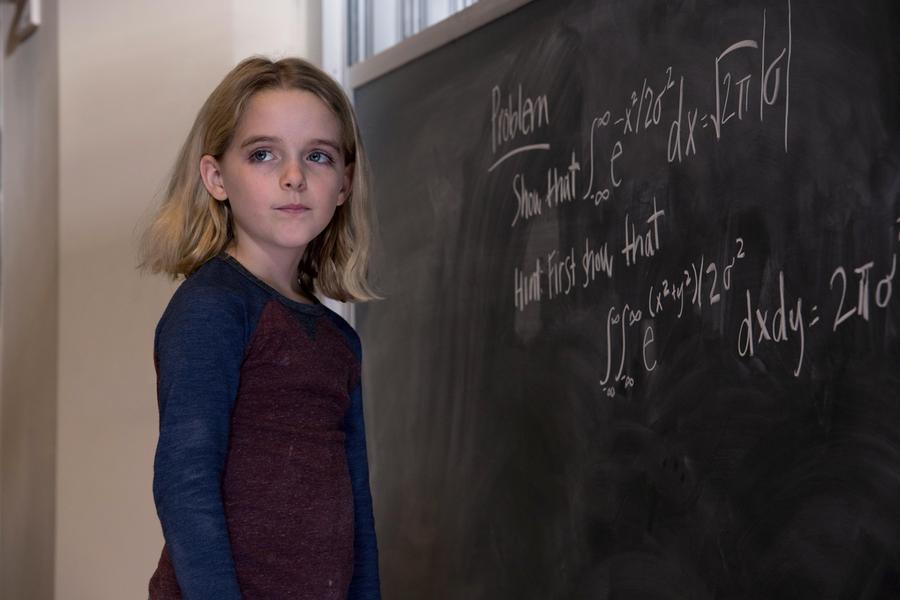
Children like Mary Adler, protagonist of the film Gifed, broadcast on 29 July 2026 in prime time on Rai Uno, they really exist, they are not even that rare and they are among us. But it’s not always easy to understand their gift and help them manage it. The Lab-Talento (Italian laboratory for research and development of potential, talent and giftedness) was created for them at the University of Pavia in 2009. It is the reference point for families and schools on the topic at a national level. Organizes: workshops, consultancy, evaluations, teacher training. Some time ago it opened a Christian family one of his workshops during which we met operators, children and parents. Here’s what we discovered.
We begin with the distribution of a white card, with only the case on the table. Bruno Munari’s “travel” sculptures are built: «Here there is no right or wrong», Silvana Castellucchio, who coordinates the art therapy moment with Massimo Negri, explains to her audience of 6-9 year olds, «you just need to make the wheels of your imagination run faster than light». To the left, towards the back, a hand is raised. It belongs to a brat who will be seven years old badly counted: “But it can’t be: no body that has mass can go faster than light.” The reply tries to gently dismantle this ferocious logic, explaining that with imagination you can do anything, even messing up the laws of physics. We are in Pavia, during the last Stima laboratory of Lab-Talento, the center of the University’s Psychology department which since 2009, directed by Professor Maria Assunta Zanetti, has been offering families, experts, schools, tools to orient themselves in the little-known sea of giftedness.
If it is now well established that, perhaps with mixed results, the inclusion of those who are disadvantaged is being addressed, very few know that tAmong us there are 5 percent of little heads that advance prematurely, while the body keeps pace with the registry office and the “heart” understood in an emotional sense even more slowly. An extra gear, yes, but also an imbalance between the emotional and rational part that weighs on and puts children and families face to face with what Professor Zanetti calls “a cumbersome gift”, difficult to manage in contact with the rest of the world, at an age when growth is relationship.
«Giftedness», he explains, «is determined biologically: there is familiarity and the potential is democratic, it makes no social, wealth or origin distinctions. But it is true that it is dynamic: if you don’t want to turn it off, you have to recognize and support it, remembering that including is not “normalizing” but keeping differences together. The parable also says that talent should not be buried but brought to bear fruit and it really only does so if it is socialised: this is why I say no to special classes, but yes to special educational needs, and perhaps to open classes, things that the legislation already provides for. We don’t need new laws, it would be enough to train teachers on this issue. Our job is to accompany: you don’t have to speed up, but you don’t have to mortify either, and different doesn’t mean wrong. And if we understand that parents are pushing, we slow down.”
Pavia can be reached in many ways: word of mouth, teachers, pediatricians who can’t find the key to a “school problem”. «We had a 13-year-old boy», says Sara Sparaciari, head of the Evaluation Area«who no longer wanted to go to school because when he spoke he was ignored by his classmates, as if he were invisible. Many suffer from exclusion. It also happens to parents: your child is doing well at school, what problems do you have?
But here we are talking about life not about grades, about an innate curiosity that bites, about an outsider who doesn’t understand it, about loneliness: «For this reason our evaluation, never before the age of six and with the consent of both parents, is not only cognitive, but also emotional and contextual. We do not give numbers to the schools we involve: because an IQ of 130-140 (the average is 100, ed.) can become stigmatized. And instead talent, whatever it is, must be a resource, not a burden.”
Listening to the parents tell their stories around a table in the Tassi courtyard of the University of Pavia, one understands that the prevailing feeling at the beginning is confusion.
Sometimes everything is evident from a very young age: «At the age of one and a half, Leonardo took off his pacifier in a stroller and read the four-digit number plates. People stopped me: “Do you read the numbers?”. Yes, he read them, and I almost felt like apologizing, I didn’t know what, while he struggled to sleep because his brain never turned off. Even today it is as if he feels obliged to give his best even if no one asks him to, on the contrary. He comes back from school weighed down, he doesn’t bring home satisfactory relationships.”
It is no coincidence, as Valeria reports, that other times everything explodes coinciding with the start of school, starting from the difficulty of managing the time left after learning too earlywith the risk of misdiagnosis of hyperactivity: «Milena in first grade read two comics a day while she waited for the others. And he only bonded with a little girl with autism spectrum disorder. He said: “Only she understands me, she is the smartest of all”. My fear is dropping out of school.”
«For your first child», Riccardo echoes, «you don’t know if the questions he asks you are from a child of that age, we went to a psychiatrist for dyslexia and she spoke of “high potential”; he knew Lab-Talento and sent us here.” Daniela and her two children arrived thanks to a teacher who, in a small village in the Piacenza area, understood everything: «I tried to teach them to cultivate their own interests, without judging others if they have different ones. Riccardo was oppositional even as a child, but in the classics he found his environment and as he grew up the balance improved. Lau24ra, on the other hand, only told me later that she was isolated at school.”
Everyone communicates the anxiety of the relentless questions: “When my daughter was 5 years old,” Teresa recalls, almost moving, “I stayed up at night to study, I didn’t trust parental controls and I feared she would search alone on the Internet, I feared I wasn’t up to par as a mother.” Now at least they have learned that when you don’t know: «The best answer is “let’s look together”». Which, if you think about it, is the same thing you do here, feeling less alone.
(From FC 24/24)