






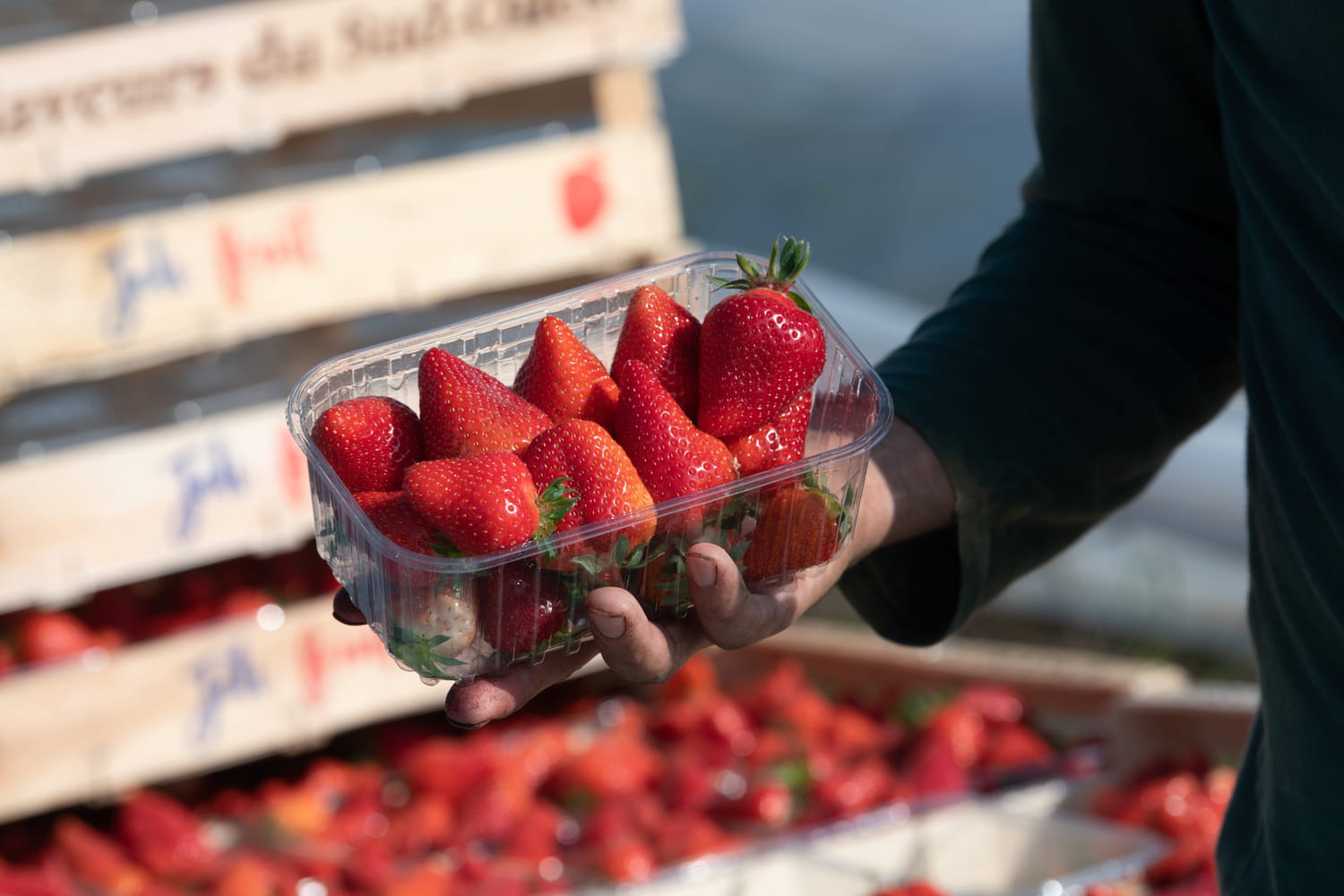
Strawberries are back in April! Researchers estimate that incorporating them into your daily menu can turn back the brain’s biological clock by 2 to 3 years.
The month of April marks the long-awaited return of strawberries, one of the lowest-calorie and most vitamin-rich spring fruits. But that’s not all: strawberries are also excellent for the brain (just like dandelion which is also found in gardens). “Strawberry is not only a spring treat, it is a real concentrate of protection for our neurons. Its antioxidants act as a natural “anti-rust” which helps the brain maintain its liveliness and better resist the effects of time“, confirms Dr. Jean-Marie Bourre, neuroscience doctor in his book “The new diet of the brain” (ed. Odile Jacob).
In a study published in the journal Nutrition, Metabolism & Cardiovascular DiseasesAmerican researchers followed a group of men and women aged 66 to 78, all in good health, in order to observe the impact of regular consumption of strawberries on their brain capacities. During the experiment, half of the volunteers ate strawberries every day while the rest of the group received a placebo powder.
After two months of follow-up, participants who included strawberries in their diet showed a 5.2% increase in their cognitive processing speed. Clearly, their brains processed information more quickly, which is a sign of better neuronal plasticity. Researchers often consider that an increase of this order corresponds to a cognitive “rejuvenation” of 2 to 3 years.
Researchers found significant effects on the brain with a daily consumption of 26 grams of freeze-dried strawberry powder. Nutritionally, this is equivalent to eating around 15 fresh strawberries per day, or around a hundred strawberries per week (3 large punnets). A figure that may seem high, but which easily fits into a balanced diet over two meals. Of course, strawberries should be eaten without sugar or Chantilly cream. These additions would cause insulin spikes and inflammation, thus neutralizing the protective effects of the fruit’s antioxidants.
In the same way as blueberries, the protective effect comes mainly from strawberries’ richness in polyphenols (notably anthocyanins) and vitamin C. On the one hand, these compounds fight against oxidative stress and inflammation, two major factors in age-related cognitive decline. On the other hand, they are capable of crossing the blood-brain barrier to lodge in areas of the brain linked to learning and memory, such as the hippocampus. This scientifically explains why strawberries are so beneficial for cognitive functions.
In April, the strawberries that offer the most flavor are the early French varieties such as Gariguette, famous for its tangy scent, or Ciflorette, whose natural sweetness means you can do without sugar entirely. Avoid strawberries that are too dark red and come from far away (often from Spain): they are selected to withstand transport but are sorely lacking in nutrients and taste.