






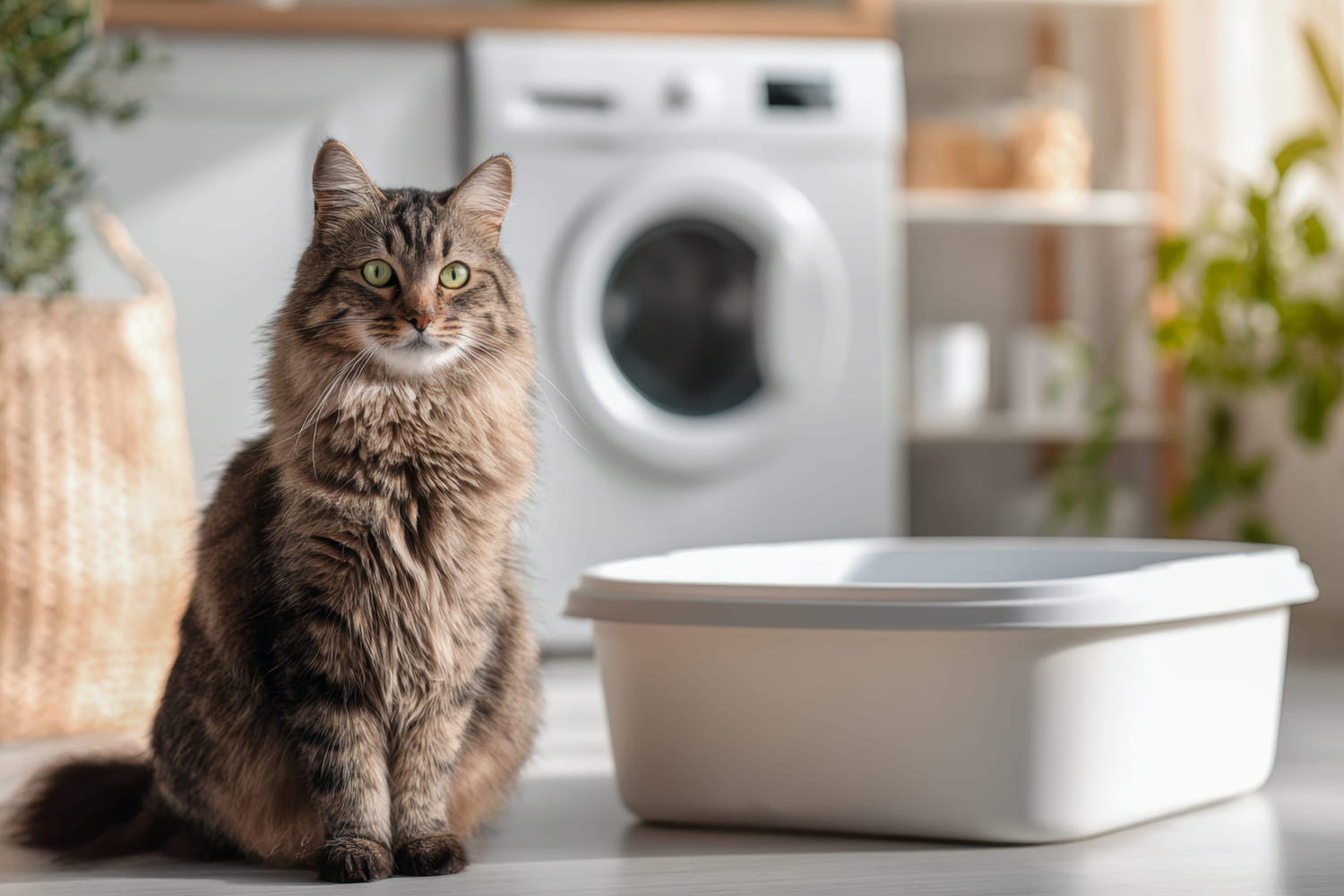
When their cat does its business somewhere other than in the litter box provided for this purpose, many people are convinced that it is to take revenge. What is it really? We asked a feline behaviorist to find out.
Coming home and finding cat feces on the floor, being woken up in the night by the cat peeing in the bed, discovering the soiled bath mat… These eliminations outside the litter box can become burdensome, even if they remain occasional. The cat being a very clean animal, some people are convinced that it does it to send them a message: it wants to annoy them, it is taking revenge for an absence or quite simply for a refusal to let them eat something.
But is this really the case? “We naturally tend to attribute human intentions to them (this is called anthropomorphism) because this helps us make sense of their behavior. But this reading often leads us to an error of interpretation, and can prevent us from identifying the real cause of the problem”explains Natalia Lindado, feline behaviorist. So, no, a cat who relieves himself outside his box does not have bad intentions, and it is important to understand why he did it.
Our expert tells us that if a cat does its business outside the litter box, it is “above all a signal of discomfort, physical or emotional”. And the causes can be numerous: they can have a physiological origin (cystitis, joint or digestive pain making it difficult to go into the tank or climb over the edge, etc.) but also behavioral and environmental. The cat may feel stress or anxiety “linked to problems of cohabitation (with another cat, a dog, or even a person), to a problem of sharing resources (if another animal “guards” access to the litter box), or to an unsuitable litter environment: dirty box, litter too exposed (near a window or a door through which other animals pass), substrate that is not suitable for the cat, or even a box that is too inaccessible”. Natalia Lindado specifies that “in many cases, we find a combination of the two: a medical cause which generates stress, or stress which weakens the physical state of the animal”. Sometimes, the phenomenon remains temporary. For example, if the cat is stressed because its humans have been away longer than usual, it may eliminate to soothe itself, pee on the suitcases to put its scent there because the ones that have been brought home are unknown to it. In other cases, it will be recurring.
Whatever happens, it is important to find the cause to be able to implement solutions, and the first thing to do is to consult your veterinarian to “rule out any physiological cause”. “If no medical cause is identified, or once it has been treated, the right reflex is to consult a qualified feline behaviorist”Natalia Lindado tells us, because this will allow “to identify the stress factors at play, to understand the context of the cat’s life and to put in place an appropriate action plan”. It could be“improve the litter environment”to create a stable routine for the cat, to establish soothing rituals or even to “working on cohabitation”but also to recall an essential point: “Punishments should be avoided in all cases, and even more so in this situation”.