




When the Word sets you on your way
The road that leads from Jerusalem to Emmaus is not just a geographical road. It is an internal threshold. On that road, on Easter afternoon, Luke places two disciples who walk away from the center of the promise, while the sun goes down and with it their hopes seem to go out. It’s time for disenchantmentthe time in which faith appears contradicted by facts. They speak, but their words do not open the future. They retrace the events, analyze them, tell them with precision, and yet everything converges towards a bitter conclusion: “We hoped”. Hope is in the past. Theirs is a closed knowledge, which knows the facts but does not grasp their meaning.
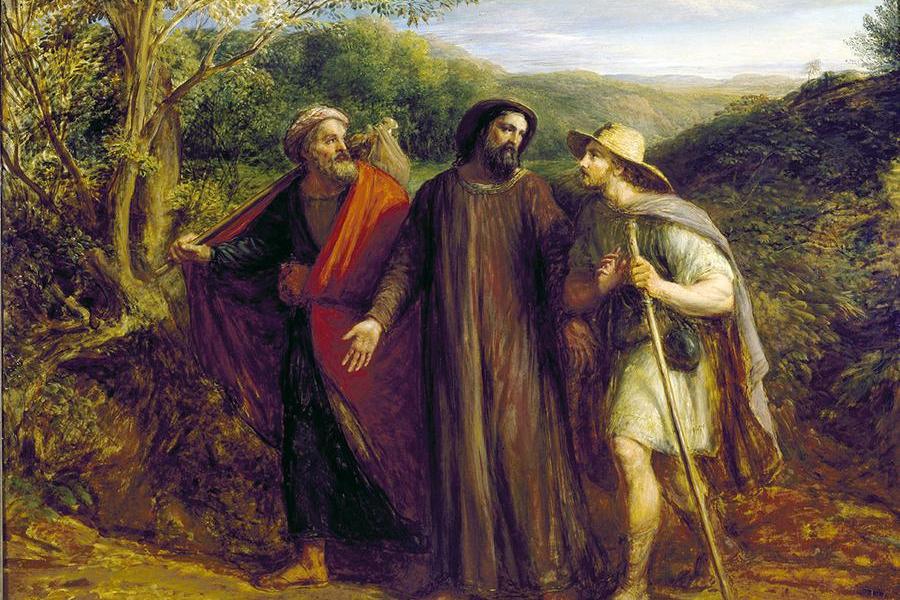
Jesus approaches like a stranger. He does not claim immediate recognition. Walk with them, at their pace, taking on the discreet form of your traveling companion. Luke notes that their eyes were prevented from recognizing him: not because Jesus is unrecognizable, but because their gaze is still captive of an incomplete reading of history. The Risen One’s first word is a question. He asks what they are talking about, what concerns them, what makes them sad. It is a question that digs, because it forces the disciples to put their wound into words. Easter pedagogy always begins from listening to human pain.
Cleopas responds with a hint of irony: “Only you are a stranger in Jerusalem.” In reality, the very one who is considered a stranger it’s the only one who knows the profound meaning of events. The disciples tell everything: Jesus the prophet, the condemnation, the cross, the empty tomb, the words of the women. They tell the whole Gospel, but how a failed story. It is possible to say everything about Jesus and not recognize him.
It is at this point that the Risen One speaks forcefully: “Fools and slow of heart to believe.” It is not a moral judgment, but a spiritual diagnosis. The heart, in the Bible, is the seat of intelligence. Slowness is not about feeling, but about the ability to understand. The problem of the disciples is not the dull emotion, but intelligence not yet converted. Then Jesus makes the decisive gesture: he interprets the Scriptures. From Moses to the prophets, he rereads the entire history of God as a story that leads to the cross and glory. It does not offer an abstract explanation, but teaches how to read life within the Word and the Word within life. The Easter faith was born here: when Scripture becomes key of reading existence. As they walk and listen, something changes inside the disciples. Later they will say it with simple and true words: “Didn’t our heart burn within us?”. It is the sign that the Word, finally understood, has begun to generate life.
Having reached Emmaus, Jesus acts as if he had to go further. The disciples invite him to stay, moved by a gesture of hospitality that comes from listening. And in the gesture of breaking bread the eyes open. The Eucharistic gesture, so familiar and yet decisive, becomes the place of recognition. But just when they recognize Jesus, he disappears from their sight. It is no longer in front of them, because it’s inside now: in the Word understood, in the bread shared, in the transformed life.
The story could end here, in the quiet of the evening. Instead it starts again. The two disciples get up immediately, in the night, and return to Jerusalem. The road is the same, but everything has changed. First it was an escape, now it’s a mission. First it descended towards the sunset, now it ascended towards the city of promise. Emmaus is the story of every disciple: a story in which loss can become revelation, sadness becomes ardor, the road back a place of a new beginning.