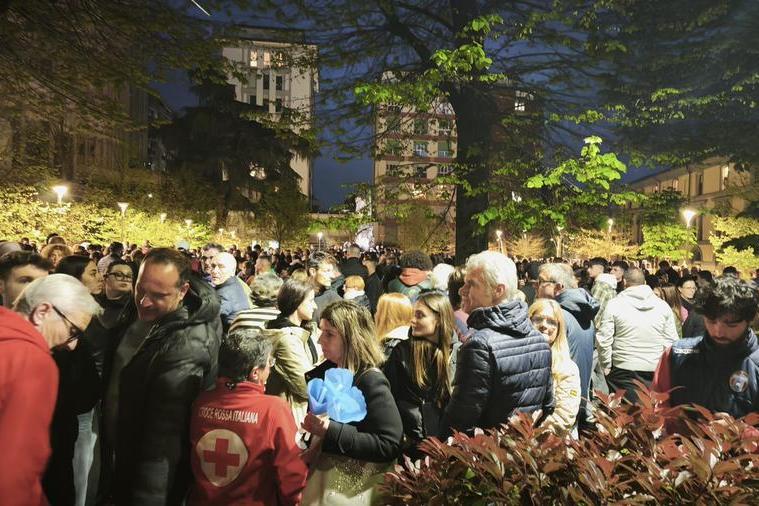




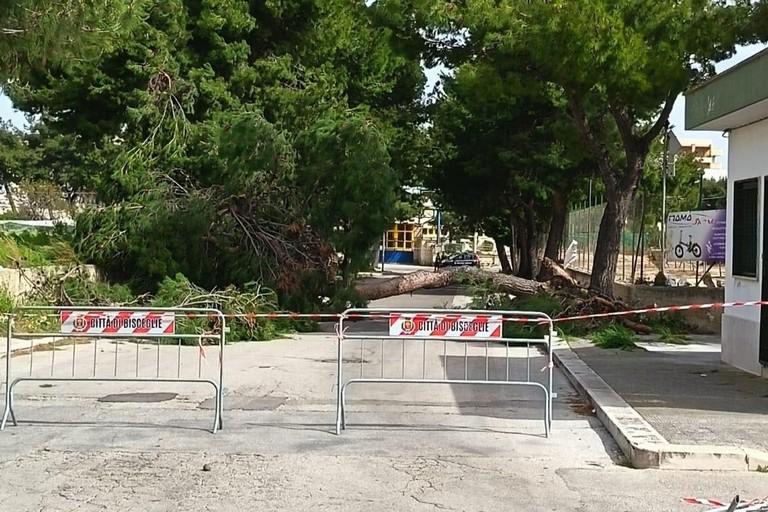
There are days that seem the same as many others, but instead they change everything. In Bisceglie, 12-year-old Alicia Amoruso’s return from school turned into a tragedy: a tree suddenly collapsed it shattered his life and that of his family.
A death that left an entire city speechless, between the pain of such a young life being cut short and the anger of those who had been reporting critical issues in that area for some time. How unpredictable is there really in a tree falling in the city?
Because what happened in Bisceglie it is not an isolated case. Just a few months ago, in Trani, a palm tree collapsed, touching a passerby and hitting a car: an episode without consequences only due to a fortuitous coincidence, but which he had already highlighted delays and difficulties in interventions.
AND from north to southevery time bad weather intensifies, news of trees blown down by the windoften accompanied by the same question: fatality or lack of prevention?
To understand how tragedies like this can be avoided, we interviewed Francesco Ferriniprofessor of Arboriculture at the University of Florence and expert in urban greenery.

Professor, the Bisceglie tragedy is unfortunately not an isolated case: in recent months similar episodes have occurred in various Italian cities, and another tragedy was close to Trani. Are we faced with a widespread problem in the management of urban greenery?
«Yes, the problem is widespread, but it must be read correctly: not in the sense that trees are “dangerous” in themselves, but rather in the sense that in many cities their management remains episodic, fragmented and often reactive. When correct management is lacking, the probability that even known or knowable critical issues will turn into emergencies increases.”
Often, after episodes like these, we talk about “fatality”. From your point of view, how much is truly unpredictable and how much are risks that can be prevented with correct management?
«A certain amount of uncertainty always exists, because zero risk with trees does not exist. But unpredictability is one thing, using “fatality” to cover project, monitoring and management shortcomings is another. Many risk factors can be reduced with correct choices, periodic checks and consistent interventions. In other words: not everything is predictable, but a lot can be prevented.”
Beyond the individual responsibilities to be ascertained, who are generally the subjects called upon to guarantee the safety and correct maintenance of trees in urban areas?
«The general responsibility falls on the owners or managers of the tree heritage, therefore in public areas on the municipal administrations. But safety does not depend on a single actor: different skills are needed to work together, between technicians, agronomists and administrations. The point is not just “who responds”, but how to organize green management capable of combining data, planning and interventions”.
In situations like these, how much does tree maintenance weigh compared to factors such as strong winds and increasingly intense climatic events?
«The climate crisis increasingly exposes trees to extreme events, including wind and intense rain. But this is not enough to explain everything. A tree already weakened by inadequate conditions or incorrect interventions reacts much worse to a disturbance. For this reason, in some cases, it is necessary to gradually renew the most fragile trees and focus on more resistant species.”
Can a tree that presents a risk of collapse be identified in time? What are the basic checks that should be carried out?
«Often yes, but not always with absolute certainty. Constant monitoring is needed, because the stability of a tree depends on many factors. The checks start from the census and a qualified visual inspection and, when critical issues emerge, continue with more in-depth checks, which also include soil and root analysis, which are often overlooked. Even the tools do not give absolute certainties: this is why prudence, continuity and updating are needed.”
Are there any protocols or guidelines for monitoring trees in the city? And, in practice, are they applied continuously?
«Yes, there are protocols and guidelines for managing trees in the city. The problem is that they are often not applied continuously: they intervene after a collapse or an emergency, instead of working regularly. More than the lack of tools, the difficulty in using them in a constant and coordinated way weighs heavily.”
Specifically, what is the most frequent mistake made today in the management of urban greenery?
«The most frequent mistake is treating the urban tree as a piece of furniture and not as the result of a technical project. This leads to choosing unsuitable species or placing them in unsuitable spaces, and then chasing problems with corrective interventions. It’s not enough to plant: you have to plant well, choosing the right species in the right place.”
We often talk about economic resources allocated to maintenance: in your experience, is the problem a lack of funds or a difficulty in planning and effectively using those already available?
«The problem is also the lack of resources, but above all the lack of planning and organisation. Without updated data and a plan, even available funds risk being spent badly or too late.”
What should change today in the management of public green areas to reduce the risk of episodes like these?
«We need to move from emergency management to constant planning. Trees must be considered as real urban infrastructures, not as decorative elements, and the initial choices must be more accurate, starting from species, soil and available space. It is also essential to build a network of shared skills and data. In short, less improvisation and more science, monitoring and coordination.”
And what role can citizens also have in reporting potentially dangerous situations?
«Citizens can have an important role, but not a substitute for the technical one. They don’t have to decide whether a tree should be cut down, but they can be precious sentinels, reporting anomalous situations or damage after weather events. However, a transparent dialogue between citizens, technicians and institutions is needed, and the verification of reports by qualified professionals.”