





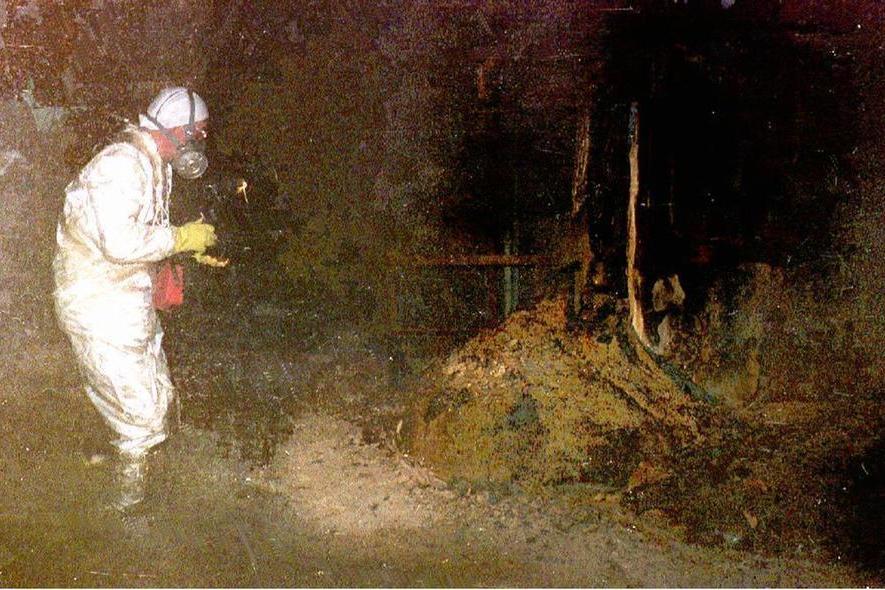
Forty years ago, on the night of April 26, 1986, the world discovered a name forever engraved in the collective memory: Chernobyl. The explosion of reactor number 4 forever changed our perception of technological risk. The gaze on that geographical area and on nuclear energy has become more mature, less conditioned by the ancestral fears of the time and much more anchored to the data of international scientific research.
It all happened during a security test conducted sloppily and in violation of almost all protocols. The RBMK-1000 reactor, of Soviet design, had a serious structural flaw: under certain conditions, instead of shutting down, it increased power in an uncontrolled manner. An unfortunate combination of human error and design limitations brought the core to an unsustainable temperature; two explosions uncovered the reactor building, releasing a radioactive cloud into the atmosphere which flew over Europe.
The sacrifice of the “liquidators”, workers, soldiers and firefighters, prevented the disaster from also involving the other three reactors, but at a very high cost in terms of human lives and health.
In the aftermath of the disaster, catastrophic projections spoke of hundreds of thousands of expected deaths, epidemics of cancer and genetic malformations transmitted to future generations. Forty years of research have returned a radically different picture. The United Nations Scientific Committee on the Effects of Atomic Radiation (Unscear) published in 2008, updated in 2018, a report based on thousands of epidemiological studies conducted on over 600 thousand liquidators, 116 thousand evacuees and approximately 270 thousand residents in contaminated areas. The conclusions are unequivocal: there were 28 deaths directly attributable to radiation among workers in the acute phase, plus another 15 in the following months. A tragic outcome, but infinitely far from apocalyptic predictions.
The “Chernobyl Forum”, coordinated by the World Health Organization, the International Atomic Energy Agency and seven other UN agencies, identified the only statistically significant health effect in the increase in thyroid cancers. About 6,000 cases were diagnosed among children and adolescents exposed to iodine-131, mostly through contaminated milk. Mortality remained extraordinarily low, less than 2%, fifteen confirmed deaths in total, thanks to the timely treatment.
For leukemia and other cancers, Unscear data and the European Arch project found no significant increase compared to control groups. A 2021 study in the journal Science then mapped the genome of 130 children of highly exposed liquidators without finding any increase in heritable mutations, definitively disproving the ghost of malformations transmitted from generation to generation.
The bitterest paradox concerns mental health. The WHO has ascertained that psychological trauma, chronic anxiety, social stigma, sense of abandonment, have produced much greater damage than that caused by radiation. Depression, post-traumatic disorders and suicide in evacuated populations are well above average: effects that the catastrophist communication of the time has aggravated. On the ecological side, the “Exclusion Zone” has become one of the richest nature reserves in Europe, where wolves, brown bears and lynxes thrive among the ruins of Pripyat.
Today Ukraine is experiencing another immense drama – large-scale war – which has brought nuclear power back to the center of world attention. Despite the tensions around the Zaporizhzhia power plant, occupied by Russian forces since 2022, but which has remained safe thanks to modern protection systems, the atom is the backbone that is saving the country from energy collapse.
With more than 50% of its electricity produced by nuclear power plants, Ukraine keeps its city lights on and hospitals functioning despite systematic missile attacks on conventional grids. Ukrainian nuclear power, once a symbol of tragedy, has become an indispensable tool for resilience and future energy independence for Kyiv, demonstrating a stability that few other sources could have guaranteed in such an extreme war context.