




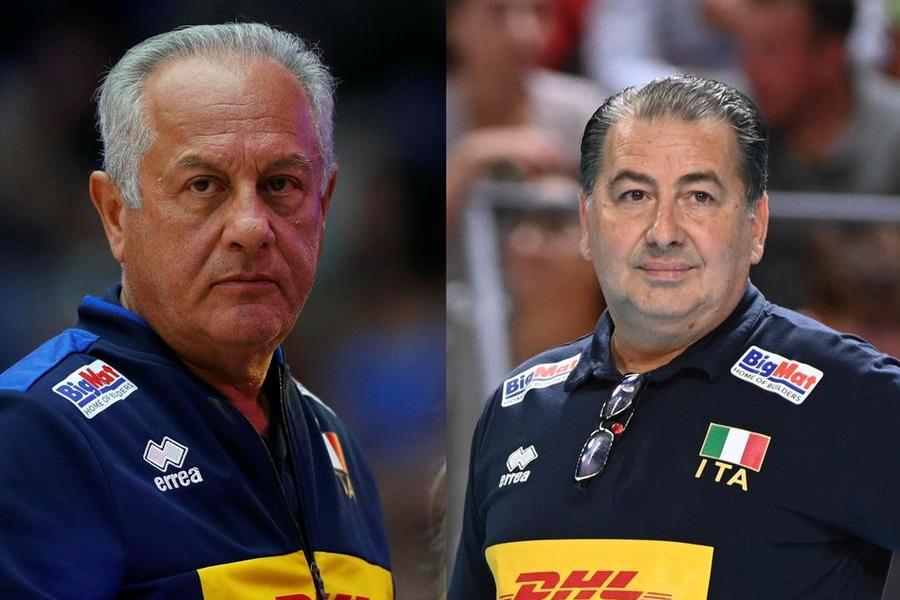
They have very serious faces, Julio Velasco and Ferdinando Fefè De Giorgi, the coaches of the Italian women’s and men’s national volleyball teams who both won the 2025 world title, while they watch the triumphs of last season on the screen. They seem very concentrated, almost frowning, not a single smile escapes them, a single flash of satisfaction in their eyes.
They know they are at the top, Julio Velasco for two uninterrupted seasons, De Giorgi fresh from the world title, coincidence has it that they are sitting, at the presentation of the blue season that opens, next to each other on the 39th floor of Palazzo Lombardia in Milan, from whose windows you dominate the entire city up to San Siro and beyond as far as the eye can see. There is no better metaphor than being high up in the city and it gives a sense of how high they perceive the risk of falling starting from the highest point from which it is difficult to climb up and briefly come down.
«I always tell my players that continuing to celebrate is the best way to lose», observes Velasco who has never lost the second skin that comes from his philosophical training, «we must not think of having won but think as if we had lost. They made a documentary called Born to win about us, which also made me touch my shoes – he says euphemistically in superstitious terms –: no one was born to win, every year we start from scratch and while we watch our celebrations, those who lost are angry, they can’t wait to beat us and they work to do so. Two important examples came to us from the Milan Cortina Olympics – of which the building hosting the match still bears the insignia -: Ilia Malinin, the super favourite, the one of whom the winner said: “I beat the best skater in history”, at the decisive moment crushed by the obligation to win he fell three times, on the other side Federica Brignone, who achieved a feat that I believe will be remembered for centuries in the history of sport, relaxed because on her return from a serious injury without pressure he won two golds. Here we aim for our girls to do like Brignone, play relaxed, without the obligation to win. Then of course to win again we will have to play better than the others because in sport it is not automatic that those who play well win, we also have to do better than everyone else. Having said this, I am confident.”
And it is a confidence that is not hidden behind superstitions: «I aim to win the European Championship not only in view of the Olympic qualification for Los Angeles, which due to the situation is difficult not to achieve, but because I have never won a European Championship with the women’s Italy and I want to win the VNL, playing the first two parts, giving two months of rest to the players who have had championship and Champions League play-offs, and space for others. Speaking of teams of miners, it’s clear that they have never visited a real mine!
The joking dig is at his former men’s national team, known as the generation of phenomena, and in particular at Andrea Zorzi, a team of which De Giorgi sitting next to him was a part and who catches the ball as an excellent dribbler.
The harmony between the two is intense and the irony is mutual too: «I wanted to tell Julio», replies Fefé, laughing as he almost always does, «that when we talk about miners, it is to say that we won because we trained more and better than the others, it is a merit and not a criticism: it is a way of making our athletes understand that no one is anointed by the Lord».
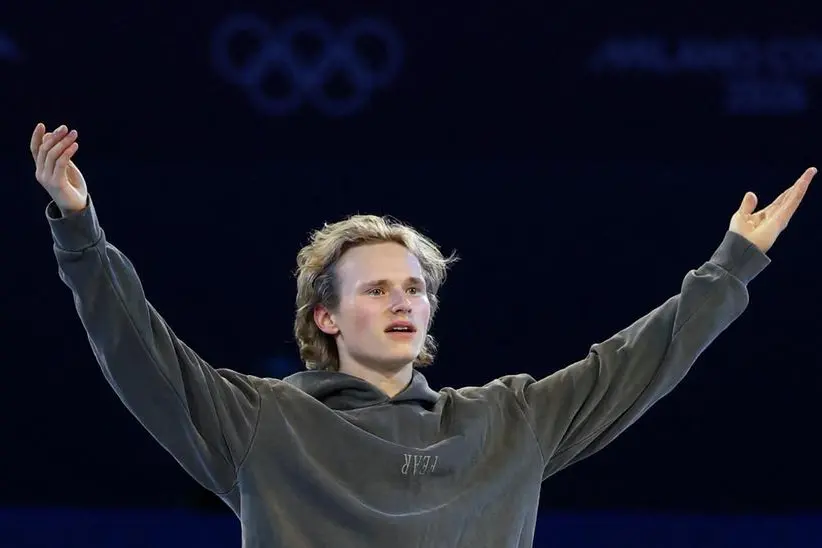
He too knows the feeling: «Every time it seems that because you are world champion you always have to win again, but this team has always had a balanced attitude towards results: more than the obligation to win they felt the moral obligation to represent the shirt better and they have always had this. What you need to fear is not so much performance anxiety which you need to learn to manage and which can also be positive because it gives you adrenaline, but the disaster is when natural anxiety turns into an anguish that blocks you. This is why we have to make our kids think starting from examples: I showed them the photo of Malinin with his father as coach next to him: I drew their attention to the father’s hands in his hair and the look of his son destroyed by failure.”
Malinin’s story in Milan Cortina according to De Giorgi is a very powerful message, not only for the way in which the defeat occurred, but for what he did afterwards: «Not only was there the failure of which that photo with the father as coach is the emblem: fathers should be prohibited from training their children, very few manage to do it in a balanced way. But there is a lesson in sporting culture in the behavior of Malinin the son: he fails but doesn’t leave the Games, he stays to cheer on his teammates, and then asks to take part in the final Gala show, he does the exercise again and does it well, not only does he show up on the ice with a shirt with the word “fear” written on it, which speaks of his willingness after the failure to immediately face his deep fears: a message of sporting culture also sent to us coaches, for which we must be grateful.”