
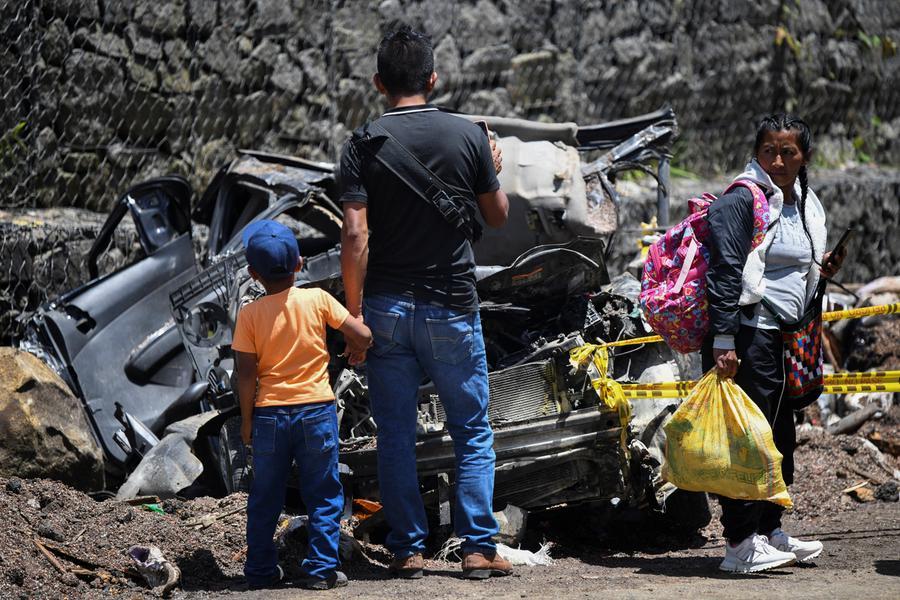



In the last week, the departments of Cauca and Valle del Cauca, which are located in the south-west part of the country, affected by the drug trafficking corridor, are undergoing a planned escalation of bomb attacks, armed attacks and violent actions against the civilian population and against infrastructure. In some cases, such as the attack which occurred on the Pan-American Highway, a dangerous road at all hours of the day, especially at sunset, there were more than 20 victims and around 40 injured, many of them civilians.
“During the explosion I was heading to Cali to go back to work, I was terrified that I would never arrive again”, says a young doctor, whose identity we are protecting for security reasons.
The events are not only isolated, in less than 48-72 hours multiple simultaneous attacks were recorded, including reprisals in the city of Cali and in the rural areas of Cauca: a scenario of systematic and strategic violence, attributed mainly to armed dissidents who have links to illegal economies.
“This war is madness, and the losers are always the people who have nothing to do with it,” says a Colombian source on the spot, and continues: «This happens in an already politically sensitive context preceding the elections, in which tensions amplify and the political impact on the armed conflict intensifies. But it is the social impact that makes the fracture in the community fabric even deeper, the breakdown of collective trust. We know that the attacks do not only destroy infrastructure, but erode trust among citizens. The Pan-American Highway, an axis of fundamental mobility, is a place of death. Civil spaces thus cease to be perceived as safe.”
Colombia has been experiencing an internal armed conflict for more than 60 years that indigenous, peasant and Afro-descendant communities together with activists, community and human rights leaders are trying to eradicate by working towards building total peace. In 2016, the FARC (Fuerzas Arnadas Revolucionarias de Colombia) signed the peace agreement with the Santos government, but this is not enough. The other guerrilla factions such as the ELN (Ejército de Liberación Nacional) and old and new armed groups continue to wage war to re-establish control over the territories. The new attacks have only one certainty for civil society: violence returns to be part of everyday life.
«This produces what sociology calls “disinstitutionalization of trust”; people don’t trust everything around them, much less the state’s ability to protect them. Not only that, it also generates territorial isolation and social fragmentation. The blockade of hauliers causes food shortages, difficulties in accessing healthcare and disruption of local economies. The result therefore is a re-territorialization of fear, where communities remain psychologically and physically isolated, especially when – as in this case – among the victims there are social leaders, farmers. So, once again, we witness the re-victimization of communities during peace processes, a condition that causes us to lose faith in the possible construction of peace and at the same time leads us to believe that we are experiencing a historical deception”, concludes the source.