




We are completely used to shops, bars and supermarkets open on Sundays. It has been happening since 2011, fifteen years ago, when the Save Italy decree-law of the Monti Government liberalized the openings and opening hours of commercial establishments. Since then, “Sunday is always Sunday” for some and “Sunday is no longer Sunday” for others. But what were the benefits of the measure? What impact did working Sundays have and have on the 3 million workers in the sector and on the social fabric? «It’s not just a question of numbers», notes Raffaela Dispenza, 50 years old, vice-president of the ACLI, «in life not everything is a commodity, we need to reflect on the value of time and the economic model in which we are immersed». Listening to workers, unions and entrepreneurs, a gloomy picture emerges: even when the economic gain is there, the relational and civil price to be paid is very high. Sunday work weighs first and foremost on families and, in most cases, it is an involuntary choice. «We are in a post-Fordist era, the ethic of sacrifice is outdated», continues Dispenza, «let’s look at young people: they give great importance to life span and prefer companies consistent with their principles, in which they are recognized as individuals capable of making a contribution». Then there is a theme of participation: «Never slowing down puts the construction of citizenship at risk», concludes the vice-president of Acli, «more than on commercial districts, we should focus on places of free sociality, in which to express ourselves beyond the logic of the market and build critical thinking». As consumers we can choose how to behave. The next time we fill the cart when we could instead be in the parish, in the neighborhood association, at the recreational club or out for a walk, let’s pay attention. The market is stealing time from our lives, is it worth it?
We ask this of some workers forced to work ten-hour shifts even on Sundays.
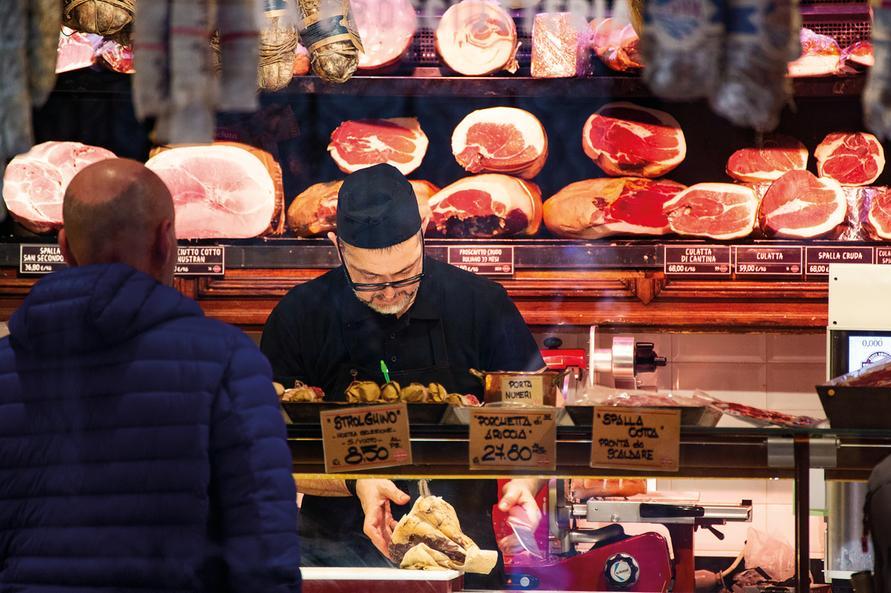
We will only say about her that she is a “citizen, mother and worker in the delicatessen department of a supermarket”. This is how Silvia signed herself, we will call her that for convenience, in a letter that we published in FC 10 this year. She spoke of a reality in which, while “other people’s children have the right to a Sunday in the park or to Mass with their parents”, she, her husband and the children have become like “strangers who take turns at the door of the house”. A reality where, due to the small staff, it happens that you work up to ten hours a day: «It means handling slicers and hot ovens when tiredness, after hours of non-stop shifts, takes away your clarity» and therefore «the risk of getting injured increases drastically». Your letter struck us and many of our other readers. So we contacted Silvia, asking her to tell us her story in more depth.
To his we have added the testimonies of Florinda and Luciano, two other workers who live accompanied by the idea “of being elsewhere while life goes on without you”. But let’s start with Silvia: «I started at the end of the 90s. Back then the pact between company and worker was sustainable: Sundays were an exception. The real watershed was the 2011 reform which liberalized trade: I was protected at the time because I had just given birth and my old contract did not include the holiday obligation. A few years ago, when I changed company, I entered the new system. At the beginning the agreement was for one Sunday a month with closing during lunch break (one person only, all day). It was heavy, but it allowed a semblance of family life.” But then the staff was reduced to the bare minimum: «Our department has 6-7 people. To cover Sunday openings we are reduced to a minimum: 3 people in the morning and 2 in the afternoon. We often face 9 or 10 hour shifts».
Added to this is the burden of training: «To cover gaps or in view of new openings, the company sends staff from other sales points to us to be trained. On busy days like Sundays, we have to serve customers and at the same time instruct colleagues who are unfamiliar with the counter. The mechanism also works in reverse. We are sent away to help open other stores. For a mother, this means total instability».
Florinda Lagattolla she also started working on Sundays when her son was just 2 years old. «His father has always taken care of him when I wasn’t there. Even now I prepare food for the two of them and return home at 4pm, when the day is already “over”: at that time my son studies and… goodbye Sunday together». From Bari, 54 years old, Florinda has worked in large-scale retail trade since 1992. After 15 years at Rinascente, today she has a part-time contract at Ikea. «At the beginning I worked from Monday morning to Saturday afternoon, with summer and winter hours. It happened every now and then that we were busy on holidays, certainly the Sundays before Christmas, but it was a completely different life. Thinking about it now, it seems like paradise to me.”
Today he works three Sundays a month: «It’s heavy. Of course there is an increase in the salary, in my case 60%, but by working 4 hours a day you don’t reach a significant figure.” Then there are the holidays, currently seven a year: “When you are young and have no ties, not being able to stay on Sundays or other holidays is not a big problem, but when you have a family it changes everything.” For those who work on holidays, organizing even just a lunch together is a challenge. «It would be right to guarantee the possibility of choosing whether or not to work on Sundays. In my case, the rigid shift contract guarantees at least three-week programming. But those who have a flexible contract or, even worse, work in the informal economy are at the mercy of the employer”, Florinda continues. And he adds: «On Sundays I see many families who come to the shop just to take a walk. Earnings do not increase much, while workers lose a very important part of their personal lives. Then, of course, you have two days off midweek but at that point the other members of the family are away from home to study or work.”
Luciano MalgovernoOn the other hand, he is 45 years old and has been working in the Pisa headquarters of a furniture brand since 2006. Having a family, Sunday work has always been a thorn in his side for him. «Also because my wife is also in the same situation: our family organization is all a mess. In my office the recovery day is constant, at least I have this advantage, but in the company the shift scheduling is bi-weekly. As, in order to be able to spend as much time as possible with the children, I first used all my parental leave, then I had to ask for part-time leave. An involuntary part-time job: between the mortgage and living expenses we are certainly not in a situation of economic security, but in recent years only reducing working hours has allowed us to keep everything together.”
Luciano and his wife have two children, a 14-year-old boy and a 10-year-old girl: «For me the most important value is family. But this favors consumerism and not relationships: I work 34 Sundays a yearor three per month, with school-age children there are many weekend commitments, from catechism to sports championships. By never being there on Sunday you feel excluded, it’s a huge sacrifice. Even when it comes to friendships: staying in touch on social media is not the same.” Luciano and his wife can count on a valid family network, so their children are never alone: «We are lucky enough to have grandparents, uncles, but that’s not the only point. While you work you constantly think about what your cars are doingthe. It’s true that our children know from an early age that we parents aren’t there because we work, and they never complain directly, but especially in the little girl I notice the disappointment of not having us with her.”
From the individual to the family, the gaze extends to the entire country: «Working on Sunday is not just a personal problem» concludes Luciano; «politics should set some limits. Can I say something about population decline? For me it is also linked to these situations, families are in difficulty. We are missing an opportunity to give value to time, as individuals and as a society.”