




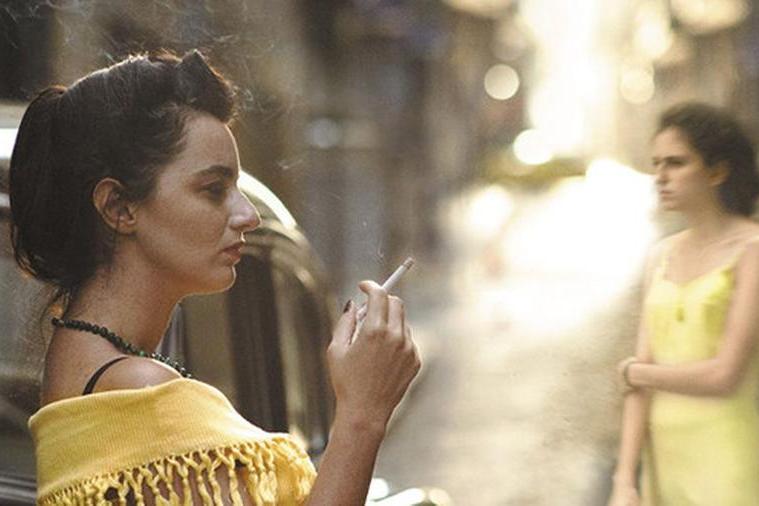
1950s, Rio de Janeiro. Guida and Eurídice are two sisters who grow up in a bourgeois family. They are very close, but separate when Guida decides, with the complicity of his sister, to run away from home to follow a sailor. The man will give her a son and abandon her, but Eurídice will not know because her father has decided to erase her from the family and therefore not to give her the letters that Guida writes to her. The two sisters thus live parallel lives, which risk crossing paths when Guida returns to Rio and laboriously tries to rebuild his life. She continues to write letters to her sister, imagining her happy studying piano in Europe, while in reality she lives in the same city as her and has agreed to become the wife of the man her father chose for her.
Based on the novel of the same name by Martha Batalha, awarded at the Cannes Film Festival in the Un Certain Regard section, it is one of those very rare films in which form and content blend perfectly: the vivid colors of Rio, the director’s lens that never leaves the faces of his protagonists, played by two perfect actresses, are the magnificent setting of the story of Guida and Eurídice, of their bond stronger than time and of the cruelty of a patriarchal society. There are some rough scenes, but always functional to the narrative, such as that of Eurídice’s wedding night. Until the beautiful ending.