



Celebrated this year on May 27, Eid el-Kebir represents a strong moment in Islam, imbued with deeply symbolic customs for the entire Muslim community.
Considered one of the most sacred holidays in Islam, Eid el-Kébir (or Eid al-Adha) brings together the Muslim community every year world around the values of solidarity and communion. It commemorates the obedience of the prophet Ibrahim, who agreed to sacrifice his son out of love for God. Today, this symbolic act is perpetuated by the donation of meat to the needy after the sacrifice of a sheep. Above all, it is a great moment of family gathering, contemplation and shared generosity.
When does Eid el-Kébir take place in France?
This year, Eid el-Kebir will take place on Wednesday May 27, 2026as announced by the French Council of Muslim Worship (CFCM). The celebration of Eid el-Kebir takes place on the tenth day of Dhu al-Hijjalast month of the Muslim calendar and one of the four sacred months of Islam. It lasts three days and also marks the end of the pilgrimage to Mecca.
What are the 10 days of Dhul Hijja before Eid el-Kebir?
THE 10 days of the month of Dhul Hijjawhich includes Eid el-Kebir, occupy a special place in Islam. They are seen as the most sacred days of the year. During this time, Muslims are encouraged to strengthen their devotion to Allah and show generosity. Furthermore, before Eid el-Kebir, it is advisable to fast for the first 10 days of Dhul Hijja, especially on the day of Arafat, considered sacred. In the Muslim religion, “this fast erases the sins of the past year and those of the year to come”, reported by Mouslim in his Sahih n°1162.
What is the history and origin of Eid el-Kébir?
The festival of Eid el-Kébir has its origins in a Koranic and biblical episode. In it, Abraham (Ibrahim in Arabic) receives the order in a dream to sacrifice his son Ishmael. About to obey, an angel intervenes and replaces the child with a sheep, symbolizing both the test of faith and divine mercy. In the sura 37 (verses 105 to 113)a “generous immolation” is mentioned, instead of the sacrifice of Abraham’s son, interpreted as the sacrifice of a sheep, a ram, or sometimes a goat or a cow. It is for this reason that Eid el-Kebir, which means “great festival” in Arabic, is also called “sacrifice festival” or “sheep festival”.
What to do on Eid el-Kébir?
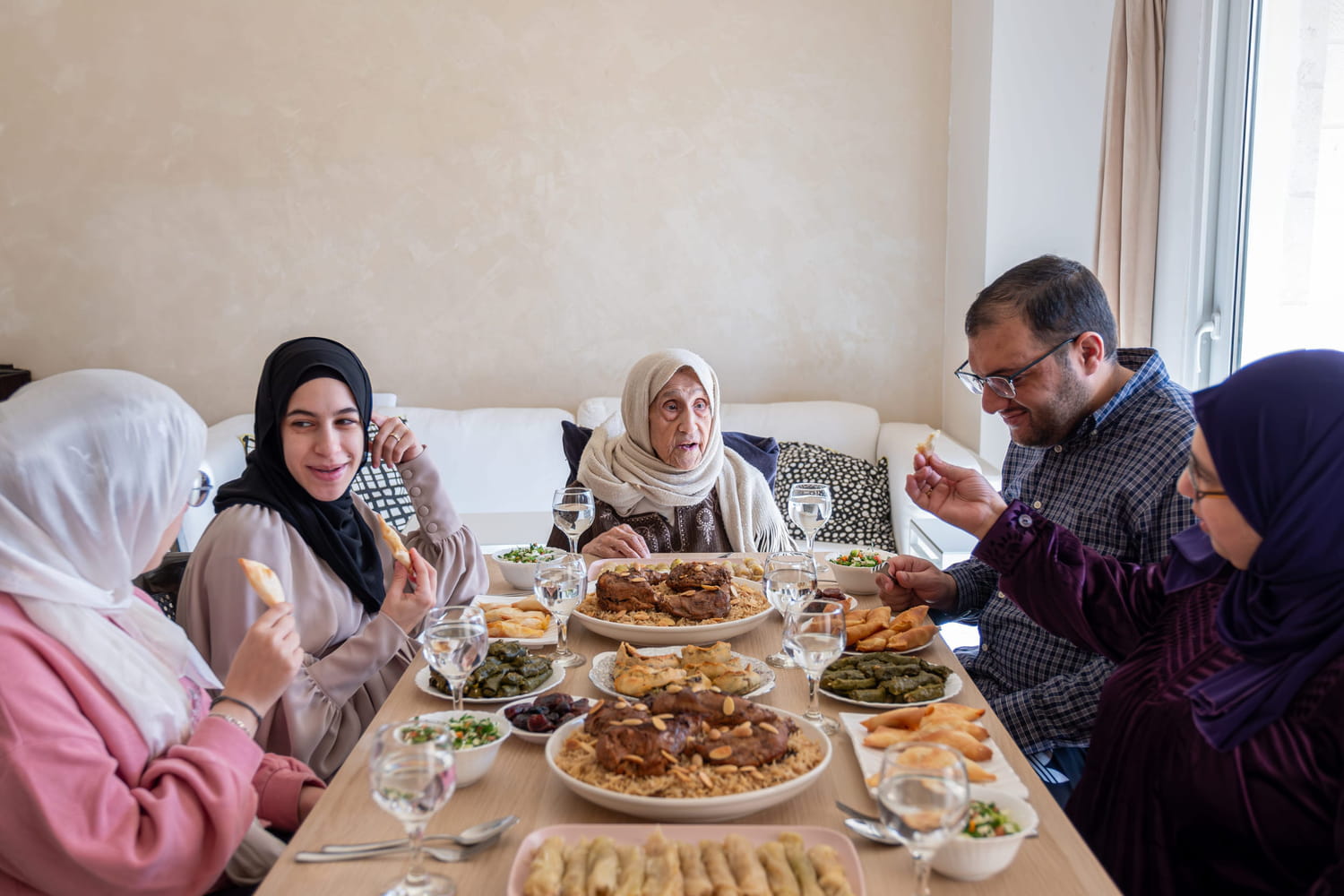
In general, on the day of Eid el-Kebir, Muslims begin with ablutions before attending the big prayer in the morning. of Eid al-Adha at the mosque, followed by the imam’s sermon. Then, the ritual of sacrifice, usually performed by the father of the family, is performed, and the meat is prepared according to specific rules. This day is also an opportunity to cook other traditional dishes. Families come together to share a meal, offer meat to the most deprived or exchange gifts. This moment of sharing is also dedicated to forgiveness, prayer and spiritual reflection.
What are the rules for sheep slaughter for Eid el-Kebir?
The Grand Mosque of Paris reminds the rules to be respected: “We ask the Muslims of France to respect the rules and laws relating to the ritual sacrifice of sheep which must be carried out by delegation in appropriate and approved places. Furthermore, according to tradition, the animal must not see the blade or be stunned before slaughtering, which must take place after prayer and before sunset on the third day, only in approved slaughterhouses. In France, these slaughterhouses are controlled by the departmental directorate for population protection and any slaughter outside these places is subject to sanctions. Those who wish to carry out a sacrifice must therefore contact an approved slaughterhouse via the Ministry of Agriculture website.
What do we eat for Eid El Kébir?
Depending on the origins (Tunisian, Moroccan or Algerian…), the culinary traditions can be slightly different. But the main dish at Eid el-Kébir remains cooked muttonaccompanied by couscous. We also find leg of lamb, or even the mrouziaa typical Moroccan dish which is a tagine with sweet and savory flavors.
How to wish a good Eid el-Kebir?
The formula for wishing each other a happy Eid is “Eid Mubarak!”. As a message, Muslims can also write to their loved ones: “Happy Eid to you and your loved ones! May this Muslim holiday bring you the best in this world: health, serenity and faith in Allah. Inch’Allah.”