





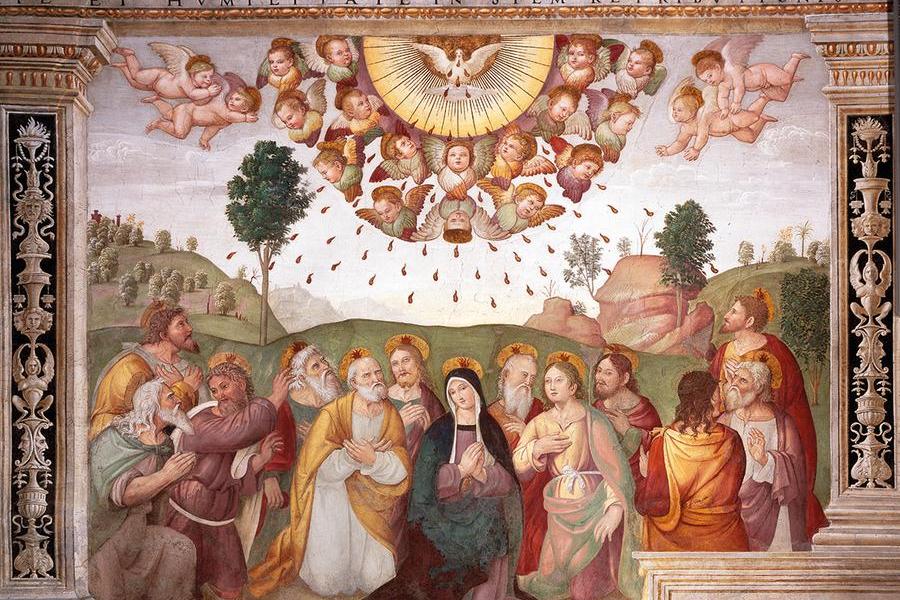
Church and Spirit: a new humanity on the move
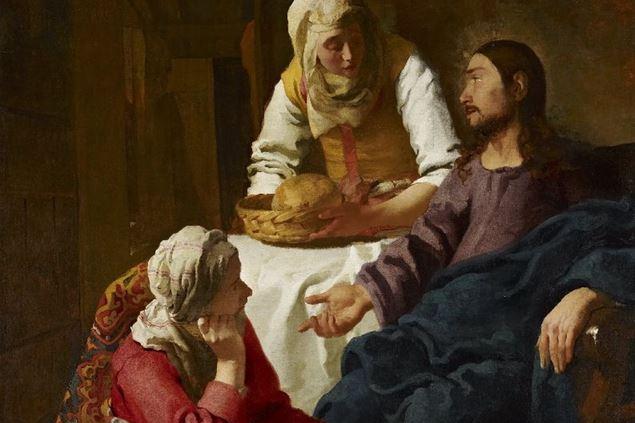
It is customary to think that the Church began on the day of Pentecost, when the Holy Spirit was poured out on the disciples; and yet the Gospel of John invites us to contemplate an even more intimate origin, already on Easter evening itselfwhen the risen Jesus presents himself to his followers, precisely to those who had abandoned him, and does not offer reproaches, but gives peace and new life. At that moment Jesus makes a gesture full of meaning: he breathes on them and says: «Receive the Holy Spirit». In that breath the creative gesture of the origins is renewed, when God shaped man and gave him life; now, in the Risen One, a new creation takes shape, a renewed humanity, no longer marked by sin and fear, but inhabited by the very strength of God. The Church is thus born, not as a simple organization, but as a living reality, generated by the breath of the Spirit, which is its soul and vital principle.
Without this essential reference, the Church risks being reduced to a purely human reality, observed and judged only according to sociological or political criteria; and not infrequently this limited gaze also insinuates itself among believers, who end up dwelling on external aspects, on contingent dynamics, losing sight of the mystery that constitutes it.
Yet, looking at the evangelical scene, we understand how decisive this mystery is: the disciples are closed out of fear, prisoners of disappointment and failure, incapable of imagining a future; and isn’t this, in many moments, also the image of the Church today, sometimes weighed down by distrust, marked by a certain internal tiredness, more inclined to lament than to hope? But the gift of the Spirit is enough for everything to change: closed doors open, fear turns into courage, the disciples from fugitives become sent, and what was locked away expands to reach every man.
In this gesture, Jesus also entrusts his followers with an extraordinary mission: “Whose sins you forgive, they will be forgiven.” The power to reconcile, to restore life where there was death, is given to the community of disciples, because continue in the story the work of salvation begun by Christ. It is not a power of domination, but a service of liberationthrough which the Spirit continues to work in the hearts of men. This is why we believe that history is not guided by chance, nor by the dark forces of evil, nor by blind fate, but by the Spirit of God, that accompanies humanity and leads it, often in a hidden but real way, towards the fulfillment of good. From here comes the concrete face of the Church wanted by Christ: a Church that does not limit himself to explaining or giving answers, but he knows how to raise questions; who does not take refuge in a complicated and distant language, but speaks with simplicity and truth, reaching people’s hearts; an open and welcoming Church, capable of generating amazement, because in it we glimpse something greater that surpasses words and touches life.
All this translates into a concrete style of community: a liturgical moment is not enough if life remains fragmented. The first testimony is active charity: being close, creating real bonds, offering forgiveness, sharing burdens and hopes. It is here that the Spirit becomes visible and Pentecost continues. Faith makes what appears complex simple, because believing is trusting the Lord and let yourself be guided by his Spirit. Thus Pentecost becomes a present reality: by choosing peace, forgiveness and communion, a new humanity is born and the Church returns to being itself.