






John 21.15-19 – Saint Rita of Cascia, Religious – Optional Memorial
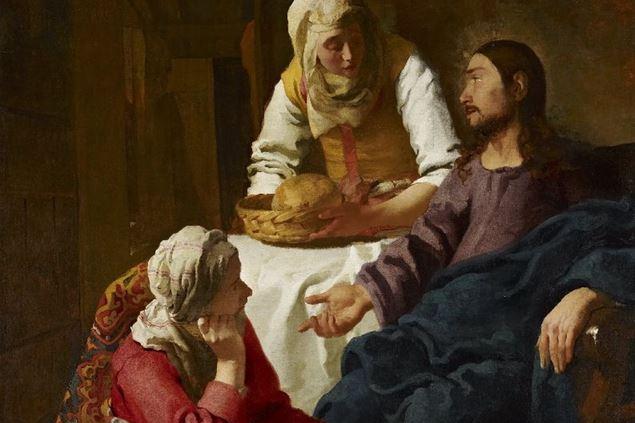
The poignant dialogue between the risen Jesus and Simon Peter, which we find in today’s Gospel, really seems to want to heal the wound of the three times in which Peter had denied the Lord. Three times Jesus asks him: “Do you love me?” and Peter responds three times: «Lord, you know that I love you».
It is a dialogue full of mercy. Jesus does not humiliate Peter, does not reproach him for his betrayal, but leads him to recognize the truest thing in his heart: the desire to love him. And it is here that we find perhaps the most authentic definition of holiness. Holiness it doesn’t consist in not being fragile. It doesn’t mean you stop feeling like a sinner. Holiness is continuing to love Jesus too within his own weakness. Peter can no longer boast of himself. He knew his limit. Yet right there, inside that fragility, he can finally love in a truer, more humble, more sincere way. «Lord, you know everything; you know that I love you.”
It is one of the most beautiful professions of faith in the Gospel, because it comes from a man who no longer relies on his own abilities, but on the mercy of Christ. Even Santa Rita, whom we remember today, lived like this. She was a woman capable of loving concretely: in the family, in marriage, in pain, in wounds, in daily life. And precisely within all these situations he loved the Lord. Because loving Jesus does not mean living an abstract or disembodied love. It means loving what life puts before us: people, responsibilities, trials, relationships. It is there that Christ hides.
Today’s Gospel therefore frees us from a very widespread misunderstanding: the Christian life is not the obsessive search for an unattainable moral perfection. It’s learning to love. The decisive question is not whether we are flawless, but what quality our love has.
Friday 22 May 2026 – (St. Rita Da Cascia, Religious – Optional Memorial)