




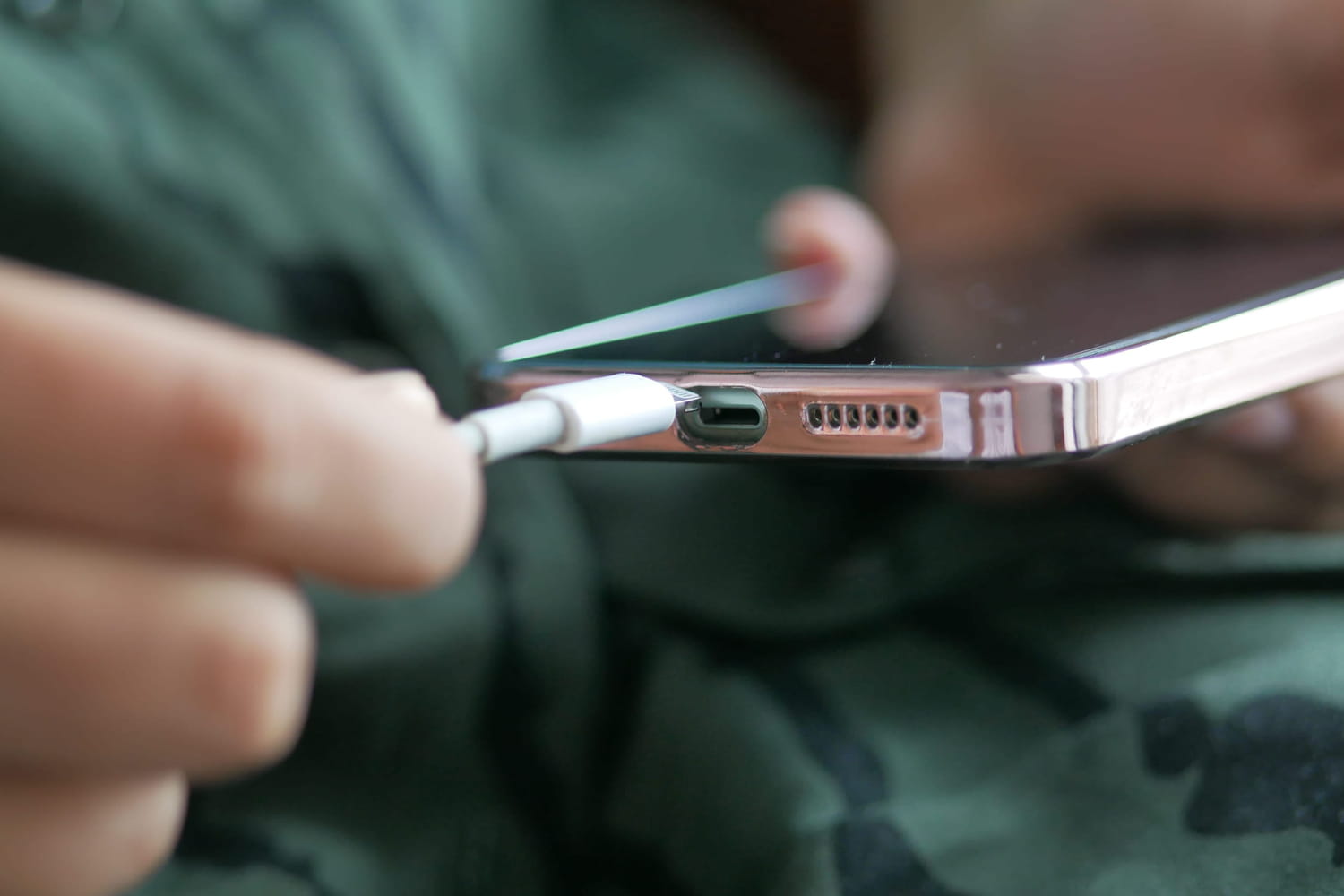
We’re all tempted to save a few dollars on cheap phone chargers. However, they present serious risks that we do not expect, warns a consumer association.
With official accessories from Apple or Samsung easily exceeding 25 or 30 euros in stores, the temptation is great to turn to more economical alternatives to charge your smartphone. In France, it is now very easy to find chargers at much more competitive prices: you can sometimes find them for just 2 euros at Action, or at attractive prices when they arrive at Lidl, or even on the internet. Faced with these low prices, we say to ourselves that we can easily buy several: one for the bedside table in the bedroom, one for the glove box of the car, and a last one for the desk. A solution that seems ideal for equipping the whole family at a lower cost, even if the lifespan is not as long as the brand chargers.
However, behind this apparent good deal, we do not necessarily realize the risks. In the short and medium term, these poor quality chargers directly attack our smartphones, starting with the battery. This phenomenon is very often accompanied by abnormal overheating of the phone during charging, a warning signal which shows that the device is under excessive voltage. But beyond the simple hardware failure, these accessories of dubious origin introduce much more serious dangers.
The risks involved have been alarmingly highlighted by the British consumer association Which?. During rigorous testing of chargers purchased on several major online marketplaces (including low-end models or fake Apple knockoffs), experts discovered major manufacturing flaws. The results of the investigation are edifying: nine of the chargers tested were so poorly manufactured that their users were exposed to a direct risk of electrocution. In addition, eight chargers had major design flaws, including electrical circuits placed too close together. This serious technical anomaly does not comply with basic safety standards and leads to proven risks of fires, fires and even explosions of the charging unit. As Sue Davies, head of consumer policy at Which? : “Poorly designed electrical devices like these can have dramatic or even fatal consequences. Online sales platforms have known about the danger posed by counterfeit chargers for almost ten years, but consumers continue to be exposed to this risk“.
To protect your home and your devices, it is essential to adopt strict checking reflexes. Before any purchase, make sure that the charger has the “CE” (European Conformity) marking, even if the Which? reminds that many counterfeits illegally affix false logos. The safest way is to inspect the overall finish: too light plastic, abnormally low weight, misaligned pins or blurred writing on the label should immediately alert you. Faced with these observations, it is better to invest a little more from the start in an official product or from recognized and certified third-party brands, rather than paying for several low-end chargers which meet neither safety standards nor the real needs of your devices.
It is also recommended to avoid leaving a charger plugged into an outlet empty when you are not using your phone; a poor quality adapter continues to draw power and can overheat on its own. Likewise, banish the bad habit of charging your smartphone at night under your pillow or on your bed: textiles retain heat and increase the risk of combustion in the event of unit failure. Finally, if you absolutely must buy a replacement charger without breaking the bank, favor traditional physical distribution channels and large specialized brands which are subject to strict security controls in Europe, rather than unverified third-party sellers on e-commerce applications.