






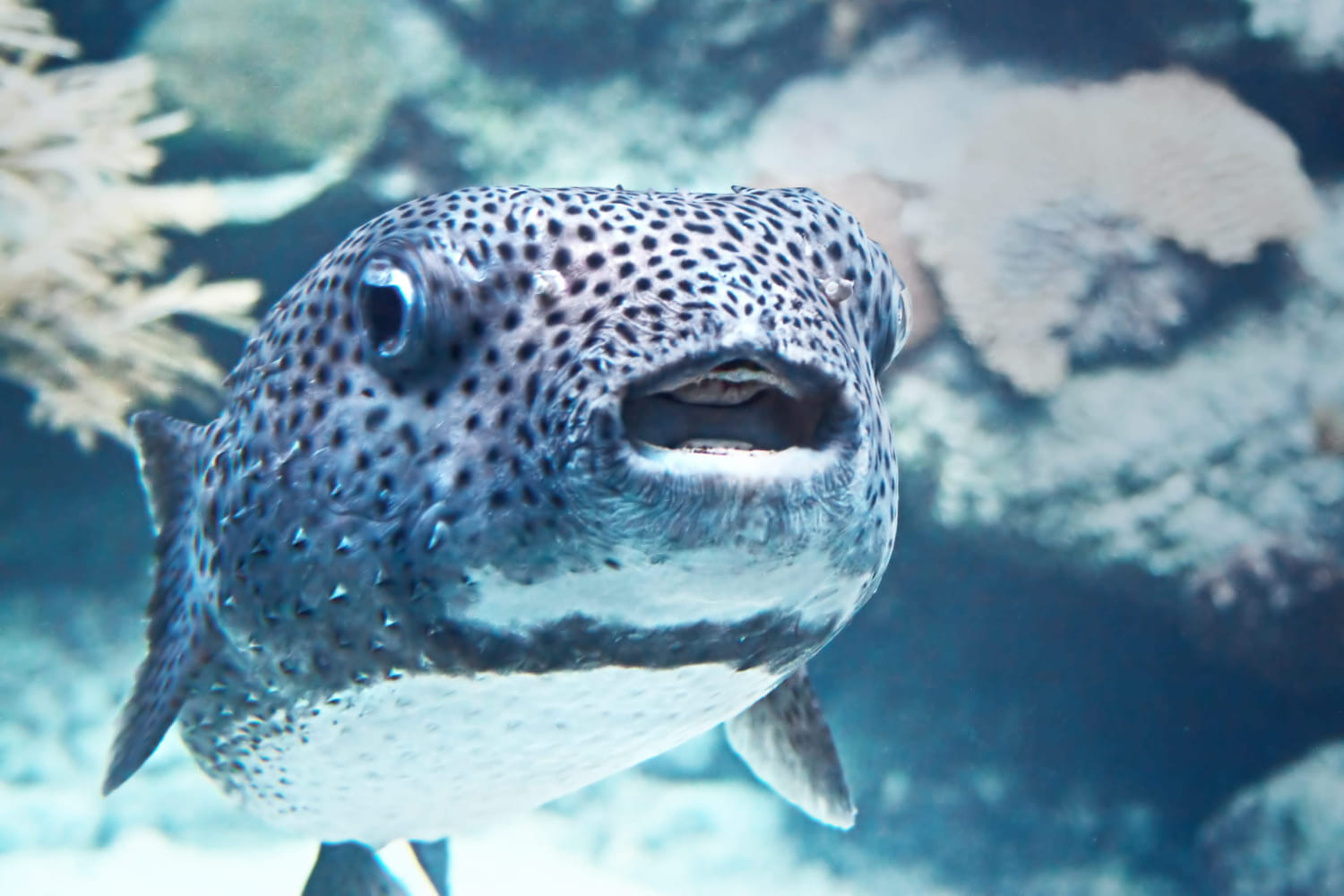
From Greece to Turkey, this fish disrupts the work of fishermen and sometimes surprises vacationers.
This funny fish from the Red Sea is colonizing the Mediterranean coasts due to warming waters. For local fishermen, the situation has become a real nightmare: this fish shreds their nets, leaving dozens of gaping holes and mutilates a large part of their daily catch. The predator, which appears harmless at first glance, will stop at nothing and venture closer and closer to beaches, particularly around Crete and the Dodecanese islands in Greece, representing a risk for vacationers who swim near the shore.
Concern is growing among tourists due to surprising and violent attacks, often caused by curiosity or the animal’s quest for food. “If one of them bites you, it will tear your finger off“, told AFP Alexis Charalampakis, a 43-year-old fisherman who saw the power of their jaws. In Greece, a bather recently had to be rushed to hospital for stitches after an attack at the water’s edge. This case recalls serious precedents along the Turkish coast, where an eight-year-old girl suffered a traumatic amputation of part of her finger, while another 57-year-old woman suffered a severe local infection and persistent inflammation for more than two months after being bitten on the leg.
This culprit that terrorizes the waves is none other than the silver pufferfish or “pufffish” (scientifically named Lagocephalus sceleratus). This migratory fish is distinguished by its ability to double in size when it feels threatened. Its jaw, similar to a rigid beak, has four massive, fused teeth (two at the top, two at the bottom) capable of crushing wood or shells. Beyond the obvious physical risk of its bite, the animal is one of the most venomous fish in the world. Its organs, notably its liver and muscle tissue, contain tetrodotoxin, a neurotoxin fatal to humans, which causes muscle paralysis and respiratory arrest if ingested.
Faced with the increase in reports during the summer season, the Hellenic Red Cross has published strict guidelines for swimmers. If you see this pufferfish near a beach or in shallow water, never attempt to approach, feed or touch it, as it may attack. In the event of a bite, the first emergency is to immediately and abundantly wash the wound with running water and soap to avoid bacterial complications, avoiding antiseptics unless medically indicated. To stop the heavy bleeding caused by its sharp teeth, apply firm, continuous pressure using a clean cloth or gauze, while keeping the injured limb elevated if the cut is deep. It is imperative to go immediately to a medical center or call emergency services to receive specialized care, a tetanus vaccine or stitches.
Finally, it is essential to remember that a bite from this pufferfish is not venomous in itself: the animal does not inject its deadly toxin through its teeth, the danger of bites therefore remains purely mechanical and infectious. The real mortal danger lies exclusively in its consumption. It is strictly prohibited by European legislation to market or eat this fish in any form whatsoever.