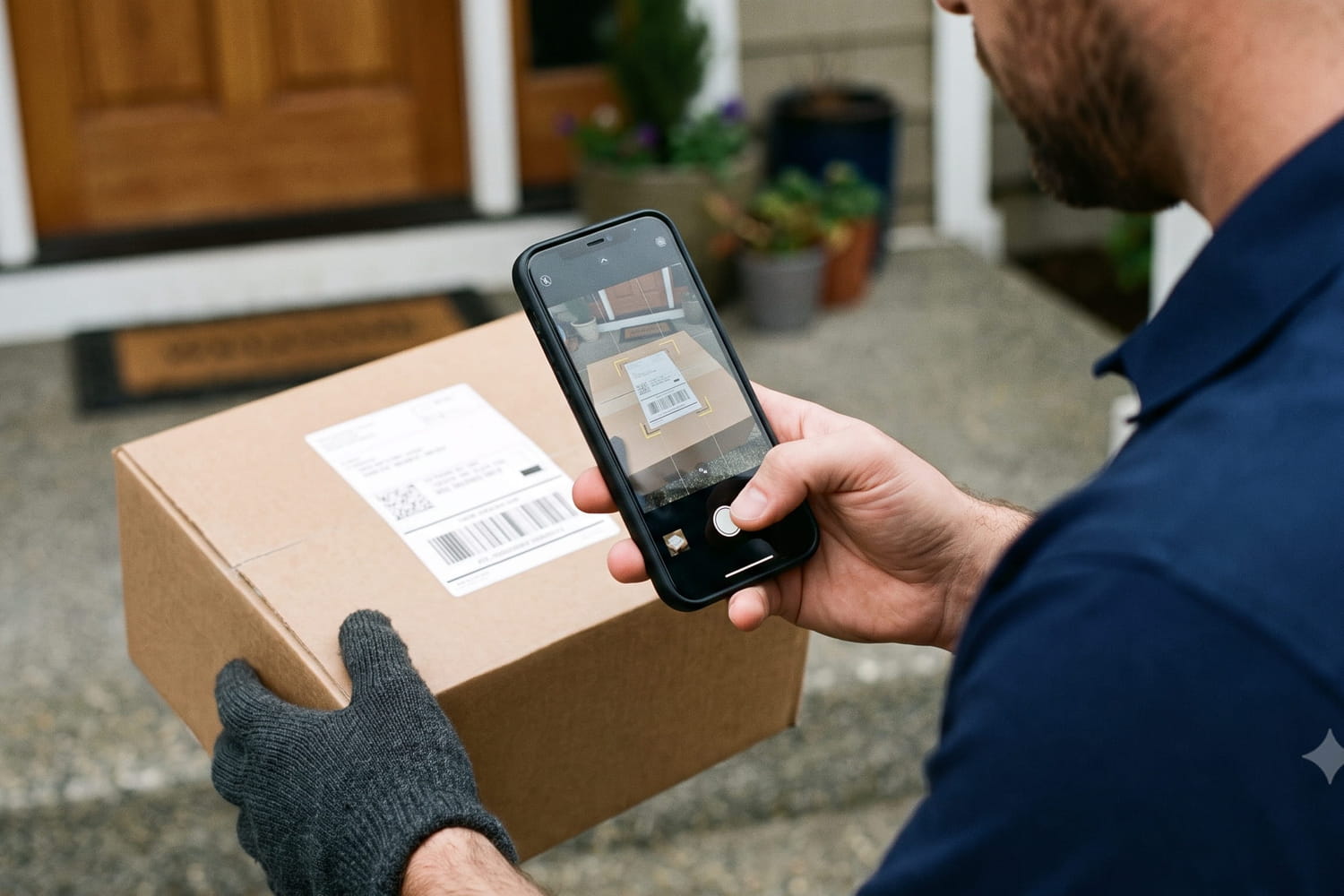
Fake package deliverers no longer just send a photo of the package with your name and address. To make the deception even more convincing, they are now adding new “proof” to their text messages.
It’s hard to miss this scam, which has been circulating since the beginning of 2026: fake delivery people pose as official carriers Chronopost or Mondial Relay for example, claiming to have a package for you, which unfortunately does not fit in your mailbox. The only solution? Reschedule delivery or choose a relay point, by clicking on a link sent by SMS. So far, nothing new.
But to make the message even more credible, the scammers found a solution by adding a photo of the package in question, with the victim’s real name and address printed on the slip. A convincing illustration because it is personalized, but entirely generated by artificial intelligence. But this tip having made the rounds in the news, consumers are probably more vigilant. This is why these fake delivery people had to add a new string to their bow.
The site Numerama spotted this new phishing campaign which has been spoofing Mondial Relay since June, so recent that the carrier itself has not yet listed it on its anti-fraud alert page. In addition to the famous photo, the SMS this time included “a fifteen-second voice message, unheard of in this type of campaign.” In essence, the voice note says the same thing: “Hello, this is the delivery guy. So, I stopped by 30 minutes ago to drop off a package for you. Unfortunately, it didn’t fit in the mailbox. So, I left you an SMS to reschedule the delivery. THANKS.” The message seems completely authentic as the tone is natural and the language common, and the background noise suggests that the person is indeed outside in the street, making their rounds of packages.
Precisely, nothing allows “to establish with certainty whether this voice was generated by artificial intelligence”. It could very well be a real person, but certainly not a real delivery person: neither name nor address is spoken, which suggests a mass mailing to several victims. And of course, in the accompanying SMS, the link is fraudulent. It links to a site identical in every way to that of Mondial Relay, with the exception of the URL which does not correspond to the official domain. The aim being of course to steal your bank details, under the pretext “reprogramming or identity validation fees”.
In any case, Mondial Relay reminds that“no carrier sends a photo by SMS”that the company “never request payment by email” Or “banking details by telephone”and that she “never validates identity by credit card”. As always, if in doubt, it is better not to click on the link and check directly on the application or the official website, by going there yourself. You can also report the scam by sending it by SMS to 33700, or on the Mondial Relay website, which will add it to its list of current campaigns.