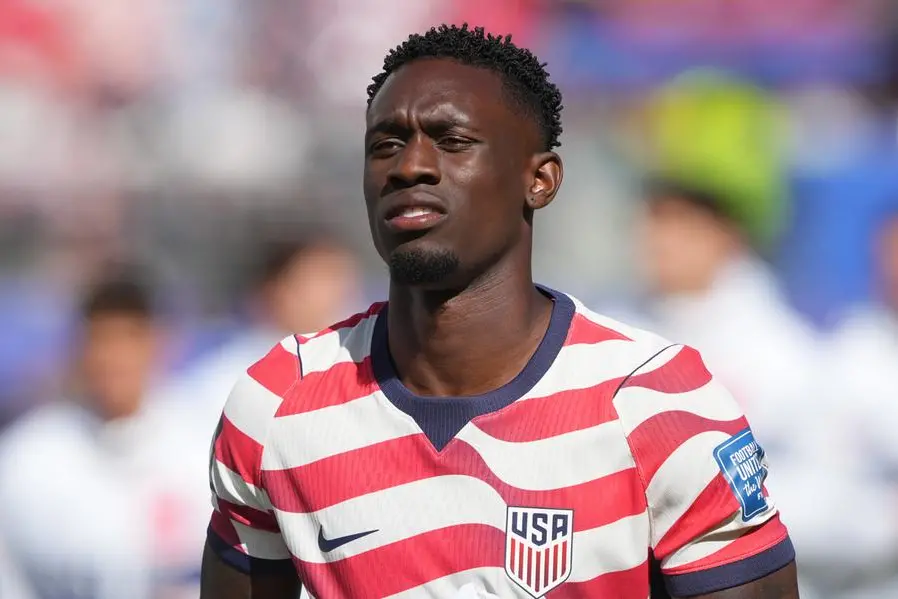
A disqualification imposed automatically during USA-Bosnia, according to the regulation (article 66.4), and then “frozen” by the Fifa Disciplinary Commission, during the World Cup the top striker of the US national team Folarin Balogun is shaking up the World Cup.
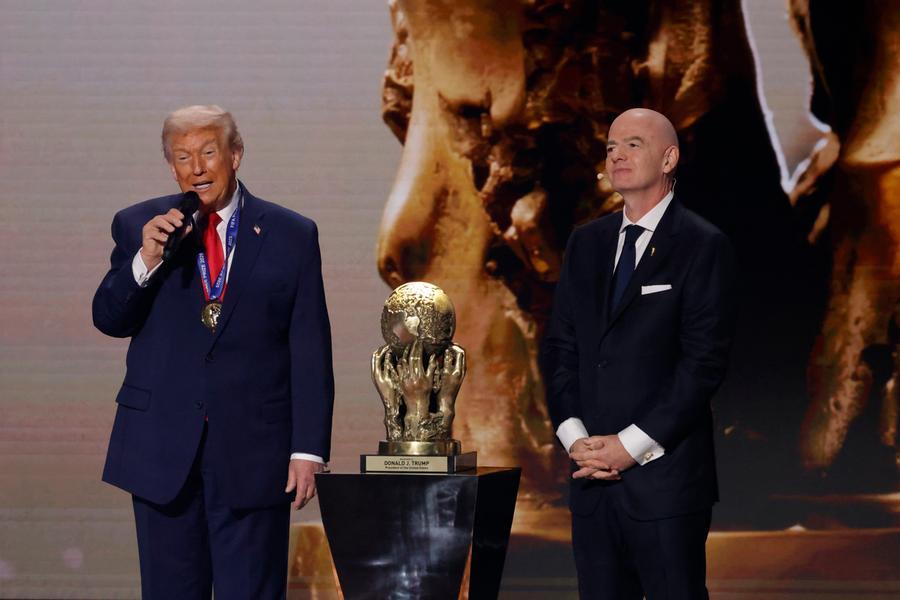
The sequence of events, reconstructed by various US media, first and foremost the New York Timesfollows the “freezing” (a sort of testing until the end of the year, based on article 27 of the Disciplinary Code) of a phone call from Donald Trump to Gianni Infantino, president of FIFA, and the US president’s thanks on social media: «Thanks to FIFA for doing the right thing and for coming back from a great injustice». Was it just a chronological coincidence or was the unfortunate FIFA responding to political interference? The second of the two by Trump’s own admission.
The case obviously causes discussion because it is unprecedented during the World Cup and also because the bond of “intimate friendship” between Trump and Infantino is known.
THE “PREVIOUS”
Article 27 had been applied to Cristiano Ronaldo in qualifying, to prevent him from missing the first matches of the World Cup (related events, certainly but different). But never during the World Cup. Those who dig into the precedents find a disqualification for Garrincha for an expulsion in the semi-final during Chile 1962, enforced with such a delay as to allow him to play and win the final with Brazil, thanks to the wave of popular protest. But those were other times and other rules
THE CURRENT RULES
The 48-team World Cup has in fact brought with it a change in the rulesaimed at avoiding adding warnings between different phases of the tournament: with the expanded format which includes an additional direct elimination round, starting from the round of 32, The FIFA Council has changed the regulations of the 2026 World Cup by establishing that individual yellow cards in the final phase of the competition will be reset after the group stage and then again after the quarter-finals. The principle is clear: to prevent the new format, which is longer than in the past, from excessively increasing the risk of disqualifications due to warnings. A choice to protect the spectacle and the stars of the World Cup. Every single warning received during the groups is eliminated before the round of 32. Another reset occurs after the quarter-finals, so that one cannot skip the final for having added a warning in the quarter-finals and one in the semi-final, a separate discussion for the direct expulsion.
SPORT AND POLITICS, A MANY-SIDED STORY
In the history of sport and above all of the organization of large sporting events, there has always been a hand in politics. There is no shortage of cases of contradictions, think of all the debate around political messages linked to the interpretations of rule 50 of the Olympic Charter. From the 1936 Berlin Olympics, with the clear intention of celebrating the Third Reich, to the sportwashing phenomena of contemporary dictatorships and “democracies”who through sport show the world their clean and best face, hiding under the glittering window, the flaws in rights to cite the most criticisable situations. The political component is undeniable even in softer situations: always when a Government and a country give their approval to the organization of a major sporting event, even in a democracy, they do so by calculating a positive return in image and consensus, the calculations of which however are done at a distance. But we are in the field of acceptable synergy, more or less virtuous depending on the case: no large demonstration could be organized without the consent and commitment of politics with a capital letter. But it is one thing to stand between governments and the government of sport, even as allies, each in their own defined field, and to interfere until the bubble of purely sporting rules is broken.
INTERFERENCE AND INTERFERENCE, FROM QATAR TO TRUMP
Already in Qatar, the gesture of the emir, Tamim bin Hamad Al Thani, who, by placing the Bisht, the Arab cloak representing well-being and royalty, on Lionel Messi’s shoulders at the time of the award ceremony, had ended up “obscuring” Argentina’s shirt, taking away its primacy in the greatest showcase, at the time of lifting the cup, had already caused discussion as excessive interference.
A controversial episode, certainly, but secondary to the actual competition. If it went as the reconstructions indicate, the Balogun/Trump case represents a further step: this time politics would have come to interfere in strictly sporting issues in a blatant way, to the point of putting its hands or feet inside the bubble of the match, of the referee’s decisions, of those of the sports judge, who by definition is autonomous at a regulatory level even from the ordinary judge.
THE REACTIONS
Belgium, the United States’ next opponent, potentially damaged by the “reinstatement” of the disqualified player, is already taking action with the appeals foreseen by the sports justice system. But what marks the watershed is the very weighty statement from UEFA: «Football, like any other sport, is based on rules, which form the basis of fair, honest and transparent competition. Sometimes the rules may be subject to interpretation. In this case, no, continues UEFA. «The automatic minimum one-match ban following an expulsion is not a discretionary option and does not require a decision by any competent body to come into force. It is a principle enshrined in the regulations, which cannot be the subject of exceptions, much less during a tournament in which several other players found themselves in the same situation and regularly served their disqualification.” And again: «When the certainty of the rules is no longer guaranteed by those called to safeguard them, the integrity of the game is put at risk and the credibility of the competition is compromised. Furthermore, a decision of this type creates a precedent within the current tournament: similar situations will now have to receive the same treatment, with inevitable damage to the competition. Football is the most loved sport in the world because it is an extraordinary game, and it is credible because it is played everywhere according to the same rules. A tournament is never an isolated event and, when the tournament in question is the World Cup, it has the power to produce consequences, positive or negative, on the entire football movement. We express our shock at an unprecedented, incomprehensible and unjustifiable decision.”