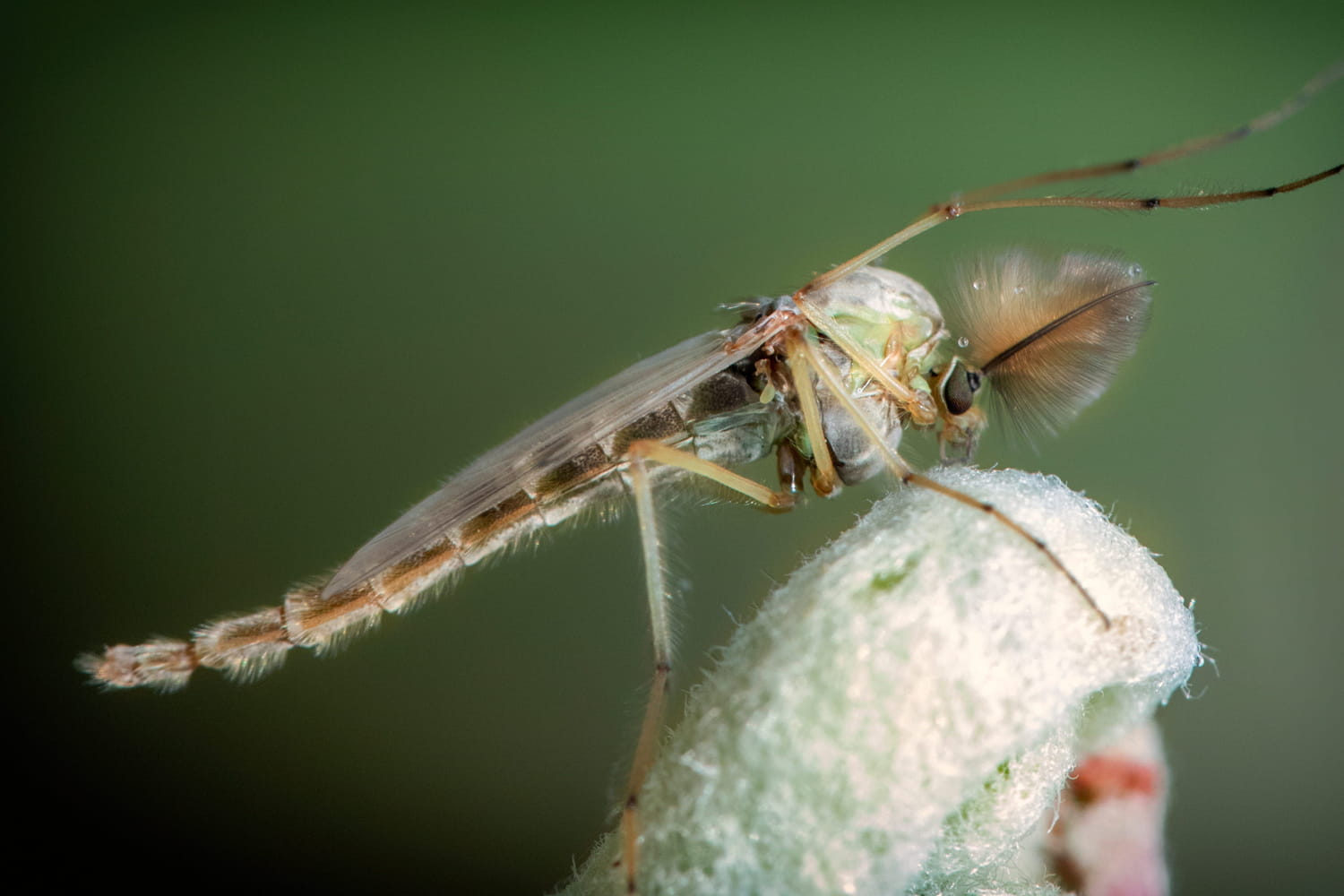
They can cover lampposts, invade terraces or form immense clouds above bodies of water. Often confused with mosquitoes, these insects regularly cause concern among local residents and walkers.
Every summer, the same spectacle surprises walkers and residents of certain lakes, ponds or streams. Clouds of insects suddenly invade the banks, gather around lampposts or sometimes cover the facades of houses. At first glance, everything suggests that they are mosquitoes. Something to worry about, especially at a time when these insects are particularly feared. However, appearances are deceiving.
If these swarms are so impressive, it is above all by their number. Thousands, sometimes millions of individuals can emerge at almost the same time when conditions are favorable. The heat of the water, the season and the development cycle of the larvae trigger these massive emergences. Adults only live a few days, just long enough to reproduce. The males then gather in large clouds above the water, attracting females before disappearing almost as quickly as they appeared.
However, these insects are not mosquitoes, but chironomids, also called “false mosquitoes”. Although they look a lot like them with their thin bodies and long legs, they are completely harmless to humans. Unlike mosquitoes, they do not bite because they do not have the oral apparatus necessary to pierce the skin. They also do not transmit diseases. Their larvae, known as bloodworms, live in aquatic environments where they play an essential role in recycling organic matter. They are also an important food source for many fish, birds and amphibians.
The main inconvenience of chironomids therefore remains their abundance. During major outbreaks, they can accumulate around exterior lighting, enter homes when windows are left open or dirty terraces and vehicles. To limit their presence, it is advisable to reduce outdoor lighting in the evening, as insects are strongly attracted to light. Mosquito nets or door curtains also help prevent them from entering the accommodation. On the other hand, insecticide treatments are rarely recommended, because they risk affecting other useful species without lastingly resolving the problem.
Although they may seem invasive for a few days, chironomids are a sign of a vibrant aquatic ecosystem. Their appearance is spectacular but generally very brief, until their reproductive cycle ends. The next time a huge cloud of insects crosses your path near a body of water, there is a good chance that you will be facing perfectly harmless “fake mosquitoes”, and not an invasion of real mosquitoes ready to bite you.