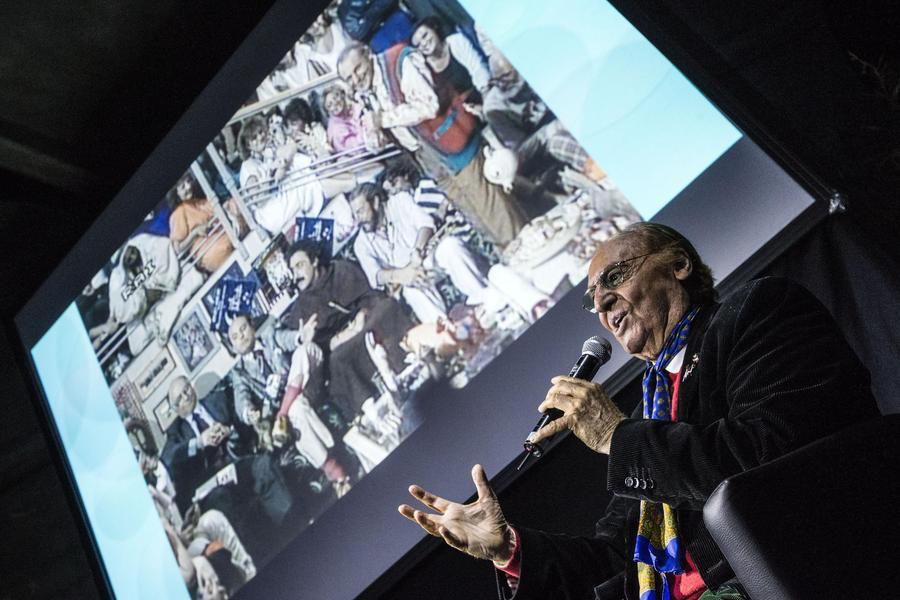
There is an unexpected image of Pope Leo XIV that comes from the years of his youth in Rome: a young Augustinian friar sitting in front of a small television, after dinner, laughing at the surreal jokes of Nino Frassicafor the comic provocations of Andy Luottofor the gags of Marisa Laurito and Maurizio Ferrini e for that dazed and brilliant world invented by Renzo Arbore.
Before the white robe, before the Petrine ministry, Robert Francis Provost he was an American student who came to Rome to study canon law. He lived in the Augustinian community a few steps from St. Peter’s Square. And right there, in a room of the convent, he had found a small daily appointment: Those of the nightthe Rai program that changed the way television was made in 1985.
The detail emerges from the documentary Leo in Rome, made by Vatican Communication Dicastery and dedicated to the Roman years of the future Pope. The story is told father Giovanni Lenzi, Augustinian brother and friend of Prevost: «In the evening in my room I had a small television this big, black and white of course, which had been given to me. He came to my room in the evening after dinner and we stayed there. It was the time when there was a program by Renzo Arbore, Those of the night. We saw it once by chance and we never missed a single episode again.” As the weeks passed, it had become a small ritual: «Every day in the evening, around ten, it started, one hour, two hours. For us that was our recreation».
A break of lightness within intense days of study and prayer. But also the encounter with a program that told of a particular Italy: ironic, curious, capable of laughing at itself.
Arbore: «The philosophy was to laugh for the sake of laughing. But with love”
Forty years later, Renzo Arbore has explained several times the secret of that broadcast which has become a real collective craze: «The philosophy of the program was “Laughing for the sake of laughing. But with love”», the popular host said in a two-year interview with Christian family. A phrase that sums up the spirit of Those of the night: not aggressive comedy, but a collective game built on intelligence, improvisation and the ability to stay together.
The programme, created almost as a bet in the late evening Rai, won over millions of viewers and transformed characters and jokes into national phenomena. From «I don’t understand but I adapt» to «What is beautiful is not beautiful, but how beautiful how beautiful how beautiful»passing through «Reaganian hedonism» and the «primordial broth» which entered the daily language of Italians: «We invaded Italy with catchphrases»Arbore recalled. So much so that prestigious invitations arrived: Gianni Agnelli wanted them at Villar Perosa, the President of the Republic Sandro Pertini welcomed them at the Quirinale.
A show born from friendship and improvisation
The birth of Those of the night it almost seems to come from the same atmosphere as the program. Arbore said that one of the inspirations came from condominium meetings in the mother’s building in Foggiabut also from the nights spent with musicians and friends after concerts in jazz clubs.
Another spark was a particular trip organized by the Soviet Union to promote a cruise. Arbore decided to participate, bringing with him not a traditional television crew, but a group of friends and artists: «Forty of us showed up. Piano bar pianists, musicians, imitators. There were Marisa Laurito, Telesforo, Luotto, Sylva Coscina, Catalano. We invaded the piers and the ballrooms. We had fun playing at night, improvising parodies.” Precisely that dimension of freedom and creativity would become the heart of the broadcast: «They had to have the joke ready, be able to create a sort of spoken jam session»Arbore explained, recalling the choice of the protagonists, “today no one knows how to do it anymore”.
From the small screen to the story of a man
The young Prevost, therefore, did not just watch an entertaining program. He was looking at a page of Italian culture from the 1980s: a way of communicating based on listening, on curiosity, on meeting different people. After the end of the broadcast, however, the future Pope returned to his books. «I told him to go to his room, because he would have continued, but I told him: “I’m going to sleep, in the morning we had to get up at half past six”», says Father Lenzi, «and he went to his room to study. He studied at night until 3, 4 in the morning, then at 6 he got up.”
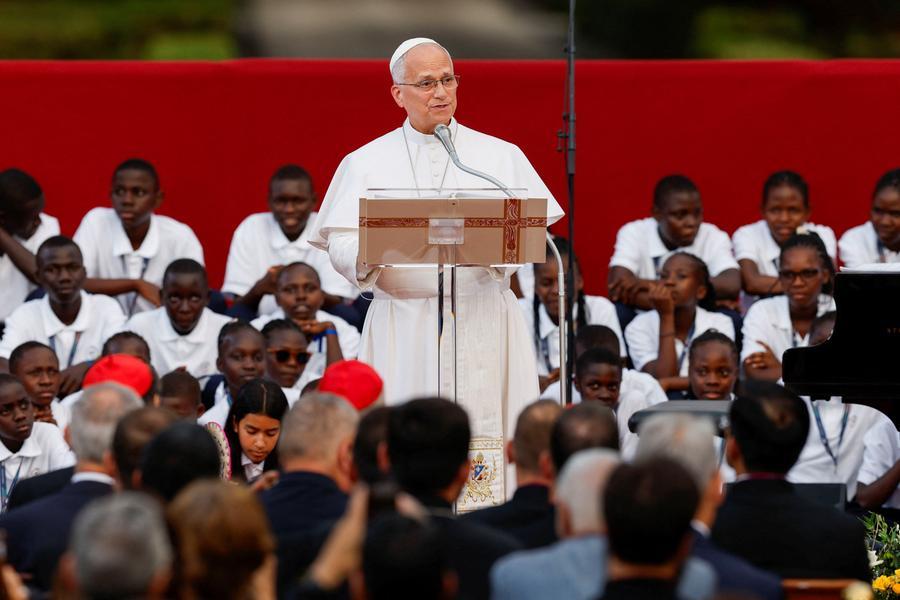
The documentary Leo in Romelast chapter of the trilogy dedicated to the life of Leo XIV after Leon de Peru And Leo from Chicagothus returns the portrait of a man even before a Pope. Created by journalists Felipe Herrera-Espaliat, Salvatore Cernuzio and Tiziana Campisiwith the assembly of Jaime Vizcaíno Harothe film retraces approximately twenty years of the life of Robert Francis Prevost: from his arrival in Italy from the United States in 1981 to his years of training in Rome, up to his service at the head of the Order of Saint Augustine for two terms, his appointment as prefect of the Dicastery for Bishops and his creation as a cardinal in 2023.
Through archive images, unpublished photographs and the testimonies of confreres, fellow students, friends and collaborators of the Dicastery for Bishops, the daily face of Prevost emerges: the years of study, friendships, travels, pilgrimages, meetings, pastoral work and community life.
Among the episodes told there is also lparticipation of the young Augustinian Prevost in the pacifist demonstration against the installation of NATO Euromissiles in Comiso, held in Rome on 22 October 1983 together with some brothers. Among the unpublished images recovered by the Vatican documentarians, the photograph, taken from the trailer of the film, which shows Prevost now bishop with a pair of Nikes on my feet: a simple detail, but capable of telling its human dimension and far from any formalism.
There are many other episodes that enrich the story of his long Roman experience: from the gym he attended during his years as a cardinal to the numerous trips he made as superior general of the Augustinians, even to distant countries such as China, up to the pastoral activity carried out as a young priest with the children of Cesano.